




Unease, as Belgium – US Tensions Rise
Diplomatic tensions between Belgium and the United States have intensified following Washington’s decision to deny entry to a prominent Belgian political party leader, a move that has stirred unease across European capitals and revived longstanding debates about sovereignty, transatlantic respect and the growing ideological fault lines between Europe and America.
The controversy erupted after US authorities barred the Belgian politician from travelling to the United States for a series of scheduled meetings and public engagements. American officials have not publicly disclosed detailed reasons for the decision, citing immigration and national security protocols, but sources familiar with the matter suggest concerns tied to the politician’s ideological positions and alleged associations viewed in Washington as incompatible with US security interests.
However, the episode has transcended the fate of a single individual. In Brussels – home not only to Belgium’s federal government but also the European Union’s institutional heart – the move has been interpreted as a troubling signal about the willingness of the United States to intervene indirectly in Europe’s internal democratic landscape.
Belgian officials have reacted cautiously but firmly. Diplomats argue that regardless of political disagreements, elected representatives operating within a democratic framework should not be subjected to opaque travel bans without transparent justification. Privately, several European policymakers worry that the precedent risks normalising politically motivated restrictions between allies who have historically championed open exchange.
The European concern is rooted partly in history. Transatlantic relations have endured disagreements over Iraq, trade tariffs, digital privacy and defence spending, yet the alliance has largely rested on shared democratic values and institutional respect. For many observers, Washington’s decision appears to blur that understanding.
Across Europe, the incident arrives at a particularly sensitive moment. Political landscapes in several EU member states are undergoing rapid transformation, with populist and nationalist parties gaining electoral traction. Whether admired or criticised, such movements represent legitimate democratic currents within European societies.
European commentators argue that denying entry to a political figure because of ideological positions risks reinforcing narratives already popular among Eurosceptic groups – namely that Western liberal institutions selectively apply democratic principles when confronted with uncomfortable political voices.
In Belgium itself, reactions have reflected the country’s complex political fabric. Supporters of the barred politician have framed the decision as evidence of American overreach and ideological intolerance, while critics maintain that sovereign nations retain the right to determine who enters their borders.
Yet even among critics, there is unease about the diplomatic optics.
Belgium occupies a uniquely symbolic role in Western alliances. As host to NATO headquarters and multiple EU institutions, it represents a physical embodiment of post-war transatlantic cooperation. Any strain involving Belgium therefore resonates beyond bilateral relations, touching the wider architecture of Western unity at a time when geopolitical pressures – from Russia’s continued aggression in Eastern Europe to competition with China – demand cohesion.
European analysts warn that Washington’s action risks complicating cooperation on issues where unity is essential. Intelligence sharing, counterterrorism collaboration and coordinated sanctions regimes depend heavily on trust between governments.
There is also concern about domestic political fallout within Europe. Populist parties may use the incident to argue that European governments remain subordinate to American preferences, a perception that could further energise calls for greater European strategic autonomy – a concept increasingly championed in Paris and gaining cautious support elsewhere on the continent.
For proponents of European independence in defence and foreign policy, the episode underscores a broader argument – that Europe must develop the capacity to pursue its interests without excessive reliance on Washington.
Trade and technology relations may also feel secondary effects. The United States and the European Union are already navigating disputes over artificial intelligence regulation, digital taxation and industrial subsidies. Diplomatic irritations layered onto economic disagreements risk deepening mistrust at a moment when both sides face pressure to coordinate responses to global economic volatility.
From Washington’s perspective, immigration authority remains a sovereign prerogative. American officials have historically exercised wide discretion over visa decisions involving foreign political figures perceived to promote extremism or threaten domestic harmony.
European observers, however, increasingly question whether such decisions should be applied to representatives from allied democracies without consultation or explanation.
The lack of transparency has become a central grievance. European diplomats note that quiet diplomatic dialogue could have mitigated the fallout. Instead, the public nature of the refusal has amplified political theatre on both sides of the Atlantic.
For now, neither government appears eager to escalate the dispute. Belgian officials have avoided retaliatory rhetoric, while Washington has signalled no broader shift in its relationship with Brussels.
Still, the episode exposes an uncomfortable truth about the transatlantic alliance in the 21st century: beneath decades of shared rhetoric lies a partnership grappling with diverging political cultures and competing definitions of democratic legitimacy.
In an era marked by rising nationalism, technological rivalry and shifting global power balances, even seemingly administrative decisions can carry symbolic weight. Whether the dispute fades quietly or evolves into a deeper diplomatic rift may depend less on visa policy than on how Europe and America choose to redefine their partnership in an increasingly uncertain world.
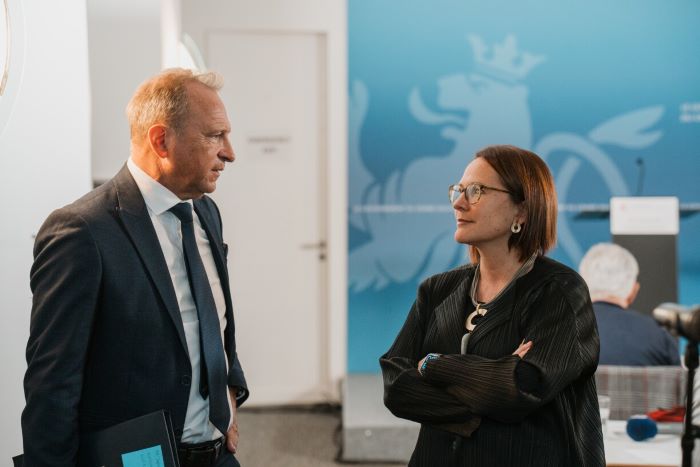
Health minister Frank Vandenbroucke ©BELGA PHOTO VIRGINIE LEFOUR