




Iran Shuts Strait of Hormuz
When Tehran decides to shut the Strait of Hormuz, it is not indulging in theatre. It is making a hard strategic move in one of the most critical maritime corridors on the planet. Nearly 20 percent of globally traded oil flows each day through this slim passage connecting the Persian Gulf to the Gulf of Oman. Interrupt that artery for any meaningful period and the shock will not remain local. It will course through the entire global economy.
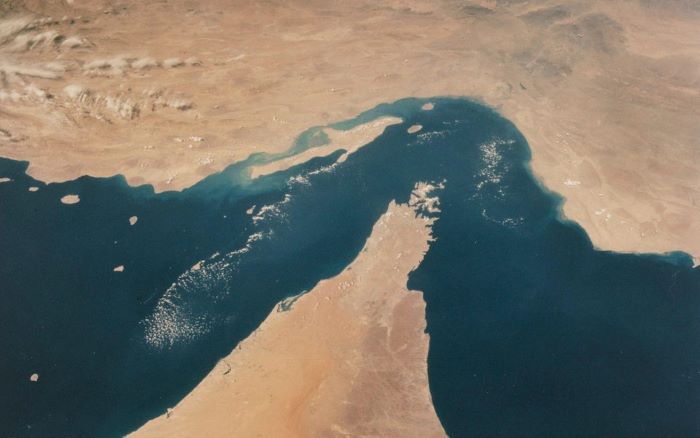
Geographically, the strait is a narrow funnel bordered by Iran on one side and Oman on the other. Economically, it is the exit gate for the Gulf’s energy producers to the industrial centres of Asia, Europe and beyond. Japan depends on this route for between 80 and 90 percent of its crude oil imports. South Korea draws roughly 70 percent of its oil through the same channel. These are advanced industrial powers whose factories, shipping fleets and technology sectors underpin global supply chains. Japan’s strategic reserves, estimated at about 230 days, provide breathing room, but they do not neutralise the structural risk. If tankers stop moving for months rather than days, the ripple effects will reach assembly lines and financial markets long before storage tanks are emptied.
The United States buys a smaller share of its crude directly from the Gulf than in previous decades, yet it remains tightly bound to the global oil price. Crude is traded on international benchmarks. A supply squeeze in the Gulf pushes up prices in Texas as surely as in Tokyo. American energy companies are commercial enterprises, not public utilities. If global prices surge, domestic prices follow. Gasoline becomes more expensive. Transport costs climb. Food and consumer goods, already sensitive to logistics expenses, rise further. In a country wrestling with inflation and stark income disparities, this is not a trivial development. It is politically volatile.
To make good on a closure, Iran would have to operate on the assumption that confrontation with the United States Navy and its partners is unavoidable or already unfolding. This is not a grey zone tactic. It is a wartime posture. The most effective method available to Tehran is the large scale deployment of naval mines. The Strait of Hormuz is narrow, and tanker routes are predictable. Mines placed quietly and in sufficient numbers can render commercial navigation too risky to sustain, even if naval forces technically retain the ability to patrol the area.
Iran is widely assessed to possess several thousand naval mines, perhaps between five and six thousand, ranging from simple contact devices to more advanced models. These can be laid by surface vessels, aircraft and submarines. Iran’s fleet includes Russian built Kilo class submarines capable of laying mines covertly. Even more suited to the shallow waters of the Gulf are its smaller midget submarines, some inspired by North Korean designs and others domestically produced. These compact diesel electric boats, with small crews and low acoustic signatures, are well adapted to confined coastal environments. Instead of prioritising torpedoes, they can carry and distribute mines across shipping lanes with methodical precision.
The financial calculus intensifies the deterrent effect. A modern crude carrier may transport around two million barrels of oil. At 75 dollars per barrel, that cargo is worth 150 million dollars. At 100 dollars, it reaches 200 million. Add the value of the vessel itself, often approaching 80 or 100 million dollars, and the total exposure per voyage can near 300 million. In such conditions, insurance premiums would skyrocket or coverage would be withdrawn altogether. Even without a single tanker sunk, shipowners and captains are unlikely to gamble hundreds of millions of dollars in a mined waterway. The strait need not be physically blocked in every inch to be commercially paralysed.
The United States Navy, particularly the Fifth Fleet headquartered in Bahrain, possesses formidable capabilities. Carrier strike groups, surveillance assets and specialised minesweepers could be mobilised to clear the channel. Yet mine countermeasure operations are slow and exacting. Each device must be located and neutralised, often under the threat of additional mines, submarines, drones or coastal missile systems. During such operations, commercial traffic would remain largely suspended. Financial markets, which react to expectations as much as to events, would not wait for a formal declaration that the sea lanes are safe again.
The most immediate consequence would be a surge in oil prices. Even a temporary disruption could propel crude well beyond 100 dollars per barrel. Energy importing economies in Asia would absorb the first blow. Production costs would rise, inflationary pressures would intensify and currencies could weaken. Europe, still sensitive to energy instability after the war in Ukraine, would face renewed strain across industry and households.
In the United States, the economic fallout would quickly become political. Higher fuel and food prices weigh disproportionately on working and middle class families. An estimated 60 to 70 percent of households already report financial stress linked to living costs. The country’s aggregate wealth is immense, yet its distribution remains uneven. Those with substantial disposable income can absorb price spikes with limited lifestyle change. Those without that cushion confront painful trade offs. Economic frustration rarely stays confined to balance sheets. It finds expression at the ballot box.
With congressional elections looming, sustained energy inflation could reshape the political terrain. If voters connect rising costs to foreign policy escalation, the balance of power in the House of Representatives could shift. A change in congressional control would alter the domestic political dynamic significantly, potentially opening the way for investigations or impeachment efforts. A maritime crisis thousands of kilometres away could thus reverberate through Washington’s corridors of power.
From Tehran’s perspective, closing the strait would be an exercise in asymmetric leverage. Iran cannot match the United States ship for ship. What it can do is exploit geography. By threatening a chokepoint essential to global energy flows, it multiplies the economic cost of military confrontation for a wide array of states. Asian and European governments, heavily reliant on Gulf oil, would feel compelled to press for de escalation. The oil market itself becomes an arena of strategic competition.
Yet this approach is fraught with danger. Iran’s own economy depends on energy exports and maritime access. A prolonged closure could isolate it further and provoke a sustained multinational naval response aimed at degrading its maritime capabilities. Once mines are in the water and shipping halted, events can accelerate beyond any one actor’s control.
Shutting the Strait of Hormuz is therefore a decision that assumes readiness for sustained conflict and accepts global economic disruption as a tool of statecraft. The mines may be invisible beneath the waves, but the consequences would be visible in fuel pumps, supermarket aisles and stock exchanges around the world. In a tightly interconnected global system, a few miles of water can hold the balance of economic stability.
Photo – Strait of Hormuz Credit: Space Frontiers/Getty Images