


Trump, Iran, and the High-Stakes Game: What America Stands to Gain, or Lose
In a world already teetering on the edge of volatility, Donald Trump’s return to the
geopolitical stage comes not with diplomacy, but with a thunderclap. “It’s not yet time to
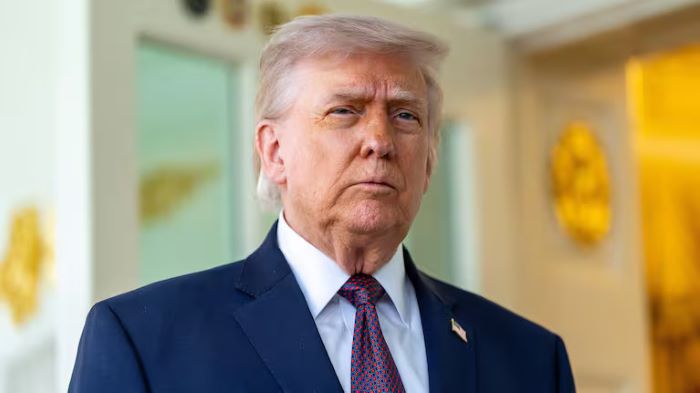
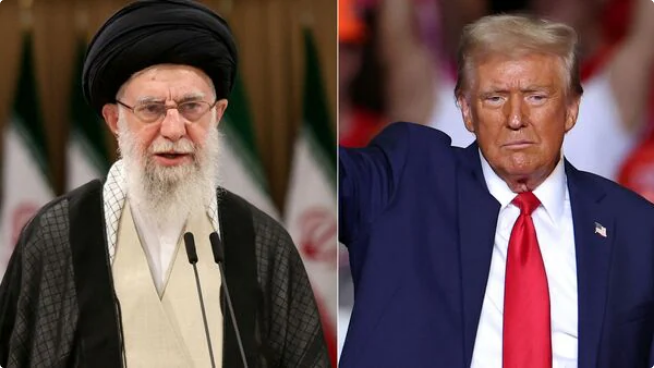
kill Iran’s Supreme Leader,” Trump said Tuesday, an incendiary remark, even for a man
known for disregarding verbal guardrails. It was as blunt as it was chilling.
As tensions between the U.S. and Iran veer dangerously toward escalation, the world is
once again asking: What is Trump’s endgame? And more broadly, what does America
stand to gain, or risk losing, in this renewed confrontation with Tehran?
The resurgence of Trump-era saber-rattling echoes familiar notes: unilateral strength,
hardline rhetoric, and a combustible Middle East already inflamed by the Israel-Gaza
war and proxy skirmishes in Yemen and Syria. But this latest flare-up could push the
region, and the world; toward a tipping point.
Trump’s Political Calculus
For Trump, the clash with Iran is as much about projecting a strong America optics as
foreign policy.
Projecting toughness on national security has always played well with Trump’s
conservative supporters, many of whom favor a no-nonsense posture abroad. But
there’s more. Trump has repeatedly slammed Joe Biden’s more conciliatory approach to
Iran, especially efforts to revive the 2015 nuclear deal (JCPOA), which Trump himself
abandoned in 2018. Casting Biden as weak on foreign policy and himself as the only
president strong enough to confront global threats allows Trump to position national
security at the heart of his ‘strong man stance.
Yet the gamble is perilous. A military misstep could cost American lives, destabilize an
already volatile region, and unravel any remaining appetite for foreign entanglements
among war-weary Americans. The bitter aftertaste of the Afghanistan withdrawal still
lingers, and a new Middle East war may be more than many Americans are willing to
stomach.
Strategic Stakes for the U.S.
America’s strategic entanglement with Iran stretches back decades, rooted in Cold War
politics, oil diplomacy, and a longstanding commitment to allies like Israel and Saudi
Arabia. Iran, for its part, remains a formidable regional actor, using proxy forces to
extend its reach from Lebanon to Yemen. For Washington, containing that influence is
key to maintaining power balances and safeguarding the free flow of global energy
supplies.
While the U.S. has moved toward greater energy independence, the world remains
tethered to the Strait of Hormuz, the maritime choke point through which nearly a fifth of
global oil passes. Any disruption there could spark international panic, as seen in 2019
when suspected Iranian-backed drones struck Saudi oil facilities, briefly halting
production and rattling markets.
In today’s tightly interlinked global economy, a new war in the Gulf would ripple far
beyond the battlefield. With Europe in economic slowdown, China locked in trade rivalry
with the U.S., and food and energy prices already strained by climate disruptions,
another oil shock could drive inflation and deepen economic anxiety.
The Military Equation
On paper, the U.S. military far outclasses Iran’s conventional forces, boasting precision
air power, cyber capabilities, and a sprawling network of regional bases but this isn’t a
textbook war and Iran has written its own playbook over time.
Rather than confront the U.S. directly, Tehran has invested in asymmetric warfare:
missile programs, cyberattacks, and a dense web of militias spread across Iraq,
Lebanon, Syria, and the Gulf. In the event of conflict, these forces could launch
coordinated strikes on American targets and allies, transforming a limited clash into a
sprawling regional war.
Retired General Mark Hertling summed up the complexity in a recent CNN interview:
“Iran is not Iraq. It has a large, urbanized population, capable military assets, and a
deep bench of regional influence. It will not be a quick or easy fight.”
The Pentagon’s own war simulations suggest any full-scale operation against Iran
would demand massive troop deployments and budgetary strain, potentially eclipsing
the wars in Iraq and Afghanistan combined.
Dueling Perspectives
Expert opinion remains split on whether Trump’s rhetoric is brinkmanship or a prelude to
real action. Dr. Vali Nasr, a prominent Middle East scholar, suggests that Trump’s
posture is more about showmanship than strategy. “He wants a deal, on his own terms,”
Nasr says. “But the danger is, you raise the temperature so high that a spark becomes
inevitable. Iran won’t capitulate.”
Others see strength in Trump’s hardline stance. “The only language the Iranian regime
understands is power,” argues Michael Doran of the conservative Hudson Institute.
“Decades of appeasement have emboldened Tehran. Trump’s strategy may be risky,
but it’s a correction, not an escalation.”
For Americans, a War with Consequences
For ordinary Americans, a return to hostilities with Iran would be anything but abstract.
Gas prices would likely skyrocket. Consumer costs would follow. Military families could
face deployment cycles. National headlines would shift back to terrorism, overseas
operations, and security alerts, pushing aside domestic issues like healthcare,
education, and gun reform.
And then there’s the digital battlefield. Iran’s cyber warfare program has proven capable
of penetrating U.S. banks, city systems, and infrastructure. Escalation could trigger
retaliatory cyber strikes, shutting down power grids, disrupting transit systems, or
compromising hospitals.
A Test of Leadership
At its core, the U.S.–Iran confrontation is a test of leadership, measured not in volume,
but in vision. Whether Trump is wielding foreign policy as a blunt instrument or laying
groundwork for another deal-making spectacle, the risks of miscalculation are real.
In the high-stakes game of international diplomacy, history reminds us: wars of choice
often become wars of regret. The true challenge isn’t in projecting strength, but in
knowing when and how to use it.
By Moji Danisa