








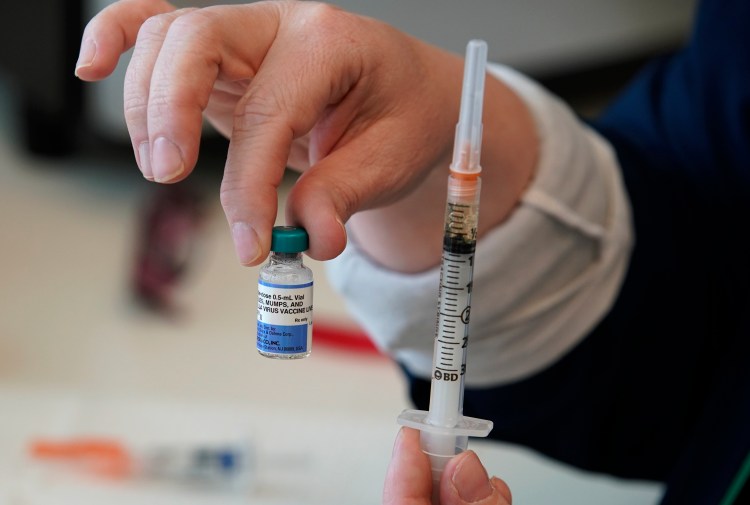
Measles’ Alarming Return, A Crisis Beyond the UK
Once considered a relic of the past, eradicated in many developed nations, measles
has made a terrifying comeback in the UK, tragically claiming the life of a child. This re-
emergence, far from being an isolated incident, signals a potential health crisis for the
entire European continent.
The primary culprit behind measles’ resurgence in the UK is a significant drop in
vaccination rates. While measles was declared eliminated in the UK, vaccine uptake for
the Measles, Mumps, and Rubella (MMR) vaccine has fallen below the crucial 95%
threshold required for “herd immunity.” This leaves pockets of unvaccinated individuals
vulnerable.
For a better overview, the UK achieved measles elimination status in 2017 due to high vaccination rates and
strong surveillance. However, this status was lost in 2018 when measles re-established
transmission, likely from European outbreaks and imported cases. Interestingly, during
the COVID-19 pandemic, the public health measures implemented to control the
coronavirus also inadvertently reduced measles transmission, leading to the UK
technically regaining its measles elimination status in 2023, based on 2022 data.
Furthermore, global travel plays a role; cases are frequently imported from countries
where the virus remains endemic. These imported cases then find fertile ground in
under-vaccinated communities. Misinformation and unfounded fears surrounding
vaccine safety have contributed significantly to this decline.
The Consequences for Europe may be serious, especially for young children.
The death of a child in the UK underscores the severity of the situation. Measles is
highly contagious and severe complications, including pneumonia, encephalitis (brain
swelling), and even death, are not uncommon, especially for children and those with
weakened immune systems. With increased travel across Europe, the virus can spread
rapidly between countries, as evidenced by rising cases across the continent. Countries
with similarly low vaccination rates face a heightened risk of large-scale outbreaks,placing immense strain on healthcare systems already struggling. Romania, for
instance, has reported tens of thousands of cases recently.
Measles is one of the most infectious human viruses, spreading through airborne
droplets from coughs and sneezes. It can remain active in the air or on surfaces for up
to two hours. An infected person can spread the virus from four days before the rash
appears to four days after.
Symptoms typically begin 7-14 days after exposure, starting with cold-like symptoms:
high fever, runny nose, cough, and red, watery eyes. Tiny white spots (Koplik spots)
may appear inside the mouth a few days later, followed by the characteristic red or
brownish blotchy rash that usually begins on the face and spreads downwards.
While measles can affect anyone unprotected, the most vulnerable demographics are
children younger than five years of age, adults older than 20, pregnant women, and
individuals with compromised immune systems.
The most effective way to check and prevent measles is through vaccination with the
MMR vaccine. Two doses of the MMR vaccine are recommended for complete
protection. The first dose is typically given at 12-15 months of age, and the second at 4-
6 years.
The MMR vaccine is highly safe and effective. Extensive research has consistently
debunked any link between the MMR vaccine and autism. Two doses provide
approximately 97% protection against measles. Side effects are generally mild and
temporary, such as a sore arm, low-grade fever, or mild rash. The benefits of
vaccination far outweigh the minimal risks, especially considering the severe
complications associated with measles infection.