






Belgium’s Demand: A Defining Moment in EU-Israel Relations
Belgium has announced it will support a European Commission proposal to partially
suspend Israel’s participation in the Horizon Europe research program, citing
concerns over humanitarian access to Gaza.
Foreign Minister Maxime Prévot confirmed on Friday that Belgium would vote in favor
of the measure, which targets Israel’s access to the European Innovation Council’s
accelerator. The scheme provides grants and equity investments for advanced
technologies, including artificial intelligence, cybersecurity, and drone systems.
If adopted, the suspension could cost Israeli companies and institutions an estimated
€400 million in potential future EU grants and investments.
The proposal follows months of EU criticism over Israel’s handling of access to aid
Gaza, with some member states accusing the country of breaching commitments under
the EU–Israel Association Agreement, which includes human rights provisions.
Prévot said Belgium’s position was tied to “full and unimpeded access for humanitarian
aid to Gaza,” warning that further measures could follow if conditions do not improve.
The European Commission tabled the proposal in July, but member states remain
divided. Germany and Italy have yet to declare their positions, while Hungary, Austria,
Bulgaria and the Czech Republic have voiced opposition.
The Danish Council Presidency is expected to present the measure to EU ambassadors
on 13 August in an attempt to secure a qualified majority. Under EU rules, at least 15
member states representing 65% of the bloc’s population must approve for it to pass.
Horizon Europe is the EU’s flagship research and innovation program, with a budget
of €95.5 billion for 2021–2027. Israel has been an associated country since the
program’s inception, granting it access to competitive funding and collaboration with
European researchers.
The suspension would not remove Israel entirely from Horizon Europe but would block
its access to certain funding streams, particularly those linked to dual-use or sensitive
technologies.
Supporters of the measure argue that the EU should use its financial leverage to press
Israel on humanitarian obligations. Critics say cutting scientific ties could damage
innovation and reduce opportunities for political engagement.
The decision is seen as a test of the EU’s ability to take coordinated action on Israel
amid deep divisions among member states.
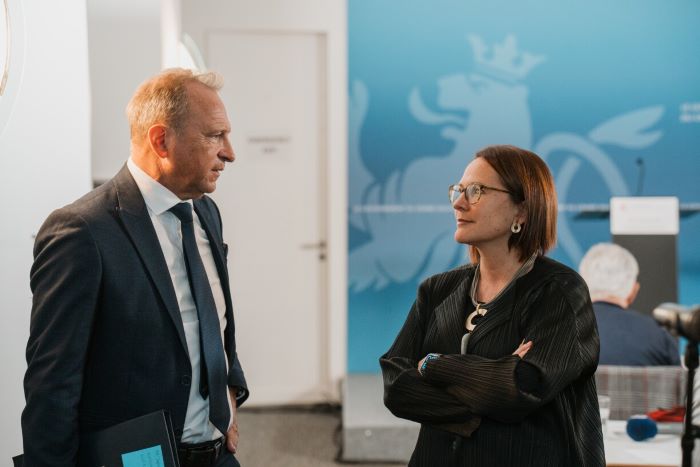
Photo – Kaja Kallas, High Representative of the EU for Foreign Affairs and Security Policy