





ECB Chief says Migrant Labor Vital to Europe’s Economic Growth
The eurozone’s post-pandemic recovery would have been far weaker without the
contribution of migrant labor, the European Central Bank president, Christine Lagarde,
has warned, urging policymakers not to overlook migration’s role in sustaining growth
even as it fuels political tensions across Europe.
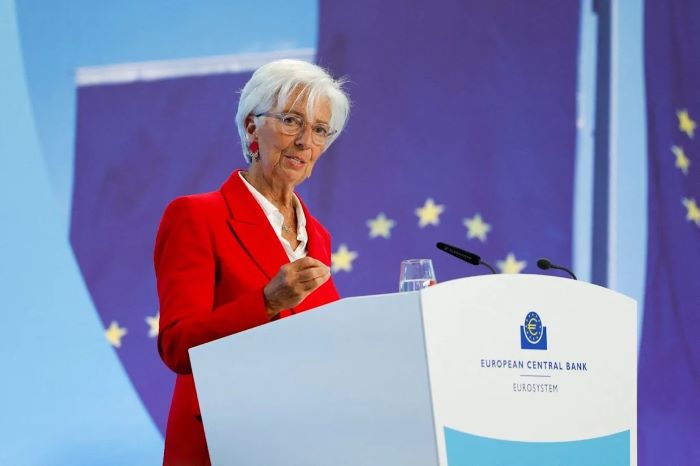
Speaking at the US Federal Reserve’s annual symposium in Jackson Hole, Wyoming,
Lagarde said foreign workers had played a decisive role in helping the bloc absorb
successive shocks from surging energy costs to record inflation – while keeping both
jobs and output intact.
“Although they represented only around 9% of the total labor force in 2022, foreign
workers have accounted for half of its growth over the past three years,” she told fellow
central bankers. Without that influx, she added, Europe’s economy would be smaller
and its labor market tighter.
Lagarde singled out Germany and Spain as the clearest examples. Germany’s GDP,
she said, would be about 6% lower today without migrant labor, while Spain’s rapid
rebound also “owes much” to foreign workers. Across the eurozone as a whole,
employment has expanded by more than 4% since 2021, almost in line with GDP
growth, despite the steepest interest rate rises in a generation.
Migration, she argued, has offset structural weaknesses such as Europe’s shrinking
birth rate and the growing demand for shorter working hours. That has enabled firms to
expand production and helped to damp inflationary pressures, even as wages for many
workers failed to keep pace with prices.
However, she acknowledged that the politics are far less straightforward. Net immigration
pushed the EU’s population to a record 450 million last year, even as governments from
Berlin to Rome sought to restrict arrivals under pressure from voters drawn to far-right
parties.
“Migration could, in principle, play a crucial role in easing labor shortages as native
populations age,” she said. “But political economy pressures may increasingly limit
inflows.”
She cautioned against complacency, noting that Europe’s labor market had so far
emerged from overlapping crises in “unexpectedly good shape”. Yet demographic
decline, political backlash and changing worker preferences continue to pose risks.,
Her remarks reflect a broader debate within Europe – whether to treat migration as a
source of vulnerability, or as an economic necessity. For Lagarde, the evidence is clear –
without migrant labor, the eurozone’s recovery would have been far more fragile.