








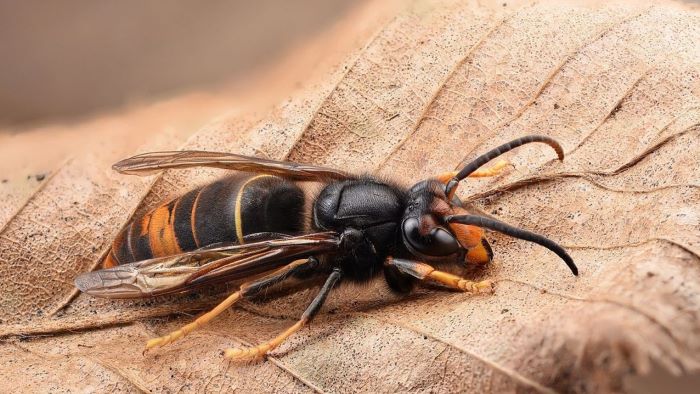
Asian Hornets Spread Across Germany, Luxembourg, Raises Fears for Safety of Humans and Bees
The Asian hornet, an invasive species first detected in Europe in 2004, is spreading
rapidly across Germany and Luxembourg, sparking fresh warnings from authorities and
fuelling concerns for biodiversity, agriculture and public safety.
Known scientifically as Vespa velutina, the species originates from Southeast Asia and
arrived in France, most likely in a shipment of pottery from China. Smaller than the
native European hornet but quicker to defend its colonies, the insect is particularly
feared for its predation on honeybees and other vital pollinators.
Luxembourg’s government has urged residents not to approach or attempt to remove
nests themselves. The insects usually build large, ball-shaped nests high in trees, but
they can also establish colonies in hedgerows, sheds or close to homes. Disturbing a
nest can provoke swarming behavior, leading to multiple stings.
Health experts note that a single sting is comparable to that of a wasp or bee. However,
multiple stings can cause severe pain, swelling and, in rare cases, life-threatening
allergic reactions. Those stung are advised to move away quickly, apply a cold
compress, take an antihistamine and seek urgent medical help if breathing difficulties,
dizziness or rapid swelling occur. People with known allergies are encouraged to carry
adrenaline auto-injectors.
Beyond the public health risk, the hornet’s advance has major ecological implications. In
France, where the species has been entrenched for over a decade, beekeepers report
devastating losses to hives, with hornets attacking bees at hive entrances and
decimating colonies. The French government has spent millions on containment, but
eradication has proven impossible.
In the UK, sightings have surged in recent summers. A national task force has
destroyed dozens of nests in an effort to prevent the hornet from becoming established,
though experts warn Britain may be fighting a losing battle as climate change makes
conditions more favorable.
For Luxembourg and Germany, the threat is both economic and environmental.
Beekeeping associations warn that the unchecked spread could wipe out local hives,
hitting honey production and weakening wider pollination networks essential for crops
and wild plants.
Officials stress that residents should report sightings rather than intervene. “Public
safety comes first,” one government statement said. Regional cooperation, beekeepers
argue, will be critical in slowing the hornet’s relentless march across Europe.