





Luxembourg’s Bond Sale Shows Enduring Strength in Uncertain Europe
Luxembourg has made a striking return to Europe’s sovereign debt markets, issuing a
€2.5bn, 10-year euro-denominated bond after years of relative quiet. The deal, hailed by
officials as a “big print”, highlights the Grand Duchy’s deliberate approach to debt
management and its ability to tap investors at moments of maximum advantage.
For a state with a triple-A credit rating and one of the lowest debt burdens in the
eurozone, the choice to issue such a large benchmark bond was more strategic than
urgent. Borrowing costs for Luxembourg remain exceptionally low, and locking in long-
term financing now ensures fiscal flexibility well into the next decade.
The response from investors was emphatic. Demand for the bond reached more than
€18bn, over seven times the amount on offer, underscoring the appetite for
Luxembourgish debt among global institutions. The timing proved crucial as the sale
came days after a record EU syndication that drew €200bn in orders, creating a surge
of market momentum that Luxembourg was quick to exploit.
Finance ministry officials describe the issuance as part of a broader strategy that
prioritises transparency, predictability and cost-effectiveness. The proceeds will help
cover state budgets and support investment in areas from infrastructure to digitalisation,
while ensuring the country maintains one of the most enviable debt profiles in Europe.
Continuing a history of restraint, the sale also reflects a long-standing tradition of
caution. Luxembourg’s debt strategy has been defined less by the need to borrow and
more by the discipline of knowing when not to. During the eurozone crisis of the early
2010s, the Grand Duchy resisted pressure to take on significant new debt, preserving
its fiscal buffers at a time when neighbours were forced into heavy borrowing.
A similar restraint was visible during the Covid-19 pandemic. While larger eurozone
economies issued record amounts of debt to stabilise their budgets, Luxembourg opted
for smaller, targeted offerings. By relying partly on reserves, it kept its debt ratios well
below the EU average, emerging from the crisis with considerable fiscal space intact.
This consistency has built a reputation that now pays dividends. Investors view
Luxembourg not only as a safe haven but also as a bellwether of prudent governance.
Its bonds, though issued infrequently, are regarded as highly liquid benchmarks, making
them a staple for institutions seeking security in turbulent times.
That reputation carries symbolic weight. Luxembourg is not among the EU’s largest
borrowers, yet its moves are closely watched. When the country taps the markets, it is
often seen as an implicit vote of confidence in the eurozone’s resilience.
The latest issuance comes as many European states grapple with mounting fiscal
pressures, from the lingering costs of pandemic support to defense spending amid
geopolitical instability. Against this backdrop, Luxembourg’s ability to issue at scale and
attract such overwhelming demand is a reminder of the premium placed on credibility.
The government has also signaled that future issuance could be increasingly linked to
climate and green investment. Luxembourg was among the early adopters of
sustainable finance in Europe, launching a pioneering “sustainability bond framework” in
2020 to channel funds into environmental and social projects.
Officials suggest that part of the proceeds from this latest bond may be directed toward
green infrastructure, energy transition projects and digital innovation aligned with EU
climate goals. With its financial centre already positioning itself as a hub for sustainable
finance, sovereign issuance is seen as another lever to anchor credibility in climate
commitments.
For the Grand Duchy, the €2.5bn deal is therefore more than just a refinancing exercise.
It is a reaffirmation of fiscal discipline, a signal of resilience in uncertain times and a
reminder that financial stability can underpin not only market trust but also investment in
a more sustainable future.
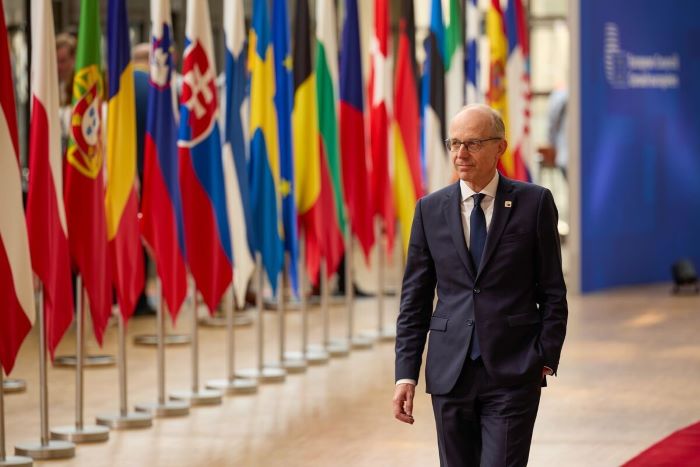
Photo – Luxembourg’s Prime Minister, Luc Frieden (Photographer: Ksenia Kuleshova/Bloomberg)