




Nepal’s GenZ Rebellion: Spark or Sustained Fire?
Nepal has been shaken by a wave of youth-led protests that forced the resignation of
Prime Minister K.P. Sharma Oli, signalling a profound shift in the country’s political
landscape. What began as anger over a social media ban quickly swelled into a broader
rebellion against corruption, nepotism and the lack of opportunity that has long defined
life for young Nepalis.
Far from being a fleeting outburst, the demonstrations are widely seen as a generational
uprising. Members of “Gen Z”, often dismissed by their elders as emotional or
confrontational, have harnessed digital tools and physical protest in ways that the
country’s traditional political class appears unable to contain. Even amid attempts to
silence them online, protesters found new ways to organise, expose privilege and
amplify their demands. The lavish lifestyles of politicians’ children, starkly out of step
with the average Nepali’s earnings, became a lightning rod for outrage.
The movement’s demands go well beyond the resignation of one leader. Protesters
want parliament dissolved, systemic reforms introduced and fresh elections held. Such
calls have plunged Nepal into uncertainty. The country has seen 13 governments since
2008, when the monarchy was abolished, and analysts fear the current upheaval could
be hijacked by rival political forces or even revive monarchical ambitions.
Yet many believe the protests are an overdue reckoning. For years, young people have
felt shut out of a system dominated by patronage networks and plagued by corruption
scandals. Their mobilisation has laid bare the generational chasm between a political
elite clinging to power and a restless youth demanding accountability.
The path ahead is uncertain. Nepal may face instability, and the protesters’ volatile
tactics have drawn criticism but the energy of this movement signals more than disorder
it reflects a refusal by a generation to inherit a broken political order. Whether Nepal’s
youth can convert passion into lasting reform remains to be seen, but their message is
clear, silence is no longer an option, and the status quo is no longer sustainable.
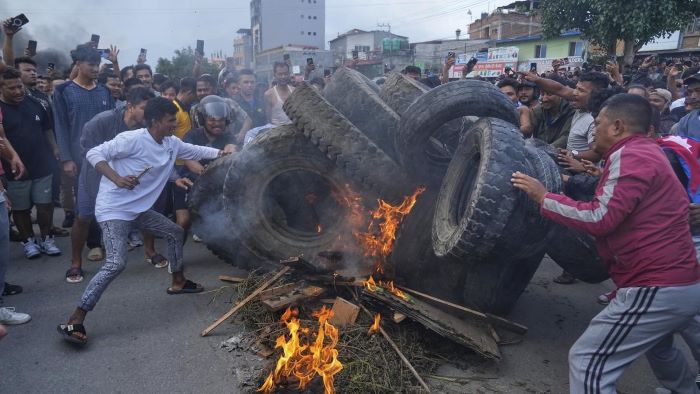
Photo – Protesters burn tyres violating the curfew orders in Kathmandu, Nepal, on September 9, 2025. | Photo Credit: AP