








Has a Rock Finally Unearthed Mars’s Ancient Secret?
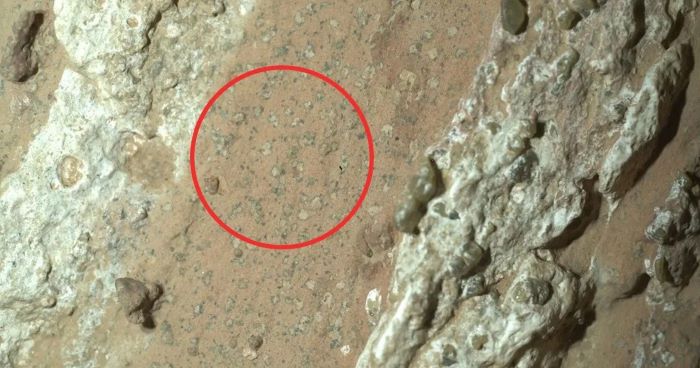
A rock on Mars may hold the most tantalizing evidence yet that the red planet once
supported life, according to new findings from NASA’s Perseverance rover.
The rover, which has been exploring the 45km-wide Jezero crater since 2021, recently
analysed a sample rich in organic molecules and mineral structures that scientists say
could only have formed in the presence of water. These features suggest that Mars
once hosted a habitable environment and, crucially, may have preserved traces of
ancient microbial activity.
The discovery has electrified planetary scientists who have long sought proof that Earth
is not the only world to have nurtured life. While NASA is careful not to claim a definitive
breakthrough, researchers describe the rock as “the clearest sign yet” that Mars once
had the necessary conditions for biology to emerge.
“This is exactly the kind of material we hoped Perseverance would find,” said Dr.
Kenneth Farley, project scientist for the mission. “It tells us that Mars had water, energy
sources, and chemistry consistent with supporting life. Whether microbes were ever
actually there remains the question – but this rock takes us a step closer.”
The rock was drilled from an ancient delta, where a river once flowed into a Martian lake
billions of years ago. Deltas on Earth are renowned for trapping and preserving
sediments and, potentially, fossils. By targeting this site, mission planners aimed to give
Perseverance the best chance of finding biosignatures.
NASA’s next challenge is to bring the rock back to Earth. Plans are underway for a
Mars Sample Return mission, a joint effort with the European Space Agency, which
could retrieve the cache of samples in the early 2030s. Laboratory analysis on Earth
would allow far more sensitive tests than the rover’s onboard instruments can achieve.
The implications extend beyond Mars. If the rock reveals signs of ancient life, it would
demonstrate that biology is not unique to Earth, but a natural outcome when the right
ingredients align. Such a finding would transform shifting the search for life
to icy moons like Europa and Enceladus, as well as exoplanets orbiting distant stars.
For now, the Martian rock remains a silent witness to a world that may once have
teemed with microscopic organisms. Scientists caution that more work is needed, but on
the dusty floor of Jezero crater, Perseverance may have stumbled upon a clue that
changes humanity’s understanding of its place in the cosmos.