


Poland and Luxembourg’s Quiet Diplomacy in an Age of Big-Power Strain
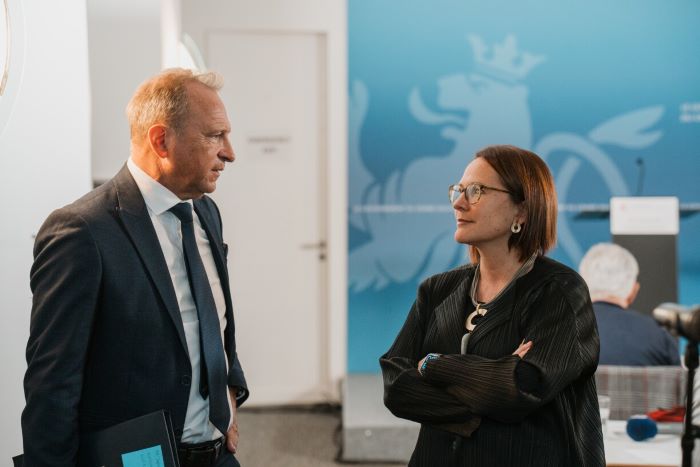
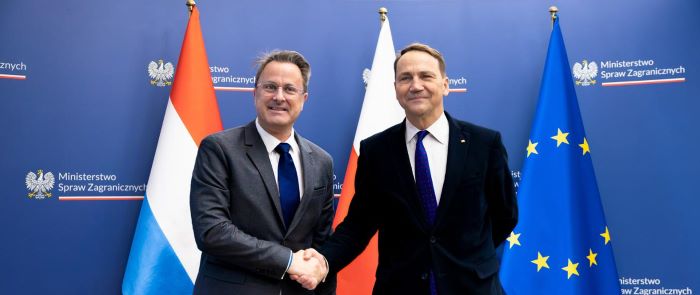
A meeting in Warsaw between the top diplomats of Poland and Luxembourg has drawn attention for what it signals about Europe’s approach to security at a time of sharpening global tension. The talks, involving Poland’s foreign minister Radosław Sikorski and his Luxembourg counterpart Xavier Bettel, came as Europe continues to navigate the consequences of war on its eastern flank, strains in the transatlantic alliance and an increasingly assertive posture from major global powers.
The encounter took place against a backdrop of geopolitical uncertainty shaped by the disruptive foreign policy style of Donald Trump, the continued pressure exerted by Vladimir Putin on Europe’s security order, and the growing strategic reach of China. Together, these forces have unsettled long-standing assumptions about stability, predictability and the durability of the rules-based international system.
While Poland and Luxembourg differ markedly in size, geography and military capacity, their diplomatic engagement reflects a broader European logic – security is no longer the preserve of large states alone. Poland, positioned on Nato’s eastern flank, has emerged as one of Europe’s most vocal advocates of deterrence, defence spending and military readiness. Luxembourg, by contrast, wields influence through diplomacy, finance and law, exercising power within institutions rather than on battlefields.
European officials describe such partnerships as complementary rather than symbolic. Poland’s strategic weight and frontline experience are matched with Luxembourg’s capacity to shape regulatory policy, financial oversight and consensus-building within the European Union. Together, they reflect an understanding that modern threats are hybrid in nature, combining military pressure with cyber attacks, economic coercion and disinformation.
The question of Europe’s ability to secure itself has become more urgent as confidence in external guarantees has wavered. The continent still relies heavily on the collective defence framework of NATO, but there is growing acceptance that European states must also shoulder greater responsibility for their own security. Defence spending has risen in many capitals, cooperation on intelligence and cyber defence has deepened, and there is renewed focus on protecting critical infrastructure and supply chains.
Small states, diplomats argue, are not condemned to irrelevance in this environment. Their influence lies in coalition-building, agenda-setting and the consistent defence of international law. Through sanctions regimes, financial controls and coordinated diplomacy, they can raise the cost of aggression and reduce the room for unilateral action by larger powers. When aligned with militarily stronger partners such as Poland, their impact is multiplied.
The Warsaw meeting underscored this dynamic. It was less about dramatic announcements than about alignment – reinforcing shared positions on European security, reaffirming commitment to collective defence and signalling unity at a time when division would be costly. In an era when global politics is increasingly shaped by unpredictability and power rivalry, such coordination has become a form of quiet resistance.
Europe’s security challenges remain formidable, and its responses uneven. Yet the continued engagement between states large and small suggests a recognition that resilience depends on interdependence. The meeting between Poland and Luxembourg offered a reminder that, in a fragile international climate, even modest diplomatic encounters can carry strategic weight far beyond the room in which they take place.
Photo – (Left), Foreign Affairs of the Grand Duchy of Luxembourg Xavier Bettel Foreign Affairs of the Grand Duchy of Luxembourg Xavier Bettel. (Right), Radosław Tomasz Sikorski, Deputy Prime Minister of Poland