



“Climate Policy Against the Headwinds”, Serge Wilmes
As climate change competes with geopolitics, defense, and economic anxiety for public attention, Luxembourg’s Minister of the Environment, Climate and Biodiversity Serge Wilmes has pushed back against the idea that ecological concerns are fading from public life. In an interview published by Virgule Media and conducted by journalists Laura Bannier and Julien Carette, Wilmes argues that climate policy has not weakened in relevance but has instead become more demanding in a more polarized global context.
According to the minister, recent data contradicts the perception that public interest in climate action is declining. Official figures at both European and national level show sustained concern. A survey by Luxembourg’s Climate Policy Observatory found that 88 percent of adults and 78 percent of young people consider climate change a major issue. Wilmes interprets this as evidence that the population has largely accepted the scientific consensus and continues to support the ecological transition through everyday choices. He points to the strong uptake of state subsidies such as klimabonus wunnen and klimabonus mobiliteit as proof that citizens are actively engaging with climate policies rather than retreating from them.
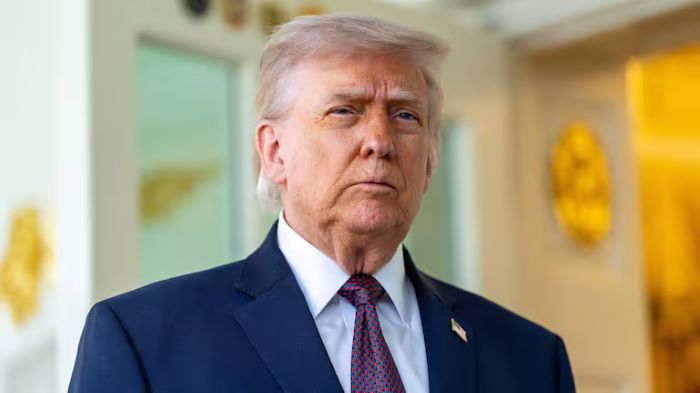
The international political environment, however, has become more complex. With Donald Trump once again leading the United States and openly questioning climate science, Wilmes acknowledges that global headwinds have intensified. Still, he rejects the idea that international resistance should slow European action. He insists that science remains the guiding reference for policy and notes that climate denial at the federal level in the United States does not reflect the whole country. States such as California, along with cities and private companies, continue to invest heavily in renewable energy and decarbonization. In Wilmes’s view, this reality is often overshadowed by political rhetoric.
At the European level, he describes continued momentum despite internal disagreements. The European Union’s climate trajectory toward carbon neutrality by 2050 remains intact, with binding milestones set at a 55 percent emissions reduction by 2030 and 90 percent by 2040. Even governments skeptical of environmental regulation have been unable to derail these commitments. Wilmes also highlights a growing influx of scientists relocating from the United States to Europe, including Luxembourg, after funding cuts under the current US administration. He frames ecological transition as an economic opportunity rather than a constraint, arguing that a just and well-managed transition represents the basis of future prosperity.
The interview also addresses concerns around biodiversity and the partial scaling back of certain elements of the European Green Deal. Critics have described recent changes as a dismantling driven by conservative and nationalist forces. Wilmes offers a more nuanced reading. He distinguishes between deregulation and simplification, noting that the Green Deal was conceived several years ago under different economic and political conditions. In some cases, he argues, measures need adjustment to ensure they are workable and publicly supported without undermining their core objectives.
He cites the European regulation on deforestation as an example. Luxembourg already enforces strict forest protection laws and does not face deforestation. Under the new regulation, however, the country would be required to expand administrative capacity significantly to comply with reporting and control requirements, without tangible environmental gains. For Wilmes, this illustrates the need for flexibility and proportionality in implementation rather than blanket rules.
Despite debates at European level, Luxembourg’s own environmental ambitions remain financially backed. The environmental allocation in the 2026 state budget remains substantial, signaling continuity rather than retreat. Wilmes’s message, as presented in Virgule’s interview, is clear. Climate policy has not lost urgency. It has entered a more contested phase where credibility, social acceptance, and practical implementation matter as much as ambition.
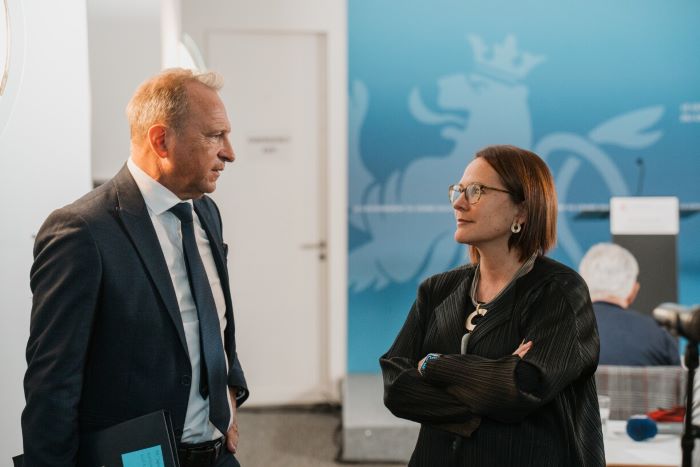
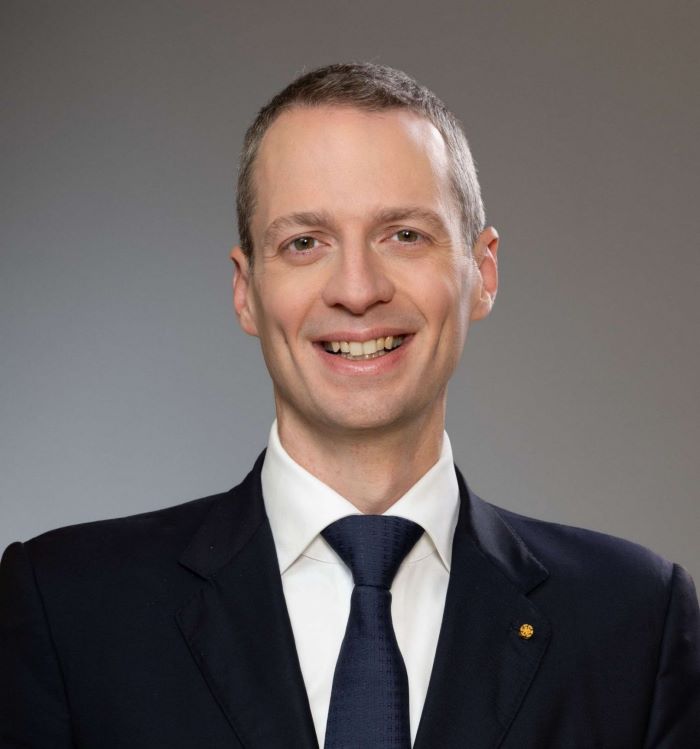
Photo – Luxembourg’s Minister of the Environment, Climate and Biodiversity Serge Wilmes