





World Cancer Day, Luxembourg’s Fight…
On 4 February, the world observed World Cancer Day, and though the date has passed, the urgency of the message remains vital for residents of Luxembourg. This annual campaign, initiated by the International Union Against Cancer and backed by the World Health Organization, is designed to spotlight one of the toughest public health challenges of our age and to remind us that cancer is not an inevitability but a battle that can be mitigated by prevention, early detection and sustained collective action.
In Luxembourg, the burden of cancer is substantial. Data from the National Cancer Registry show that between 2014 and 2021 there were 23 660 new cancer diagnoses, averaging nearly 3 000 new cases annually. During this period more than 8 400 people died from the disease. These figures reflect both the scale of the challenge and the impact on families and the health system.
The patterns seen locally mirror broader trends across Europe. Luxembourg’s age-standardised cancer incidence was estimated at about 549 new cases per 100 000 people in 2022, roughly on par with the European Union average. Among men the rate is moderately lower than the EU average, while among women it is slightly higher. Projections from the European Cancer Information System suggest that, if current patterns continue, cancer incidence in Luxembourg could increase by as much as 57 % by 2040.
Despite these sobering trends, there are also reasons for cautious optimism. Luxembourg has achieved one of the lower cancer mortality rates in the EU, with around 203 deaths per 100 000 population, some 14 % below the EU average. Improvements in early detection and advances in treatment contribute to this positive outcome.
Nevertheless, cancer remains a principal cause of death in the Grand Duchy. In 2022 tumours accounted for approximately 25 % of all deaths, with about 1 099 people dying from cancer that year alone. Lung cancer is the leading cause of cancer mortality among men followed by prostate and pancreatic cancers, while among women breast and lung cancers are predominant.
This is where prevention and screening become more than policy jargon. Luxembourg’s national screening programmes for breast and colorectal cancers invite eligible residents aged 45 to 74 to participate in free testing designed to catch disease early when treatment is most effective. For example in 2025 over 51 900 women received invitations to the mammography programme, but only around 24 000 participated. Among these, more than 2 000 abnormal results warranted further investigation. Similarly over 91 000 people were invited for colorectal screening and nearly 32 000 completed tests, with close to 1 500 positive results.
Public health advocates stress that the opportunity cost of non-participation is high. Early detection can dramatically improve survival rates for common cancers such as breast and colorectal, and broader lifestyle changes could prevent an estimated 40 % of cancers, according to European health campaigns promoting healthy behaviours including smoking cessation, moderated alcohol consumption, balanced diets and regular exercise.
World Cancer Day’s message, though delivered two days ago, remains with us as Luxembourg adjusts its national strategies. A new joint EU-funded initiative, the LLUMINAS project between Latvia and Luxembourg, aims to further audit and strengthen screening efforts over the next two years, signalling a commitment to not only measure but meaningfully reduce cancer’s toll.
For Luxembourgers this statistical picture is more than numbers. It is a call to action to know the risks, seize the tools of early detection and support policies that make prevention and treatment accessible to all. The fight against cancer transcends one day; it is a continuous collective endeavour.
Moji Danisa
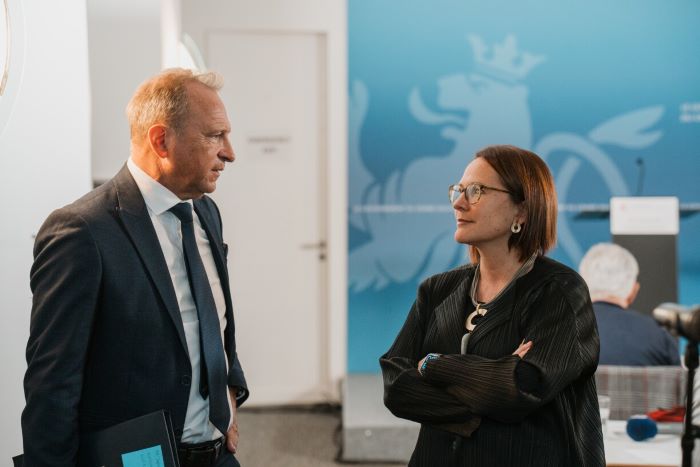
Image – Dr. Carole Bauer, President of Fondation Cancer (©Fondation Cancer)