







Nearly 20,000 Silver Coins Found in Moscow
The discovery of nearly 20,000 silver coins inside a historic merchant’s house in Moscow is more than a sensational archaeological find. It is a powerful reminder that history is often buried in ordinary places, and that the anxieties, hopes, and survival strategies of people centuries ago are not very different from those of the modern world.
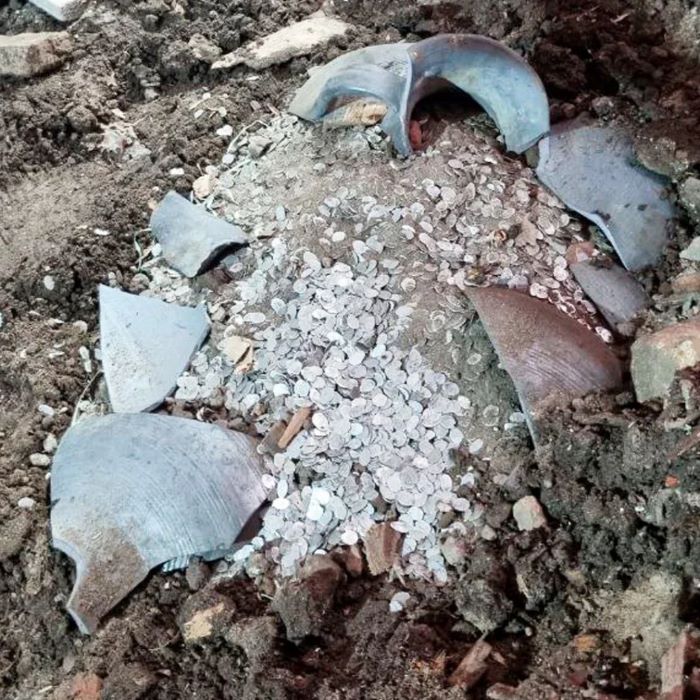
The hoard was uncovered during restoration work on the chambers of a wealthy Moscow merchant from the late 16th and early 17th centuries. The coins were hidden in a ceramic vessel on the upper floor of the house, suggesting they were deliberately concealed for safekeeping during a period of great turmoil. Their dates point to the chaotic era known as the Time of Troubles, when Russia was shaken by political instability, famine, foreign invasions, and economic collapse.
In such uncertain times, people often converted their wealth into silver and hid it, hoping to retrieve it when conditions improved. The owner of the house was a prominent merchant involved in large-scale trade and state-linked enterprises. The size of the hoard suggests not just personal savings, but possibly a concentration of commercial capital set aside during a crisis.
Coin hoards are more than treasure – they are historical records in metal form. Each piece carries the imprint of a ruler, a mint, and a political authority. During the Time of Troubles, multiple claimants to power issued their own coins, reflecting the confusion and fragmentation of the state. A study of the hoard may reveal which rulers’ currencies circulated at the time, how trade networks functioned, and how wealth was stored and protected in an age without modern banking.
One of the most haunting aspects of such discoveries is the question of why the coins were never recovered. Hoards are usually hidden with the intention of being retrieved later. When they remain buried for centuries, it often means tragedy intervened. The merchant may have died suddenly, fled during violence, lost his property to political upheaval, or seen his family line disappear. What survives is a silent testimony to interrupted lives and broken plans.
The find also carries meaning for the modern world. It is a reminder of the fragility of wealth and the instinctive human response to uncertainty. In the 17th century, silver coins were a reliable store of value. Today, people turn to cash, gold, property, or digital assets for the same sense of security. The underlying instinct has not changed: when systems feel unstable, individuals seek something tangible they can trust.
It also illustrates the economic consequences of political turmoil. Instability breeds fear, fear leads to hoarding, hoarding reduces circulation, and reduced circulation deepens economic crisis. The cycle has repeated itself throughout history, from medieval kingdoms to modern financial systems.
The Moscow hoard underscores the enduring role of precious metals. Long before banks, paper currency, or digital transactions, silver and gold functioned as universal money. Even in the present age, central banks and investors still rely on precious metals as a hedge against uncertainty.
Beyond economics, the discovery highlights the hidden layers of history beneath modern cities. Restoration and construction projects frequently uncover coins, tools, jewelry, weapons, and other remnants of earlier lives. Every major city is, in effect, an archaeological site waiting to be rediscovered.
Similar hoards have been found across the world, often buried during times of war, invasion, or economic collapse. The pattern is remarkably consistent – stability allows wealth to accumulate, crisis prompts people to hide it, tragedy prevents its recovery, and centuries later the hidden treasure resurfaces as a historical artifact.
While the coins may carry significant monetary value, their true worth lies in what they reveal about the past. They tell of the scale of merchant wealth, the reach of trade networks, and the psychological impact of political chaos. They offer insight into the everyday survival strategies of people who lived through uncertain times.
Perhaps the most striking element of the discovery is its emotional resonance. More than four centuries ago, someone carefully sealed thousands of silver coins in a pot, believing they would return for them. They never did. What remains is a quiet message from the past, a reminder that fear, hope, and the urge to protect one’s livelihood are universal human experiences. The coins are not just relics of Russian history – they are reflections of a timeless relationship between wealth and insecurity, a relationship that continues to shape the world today.
Photo – Olga Lyubimova Via Telegram