


The Limits of Power: Trump and the Battle to Shape Iran’s Future
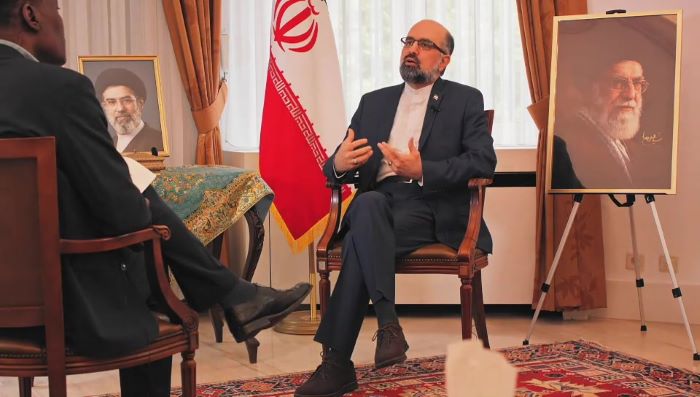
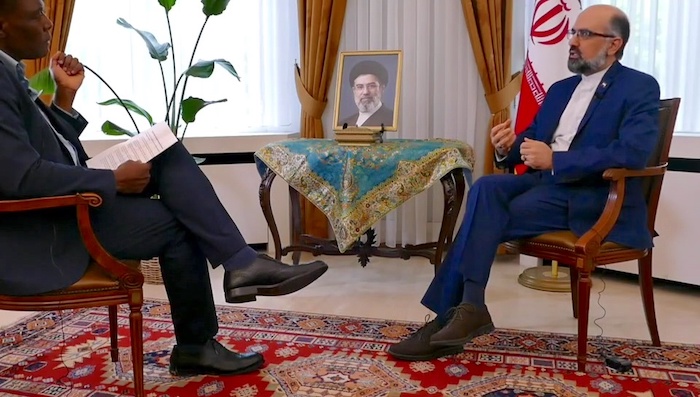
As conflict deepens across the Middle East and uncertainty surrounds the future of Iran’s leadership, a controversial assertion from United States president Donald Trump has added a new layer of tension to an already volatile situation. Trump has declared that the United States should have a role in determining who becomes Iran’s next leader, a statement that has drawn sharp reactions from diplomats, analysts and political observers around the world.
The demand raises profound questions about power, sovereignty and the limits of foreign influence in shaping the political destiny of another nation. It also highlights the increasingly blurred line between military intervention and political engineering in modern geopolitics.
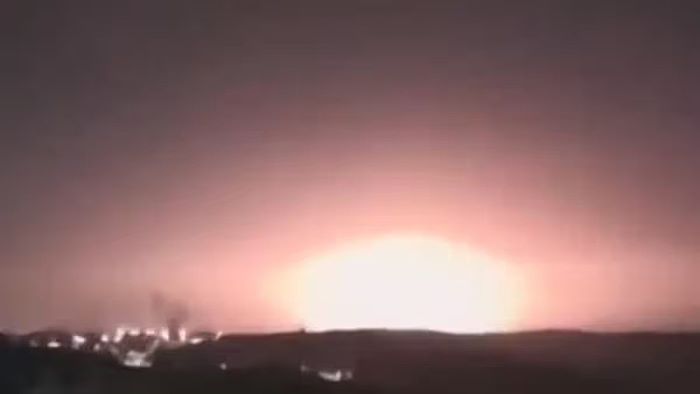
Trump’s position appears to be rooted in the belief that the current moment presents a rare strategic opening. With Iran under intense military and economic pressure and its leadership structure shaken by war, Washington may see an opportunity to influence the direction of a country that has long been one of its most formidable adversaries in the Middle East.
For decades, relations between the United States and Iran have been defined by hostility and mistrust. Since the Iranian revolution of 1979, which overthrew the Western-backed monarchy and installed a clerical regime, the two countries have remained locked in ideological and geopolitical confrontation. Iran’s regional alliances, its support for armed groups across the Middle East and its nuclear ambitions have repeatedly brought it into conflict with Washington and its allies.
Against this background, Trump’s suggestion that the United States should help shape Iran’s next leadership can be seen as an extension of a broader objective – weakening or dismantling the political order that has governed Iran for more than four decades.
Yet the reality inside Iran is far more complex than any external demand might suggest. The country’s political system contains its own mechanisms for succession. The supreme leader, the highest authority in the Islamic Republic, is traditionally selected by a clerical body known as the Assembly of Experts. This process is embedded within the framework of Iran’s constitution and is deeply tied to the country’s religious and political institutions.
From a legal standpoint, therefore, there is little basis for a foreign power to claim a role in selecting Iran’s leader. International law rests heavily on the principle of national sovereignty, which holds that each state has the right to determine its own political system without external interference.
History, however, shows that global politics often operates in a space where legal principles and raw power collide. Major powers have frequently attempted to shape political outcomes beyond their borders, particularly when strategic interests are at stake. Throughout the twentieth and twenty-first centuries, the United States and other powers have intervened directly or indirectly in leadership struggles across various regions.
Trump’s statement appears to draw from this historical precedent. Rather than presenting a legal claim, it signals a willingness to exert influence through pressure, alliances and the strategic realities created by war.
Several pathways could theoretically allow Washington to affect the outcome of Iran’s leadership transition. Continued military pressure could weaken existing power structures and create openings for rival factions. Economic sanctions might further strain the government’s authority, especially if internal divisions widen under the weight of prolonged conflict.
Support for opposition movements could also become a factor. Iran has long faced internal dissent from various political, ethnic and ideological groups. In periods of national instability, such movements can gain momentum, particularly if they believe powerful external actors are willing to back their efforts.
Diplomatic manoeuvring may represent another avenue. By working with regional allies and influential global powers, the United States could attempt to shape a broader international consensus around what a future Iranian government should look like.
Yet these strategies carry enormous risks and uncertainties. Political transitions driven by external pressure rarely unfold according to the plans of those who initiate them. History offers numerous examples in which attempts at regime change have produced outcomes far different from those originally envisioned.
Iran presents an especially difficult case. Its political institutions are deeply entrenched, and its security apparatus remains one of the most powerful in the region. The Islamic Revolutionary Guard Corps, for instance, wields significant influence across the military, economic and political spheres. In a moment of national crisis, such institutions may consolidate power rather than surrender it.
There is also the powerful force of nationalism. Even Iranians who oppose aspects of their government may react strongly to the perception that a foreign power is attempting to dictate their country’s leadership. External pressure can sometimes strengthen hardline factions by allowing them to frame internal struggles as a defence of national sovereignty.
Beyond Iran itself, Trump’s remarks risk complicating the broader geopolitical landscape. Countries with strategic ties to Tehran may view any attempt by Washington to influence the country’s leadership as a direct challenge to their own interests. Such perceptions could deepen divisions among major powers and increase the likelihood of wider confrontation.
At the same time, the turmoil within Iran may create unpredictable political dynamics that no outside actor can fully control. Leadership struggles, shifting alliances and public unrest could all play a role in determining the country’s future direction.
In this sense, Trump’s demand reflects a familiar tension in global politics – the belief that power can shape history versus the reality that complex societies rarely bend easily to external designs.
Whether the United States ultimately gains any influence over Iran’s next leader will depend less on declarations from Washington than on the evolving balance of forces within Iran itself. Military pressure, internal politics and regional rivalries will all interact in ways that are difficult to predict.
What remains clear is that the struggle over Iran’s future leadership is not simply a question of succession. It is part of a much larger contest over the shape of power in the Middle East and the limits of foreign influence in a world where sovereignty, ambition and geopolitical rivalry continue to collide.
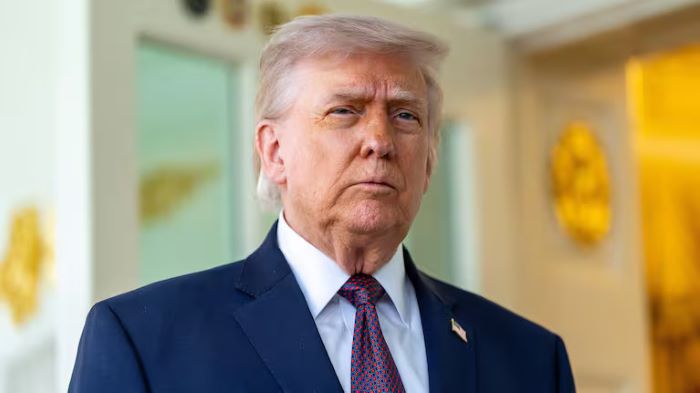
Photo – Alex Brandon AP