


EU Scrambles as Israel-Iran Conflict Escalates
As violent exchanges between Israel and Iran enter their third day, the European Union
has stepped into high alert mode, urgently seeking ways to prevent a wider regional
conflict that could send shockwaves across the globe.
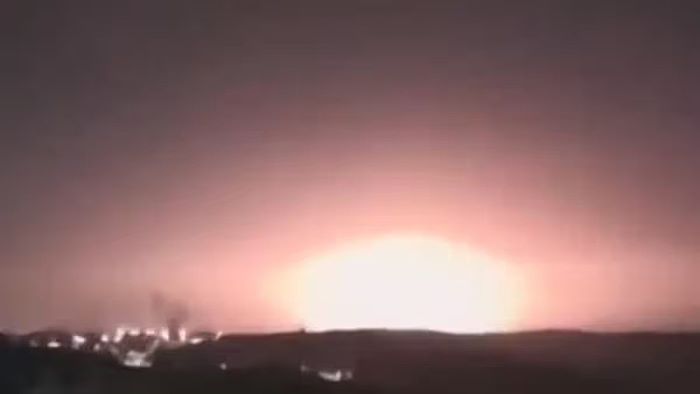
On Sunday, Iran launched another wave of missile and drone attacks targeting Israeli
territory. In response, the Israeli Air Force unleashed a series of strikes on Iranian
military and nuclear infrastructure, including locations in Tehran. Prime Minister
Benjamin Netanyahu declared that Iran would “pay a heavy price” for the deaths of
Israeli civilians, further raising the stakes in what is now one of the most dangerous
flare-ups in Middle East geopolitics in years.
Amid the growing crisis, EU foreign policy chief Kaja Kallas has called an extraordinary
meeting of the foreign ministers of the 27 member states for Tuesday. The virtual
gathering will focus on coordinating diplomatic efforts toward both Tel Aviv and Tehran.
According to diplomatic sources, the EU aims to reaffirm its call for de-escalation,
encourage adherence to international law, and reengage with efforts to resolve the long-
standing Iranian nuclear issue.
The roots of the Israel-Iran conflict run deep. Before the 1979 Iranian Revolution, Iran
and Israel maintained cordial relations. However, the Islamic Revolution dramatically
shifted Iran’s foreign policy. The new regime, led by Ayatollah Khomeini, declared Israel
an illegitimate state and labeled it an enemy of Islam. Since then, Tehran has
consistently supported anti-Israel groups such as Hezbollah in Lebanon and Hamas in
Gaza, while vocally opposing the existence of the Israeli state.
Israel, on the other hand, views Iran’s nuclear ambitions as an existential threat. It has
repeatedly stated that it will not allow Iran to acquire nuclear weapons and has carried
out cyberattacks, covert operations, and airstrikes against Iranian assets in Syria and
elsewhere.
Tensions have especially escalated since the U.S. withdrew from the 2015 Iran nuclear
deal the Joint Comprehensive Plan of Action (JCPOA) in 2018 under President Donald Trump.
Subsequent rounds of sanctions and provocations, including the assassination of Iranian General Qasem Soleimani and Iran’s alleged attacks on oil tankers; have deepened the mistrust. Iran’s continued uranium enrichment, far beyond the JCPOA limits, has only heightened Israeli fears of a nuclear-armed Iran.
The Global Stakes are frightful and the EU has emphasized that any solution must
come through negotiation. “Dialogue remains the only acceptable path forward,” said an
EU statement over the weekend. But as violence spreads, the space for diplomacy may
be rapidly shrinking.
Global Oil Markets: Iran sits near the Strait of Hormuz, through which a third of the
world’s seaborne oil passes. Any disruption could send oil prices skyrocketing,
triggering global inflation.
With both nations capable of striking sensitive facilities, the specter of a
radioactive incident, either through attack or accident, has alarmed international
observers.
The war could easily pull in proxies and allies. Hezbollah, already
active on Israel’s northern border, could ignite a multi-front war, dragging in Lebanon,
Syria, and possibly U.S. forces in the region.
A wider conflict may embolden extremist groups worldwide, creating
new security concerns for Europe, the U.S., and other Western nations.
As the world watches anxiously, the EU and other global powers are racing against time
to prevent a catastrophe that could engulf not just the Middle East, but ripple far
beyond.