









Luxembourg’s Classroom Smartphone Ban Tests Digital Generation
Luxembourg’s recent ban on smartphone use in secondary school classrooms marks a turning point in the national conversation about education, technology, and teenage well-being. As of June 2, smartphones are no longer permitted during lessons in any of the country’s state lycées, and in some schools, the policy goes even further. While the move reflects growing concerns about screen time and mental health, it also opens up complex questions about equity, digital literacy, and the role of inclusive policy-making.
The policy, long in development, is an extension of the earlier April 22 ban in primary schools and after-school care centres. Backed by Education Minister Claude Meisch and framed under the broader “screen life balance” initiative, the aim is to reduce distractions, prevent digital overconsumption, and reintroduce healthier classroom dynamics. But as schools begin implementing these restrictions—with considerable freedom in how they do so—the national debate has intensified.
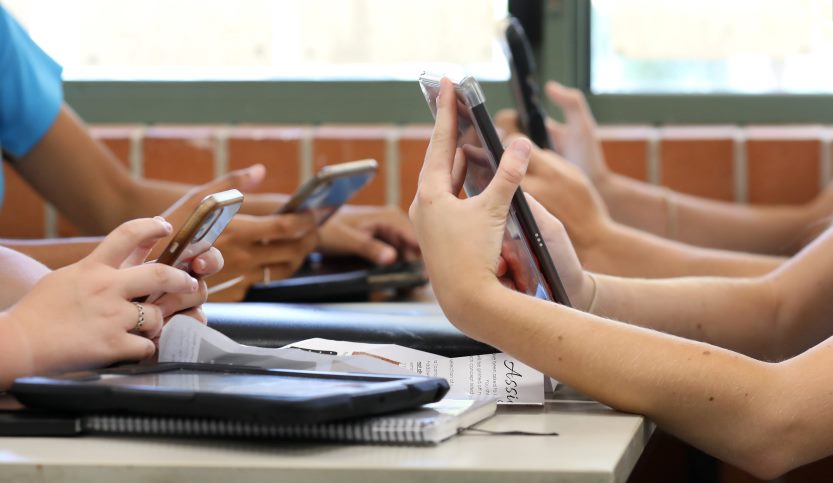
There are three levels of enforcement under the policy. The minimum standard, enforced at all 38 public secondary schools, is a ban during classroom hours. Beyond that, schools were allowed to tailor their own approaches. Five schools have opted for the most stringent version, requiring students to hand over devices at the beginning of the day. A majority of 27 schools chose intermediate measures, such as age-tiered restrictions or zone-based limitations. Only six schools adopted the basic policy, mainly those without lower-year students.
This decentralised model has led to a patchwork of rules. At some schools like Lycée technique du Centre, younger students face a full-day ban, while older students get more leniency. Others, like Lycée Aline Mayrisch, use architectural zones to enforce restrictions. The Lycée de Garçons plans to lock smartphones in magnetic pouches, while schools like Maach Lycée have designated digital-free areas and added social spaces with books, games, and a school newspaper. Clearly, while the national policy may appear rigid, its local manifestations are anything but.
However, not all reactions have been supportive. The National Student Conference (CNEL) has criticised the move, particularly the restriction of WiFi access to students under 15. They argue that students without mobile data, often due to economic constraints, are unfairly disadvantaged. Their discontent was amplified by the Ministry’s decision to roll out the policy without prior consultation with student representatives, which has led some to accuse the Ministry of bypassing a participatory democratic process.
Moreover, there is a wider concern among educators and parents that the policy may conflate two separate issues: discipline in the classroom and the broader question of digital literacy. A working group at one of the European Schools, formed in spring 2024, has tried to address this nuance. Supported by the parent association APEEEL2, the group acknowledged that while regulation is necessary, it should not come at the cost of technological inclusion, especially for students with specific educational needs who rely on digital tools. There’s also growing awareness that some of the very students targeted by the bans might require access to information, assignments, or language translation services that smartphones uniquely provide.
The Ministry’s response has been largely preventive and protective. Stronger content filters and restricted access to educational WiFi networks are now in place, and exceptions have been made for medical or educational reasons. At the same time, the Ministry insists that iPads will remain central tools in the classroom, particularly for younger students who need to build digital competencies. But the contradiction remains: devices that connect students to knowledge are simultaneously seen as threats to their development.
Still, the heart of the matter lies not just in what devices do, but how they’re used—and by whom. The Ministry justifies the ban by citing research linking excessive screen time to poor mental health, impaired sleep, and weakened social skills. While these claims are substantiated by growing bodies of evidence, they don’t necessarily account for the diversity of student experiences or the importance of digital fluency in a modern economy.
Some schools have recognised this. The chill-out zones at Maach Lycée, or initiatives like “phone-free Wednesdays” at Lycée technique de Lallange, reflect a softer, more integrative approach. These schools aren’t just banning phones; they’re re-imagining school spaces to fill the social and cognitive voids that phones often occupy. That is perhaps the key, success lies not in subtraction but in substitution. You can’t remove something central to a teen’s life without offering a meaningful alternative.
At its best, the new policy is a bold effort to reclaim attention spans and rekindle interpersonal relationships in schools. At its worst, it risks widening inequality, isolating students from needed support, and enforcing a top-down solution to a complex, evolving problem. The lack of early consultation with students has already strained credibility in some quarters, and unless dialogue deepens, resistance may harden.
Ultimately, Luxembourg’s smartphone policy sits at the intersection of education, health, and justice. It invites schools to become laboratories for testing what digital balance looks like in real life, not just policy. But it also challenges institutions to go beyond bans and embrace broader reforms—rethinking school culture, modernising pedagogical tools, and including every voice in the process.
Disconnecting from smartphones is not inherently regressive. Done well, it can be liberating. But it must be accompanied by connection—between students and teachers, between home and school, and between policy-makers and those they serve. Only then can Luxembourg claim not just to be banning phones, but building a better school environment in their absence.