


Europe Pushes for Diplomacy Amid Rising Tensions Over Iran’s Nuclear Program
With tensions in the middle East keeping leaders on the verge, top diplomats from
Europe and the United Kingdom are set to hold high-stakes nuclear talks with Iran in
Geneva, hoping to avert a wider conflict in the Middle East. The meeting, scheduled for
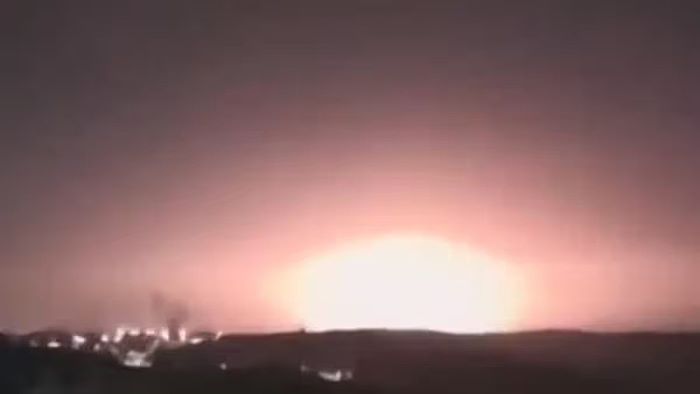
June 20, comes at a time when Israel’s bombing campaign against Iranian nuclear
facilities has dramatically escalated tensions and with U.S. President Donald Trump
weighing whether to militarily join Israel’s offensive.
The European delegation will include EU foreign policy chief Kaja Kallas, along with
British Foreign Secretary David Lammy, France’s Foreign Minister Jean-Noel Barrot,
and Germany’s Johann Wadephul. They are expected to meet with Iran’s foreign
minister, Abbas Araghchi, in what officials are calling a last-ditch effort to de-escalate
the crisis and bring Tehran back to the negotiating table.
Araghchi confirmed the Geneva meeting in a statement to Iranian media agency IRNA
on June 19, stating, “We will meet with the European delegation in Geneva on Friday.”
The meeting follows a week of intense diplomatic back-and-forth, including several
phone calls between Araghchi and U.S. special envoy to the Middle East, Steve Witkoff.
According to three Western diplomats who spoke to Reuters on condition of anonymity,
those conversations have focused on finding a diplomatic off-ramp before the region
plunges into a broader war.
Iran, however, has drawn a clear red line. Araghchi reportedly told international
mediators that Tehran would not consider returning to negotiations over its nuclear
program unless Israel halts its ongoing military strikes. Since the first Israeli air raids
on June 13, Iran has retaliated with missile strikes of its own, some of which have
landed deep within Israeli territory, intensifying the cycle of violence.
European officials, speaking separately to Agence France Presse (AFP), confirmed the Geneva talks and
stressed their importance. UK Prime Minister Keir Starmer echoed the growing sense of
urgency, saying on June 19 that while Britain fully recognises Israel’s right to defend
itself, “the principle is that we need to de-escalate this.”
“It’s better dealt with by way of negotiations than by way of conflict … The risk of
escalation across the region is obvious,” Starmer said, warning of the potentially
devastating consequences of a prolonged military confrontation.
French Foreign Minister Barrot offered a similar perspective: “We have expressed our
willingness to take part in negotiations aimed at securing from Iran a lasting rollback of
its nuclear program and its ballistic missile program. Negotiation remains today
the only way to achieve a lasting rollback.”
The proposed Geneva meeting aims to lay the groundwork for a new framework that
would allow international inspectors unrestricted access to Iran’s nuclear sites. A
second point of discussion is Iran’s growing arsenal of ballistic missiles, which Western
powers hope to see reduced as part of any future agreement.
The backdrop to the current standoff is a familiar one: the collapse of the 2015 Joint
Comprehensive Plan of Action (JCPOA), widely known as the Iran nuclear deal. In
2018, then-President Trump withdrew the United States from the agreement, a decision
that reignited tensions and prompted Iran to ramp up its uranium enrichment activities.
While Iran maintains that its nuclear program is purely civilian in nature, its
enrichment levels have approached weapons-grade, though still fall short of the 90
percent needed for a warhead, according to AFP
Earlier this year, the Trump administration had initiated indirect talks with Iran in an
attempt to revive the diplomatic track. However, those efforts were derailed just days
before a planned sixth round of negotiations, when Israel launched a surprise military
campaign against Iranian nuclear sites.
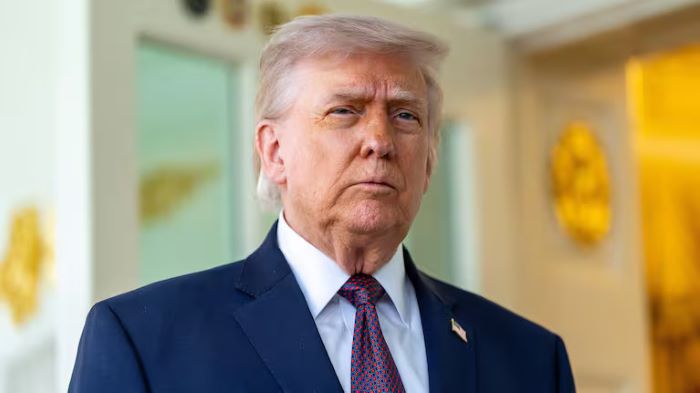
President Trump has since suggested that the door to diplomacy remains open, albeit
narrowly. On June 19, he stated that a decision on whether the U.S. would join the
conflict militarily would be made “within the next two weeks.”
“Based on the fact that there’s a substantial chance of negotiations that may or may not
take place with Iran in the near future, I will make my decision whether or not to go
within the next two weeks,” Trump said in a statement read by White House press
secretary Karoline Leavitt on June 18.
In the meantime, U.S. military assets have been mobilised to the region, a move widely
interpreted as preparation for possible involvement should diplomacy fail.
Across the Atlantic, British Foreign Secretary David Lammy was in Washington on June
19 for discussions with U.S. Secretary of State Marco Rubio, with Iran dominating the
agenda. The U.S. State Department confirmed the bilateral meeting, underscoring the
urgency of coordinating Western responses.
Not everyone, however, is convinced that diplomacy will prevail. Israeli Prime Minister
Benjamin Netanyahu has made clear that his government views the current offensive as
essential to preventing Tehran from acquiring nuclear weapons. Speaking to reporters,
he said the campaign was launched to “ensure Israel’s survival,” dismissing
international calls for restraint.
As the Geneva meeting approaches, the world watches anxiously. At stake is not just
the fate of the Iran nuclear program, but the stability of the entire Middle East and
perhaps, the direction of global security in the coming decade. Whether diplomacy will
be given a final chance, or whether the region plunges further into chaos, may be
decided behind closed doors in Geneva.