






Luxembourg and France Align on EU Investment Union Push
The European Union’s long-stalled ambition to build a unified capital market is showing fresh signs of life, as Luxembourg and France close ranks on a deal that could finally unlock the EU’s rebranded Savings and Investment Union. The convergence between Paris and Luxembourg, long seen as ideological and institutional opponents on this file, suggests a new chapter for a plan that has languished for nearly a decade due to competing visions of financial sovereignty and regulatory oversight.
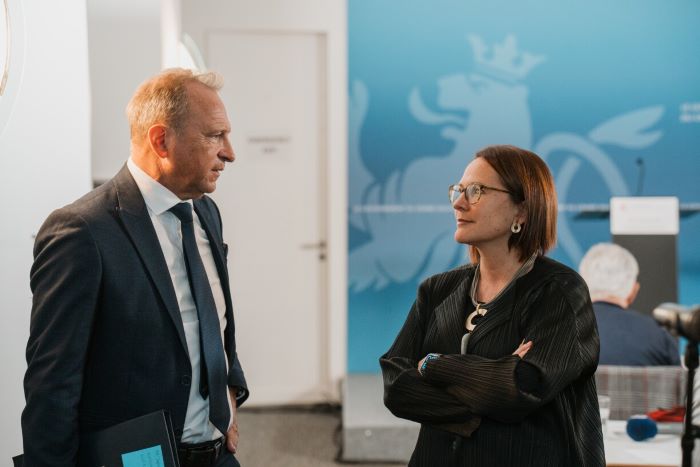
On Wednesday, Luxembourg’s Finance Minister Gilles Roth hosted EU Commissioner for Financial Services, Maria Luís Albuquerque, in a high-level meeting in the Grand Duchy. The talks produced cautious optimism, with both parties describing the dialogue as “more constructive than in the past.” Roth acknowledged a shift in tone, and Albuquerque emphasized the EU’s commitment to harmonised financial supervision, while carefully steering clear of promising a single centralised authority.
The Savings and Investment Union, formerly known as the Capital Markets Union (CMU), was first proposed in 2015 by the European Commission under President Jean-Claude Juncker, a former Luxembourg prime minister. The central idea behind the initiative was historically rooted in the recognition that Europe’s fragmented financial markets were limiting the capacity of small businesses and innovative startups to access funding outside traditional banking channels. The 2008 global financial crisis had exposed the risks of over-reliance on banks, leading to a push for broader, deeper capital markets.
Despite early enthusiasm, the CMU ran into political resistance. Countries like France pushed for centralising oversight under the Paris-based European Securities and Markets Authority (ESMA), aiming to create a more integrated supervisory framework similar to that of the United States’ SEC. Meanwhile, smaller financial centres—most notably Luxembourg—argued for retaining national supervision, citing concerns about losing control over local market nuances and the risk of regulatory overreach. These disagreements caused years of gridlock.
Luxembourg’s position has always been central to this debate. As one of the EU’s premier financial hubs, managing over €5 trillion in assets under management, the Grand Duchy plays a vital role in European capital markets. Its expertise in fund administration, wealth management, and cross-border financial services has long made it wary of initiatives that might centralise oversight in a way that would undermine its regulatory autonomy or disrupt its competitive edge.
Yet recent developments point to a pragmatic shift. In March 2025, Luxembourg Prime Minister Luc Frieden and French President Emmanuel Macron declared that their standoff had ended, signalling that both sides now view the success of the Union as a shared priority. At the EU level, this was a notable breakthrough. The reconciliation suggests a broader recognition that in a world shaped by geopolitical instability, green and digital transitions, and global competition for capital, the EU cannot afford fragmented capital markets.
For Luxembourg, participation in this Union offers both opportunities and risks. While its financial sector could benefit from more seamless cross-border investment flows, it also faces the challenge of adapting to more standardised licensing and reporting requirements. Roth, however, struck a conciliatory tone on this point, saying, “If licensing requirements are tightened, Luxembourg will of course adapt.” His comments indicate a willingness to align with more uniform rules if it results in a more effective and competitive European capital market.
The Savings and Investment Union initiative aims to reallocate Europe’s vast pool of private savings—estimated at over €30 trillion—into productive investment, especially in innovative sectors, green infrastructure, and small business financing. One of the biggest challenges remains the regulatory fragmentation that deters cross-border capital movement. Commissioner Albuquerque listed persistent obstacles such as divergent interpretations of EU rules, tax-related disincentives, and mistrust among national regulators. “We need to reduce administrative burdens, not create new ones,” she said, underscoring that success will rely more on coordination than centralisation.
The Luxembourg–France deal signals growing momentum behind the project. It reflects a broader European shift towards strategic autonomy in financial markets—an imperative made clearer by recent global shocks such as the COVID-19 pandemic and the economic repercussions of the war in Ukraine. As global competition for green investment accelerates, EU officials argue that a single market for capital is no longer optional, but urgent.
The current iteration of the initiative departs from earlier proposals that leaned heavily on institutional centralisation. Instead, the focus is on harmonised rule-making, supervisory cooperation, and interoperability of market systems. The Commission is expected to unveil a new set of legislative proposals before the end of the year, and while technical challenges remain, the political space for compromise appears to be growing.
The Savings and Investment Union is still far from a finished product. Its success will depend on the willingness of all EU member states—not only Luxembourg and France—to cede just enough control to allow capital to flow freely while maintaining investor protections. But after nearly a decade of impasse, the Union may finally have the political momentum it needs to evolve from aspiration to action.
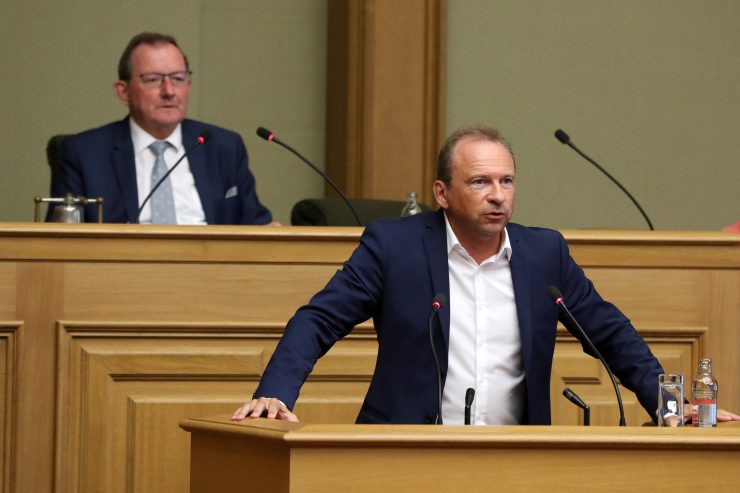
Photo – Luxembourg’s Finance Minister Gilles Roth