








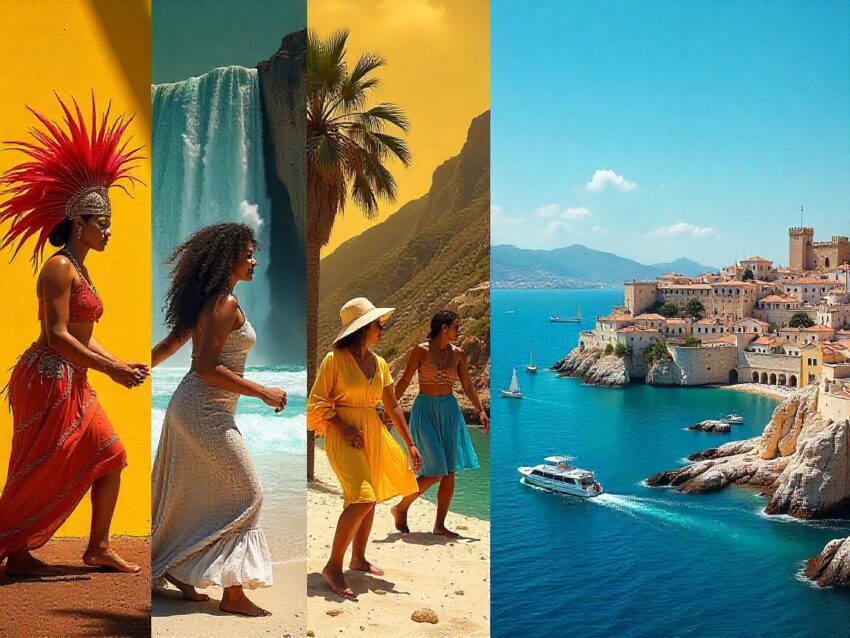
Tourism Titans Rise: Brazil, Gambia, Chile and Others Break Records, U.S. Struggles
A global tourism shake-up is in full swing and the United States is losing ground.
Countries once seen as underdogs, including Brazil, Paraguay, Chile, The Gambia,
North Macedonia, and Malta, are smashing records and rewriting the rules of global
travel. Fueled by affordability, authenticity, and a hunger for new experiences, travelers
are charting new paths and leaving traditional destinations behind.
Brazil is the latest nation to join the ranks of tourism’s breakout stars. The country has
recorded a staggering 48% surge in international arrivals, driven by a weak currency,
cheap flights, and an expanded appetite for Brazilian culture beyond Carnival. Cities like
Rio de Janeiro and Salvador are buzzing all year round, no longer just seasonal stops
on the tourist map.
But Brazil isn’t alone. Paraguay has stunned the industry with a 53% jump in visitors,
thanks to its untamed jungles, hidden waterfalls, and colonial charm. Without the need
for flashy advertising campaigns or billion-dollar budgets, the country is becoming a
magnet for travelers looking for raw, off-the-grid adventures.
Meanwhile, Chile continues its ascent as South America’s premier destination for
extreme landscapes and sustainable tourism. From the Atacama Desert to the glaciers
of Patagonia, the country’s bold bet on eco-tourism and digital nomad-friendly policies
has paid off with a 48% rise in visitors.
In West Africa, The Gambia has emerged as a surprise favorite. Tourist arrivals jumped
by 46% as visitors flocked to its warm beaches, welcoming communities, and
grassroots experiences. With affordable packages and a genuine local charm, The
Gambia is building momentum without the need for luxury gimmicks.
Across Europe, smaller nations are finding big success. North Macedonia, with a 22%
increase, is captivating visitors with Lake Ohrid’s scenic beauty, medieval towns, and
ultra-low travel costs. Lithuania and Latvia, once overlooked, are gaining traction with
cultural depth, culinary innovation, and nature tourism, while Malta continues to punch
above its weight with a 19% rise in visitors drawn to its historic sites and boutique
appeal.
Finland is also having a moment, with a 15% increase in tourism boosted by its unique
“Work from the Arctic” initiative, enticing remote workers to trade their office desks for
co-working cabins under the Northern Lights.
And then there’s Japan. Already a top-tier destination, the country has seen tourist
spending rise by 28.4% in early 2025. A weaker yen, combined with unforgettable
experiences, from cherry blossoms to bullet trains to gourmet street food, has turned
Japan into a travel juggernaut.
In stark contrast, the United States is crawling forward. While flights are full and resorts
are open, international visitor growth is tepid at just 3–5%. Overpriced cities, political
polarization, and increasingly generic attractions have left American tourism struggling
to inspire.
Travelers in 2025 are clearly casting their votes, with their passports. They’re choosing
destinations that offer real value, deeper cultural engagement, and unfiltered adventure.
The new winners of global tourism aren’t the biggest or most marketed, they’re the
boldest, the smartest, and the most in tune with today’s evolving traveler.
If the U.S. fails to adjust to this new reality, it may soon find itself permanently left
behind on the global tourism map.