




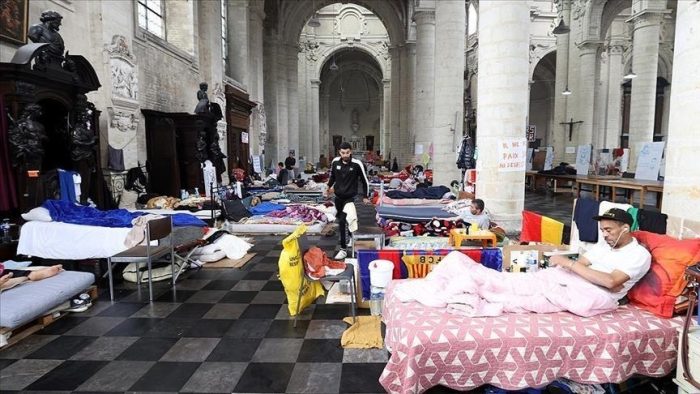
Belgium’s Hunger Strike: A Moral Weight of Sacrifice
As a group of activists in Ghent began a five-day hunger strike on Monday, demanding
Belgium sever all ties with Israel, the potent, if often symbolic, act of self-deprivation
once again takes center stage in the fraught landscape of international protest. While
the immediate physical impact will be felt by the strikers, the true measure of their action
will be its capacity to move the needle on Belgian foreign policy, spark wider European
solidarity, or merely amplify a cry for justice in a conflict increasingly defined by global
division.
The activists, spearheaded by figures like Father Lud Vandeput of the Saint Michael
Movement, are not merely enduring physical hardship; they are banking on the moral
weight of their sacrifice. Vandeput articulated their core conviction: “taking action
against Israel’s continued genocide in Gaza is a moral duty.” This framing elevates their
demands beyond typical political lobbying, aiming instead to prick the conscience of a
nation. Their specific demands – a complete severing of military, diplomatic, and
economic ties with Israel, are sweeping, reflecting the depth of their outrage over the
humanitarian catastrophe unfolding in Gaza since October 7, 2023.
The efficacy of a hunger strike in achieving such ambitious political outcomes is
historically varied. On one hand, it can galvanize public attention, forcing media
coverage and placing uncomfortable pressure on political leaders. The stark image of
individuals risking their health for a cause can humanize distant conflicts and resonate
with a segment of the public. The Ghent strike follows a similar five-day protest in
Brussels just weeks prior, suggesting a coordinated effort to sustain momentum and
amplify the message within Belgium. The activists’ stated hope that their strike will
“inspire similar protests in other European cities” reveals a strategic ambition beyond
national borders, aiming for a ripple effect across a continent grappling with its own
stance on the Israel-Palestine conflict.
However, the path from moral protest to significant policy shift is often arduous.
Governments, particularly in democratic nations, tend to be resilient to direct pressure
from such actions, often balancing public sentiment with complex geopolitical
considerations, economic ties, and established diplomatic frameworks. Belgium, like
many European Union members, maintains intricate relationships with both Israel and
Palestine, and any move to sever ties entirely would have profound diplomatic and
economic repercussions, potentially isolating Belgium within the EU and on the global
stage.
The hunger strike, therefore, operates on multiple levels. It is an act of profound
personal commitment, a public declaration of moral outrage, and a calculated attempt to
disrupt political inertia. Whether it achieves its direct policy goals for Belgium remains
uncertain, given the formidable political and economic obstacles. Yet, its potential to
intensify public debate, inspire further grassroots activism, and contribute to the growing
international chorus demanding accountability for events in Gaza cannot be
understated. In an era where traditional diplomacy often seems gridlocked, the hunger
strike represents a raw, visceral appeal for justice, banking on the power of suffering to
catalyze change.