








From Monkey Chants to Match Cheers
Joël Kitenge’s life reads like a screenplay about grit, transformation, and destiny. Born in Kinshasa in November 1987, he arrived in Luxembourg at age four with his boxer father, chasing a better life. Linguistically gifted, he grew up trilingual in a country he barely remembers immigrating to. Football wasn’t in his blood—yet it changed everything.
A schoolyard goalkeeper by chance, Joël Kitenge found his calling the day a classmate got injured. Thrown into goal, his fearless energy—“jumping around like a monkey,” as he puts it—caught the coach’s eye, and he was asked to stay. He spent years between the posts before his physical strength and commanding presence on the pitch saw him shifted into central defense, where he modeled his game on Spain’s Carles Puyol. As his versatility grew, a coach moved him into midfield—a role that demands far more than stamina. It tests a player’s ability to channel energy, control movement, dictate rhythm and apply vision across a full 90 minutes. Kitenge rose to that challenge and thrived. Eventually, he was pushed further upfield, where he led the attack with equal tenacity for both club and country.
Kitenge’s ascent through Luxembourgish clubs is a testament to his adaptability. After starting at Schifflange, he navigated early moves abroad, playing in France (Villefranche) and Germany (Emmendingen). He played in the Netherlands with second-division side Lienden FC under Coach Hans Kraay and even received an invitation to join AZ Alkmaar from none other than Louis van Gaal. But that opportunity slipped away when, in July 2009, Van Gaal was released from his contract with AZ—just after guiding them to the Dutch title—to take over at Bayern Munich following the dismissal of Jürgen Klinsmann.
Kitenge eventually returned home to Fola Esch, where between 2008 and 2012 he found his rhythm, making 93 appearances and contributing goals in nearly a quarter of them. A move to F91 Dudelange followed, culminating in a national title win in 2014.
It was at age 17 in 2005 that Luxembourg first called him to the national team. He eventually earned 29 caps and scored twice before integrating himself into Bundesliga-style club football . Standing alongside local stars like Miralem Pjanić, Joël brought a boxer’s discipline to a national side known for punching above its weight.
He speaks fiercely about two kinds of African players: those who succeed with pure heart and will, and those who pair natural talent with tactical intelligence. He cites Sadio Mané as a visionary athlete and Didier Drogba as a physical striker—role models that shaped his own evolution. That understanding propelled him from raw attacker to nuanced number 10, orchestrating play and vision as much as pressing defenses.
Kitenge faced the ugly side of bigotry: monkey chants, racist taunts, “go back to your country,” “eat your banana.” These moments hurt—“you cry, you want to hit someone”—but he absorbed them. His response: let the pitch speak. “The same people who insult you are the ones who come after and say, ‘you were great.’” He played for respect, not revenge.
Success didn’t come without sacrifice. At 28 he walked away from Luxembourg’s top leagues to open a restaurant in Baschleiden. The decision weighed heavily—“the hardest of my career”—but he was ready to give back to local football rather than chase personal glory. He returned to the field at amateur clubs: Grevenmacher, Useldange, Rumelange, Itzig, Schengen and Munsbach, carving out a new legacy as mentor and community pillar
At Hesperange’ Commune, where he works now in the town’s administration, he trains young players, giving back what he learned. Local press hail him as “patrimoine national,” a public character admired for heart not fame. He relishes disrupting the rhythm of former teammates in cup matches, still lighting up the crowd with intelligent movement and energy even as pace fades.
His national team highlights include playing at De Kuip, Rotterdam’s 50,000-seat coliseum, where facing Seedorf and co. as a Luxembourg trained striker meant more than competition—it was catharsis. Against France in Metz, Mexican-style crowd noise and Marseille’s Mexès calling him “solid” stoked his confidence. “They’re just men,” he reminds. “You put your body, your hunger, your rage—you deserve to be there.”
Kitenge gives voice to a migration story that avoids clichés. He came not to conquer but to build—a multilingual child, a boxer’s son, a goalkeeper who became a national team forward, then a restaurateur, coach, municipal worker. His life spans Kinshasa to Luxembourgish hearts, mirroring Luxembourg’s own metamorphosis into a multicultural football nation.
Now 37, retired from international play, his career has become a roadmap for young immigrant players in Luxembourg. He stands for resilience: overcome racism, adapt to culture, forge identity through sport and community. He’s proof that football is about more than fame—it’s a language that builds bridges. And that the real win is being remembered not just for goals, but for purpose.
By David Danisa CityNews
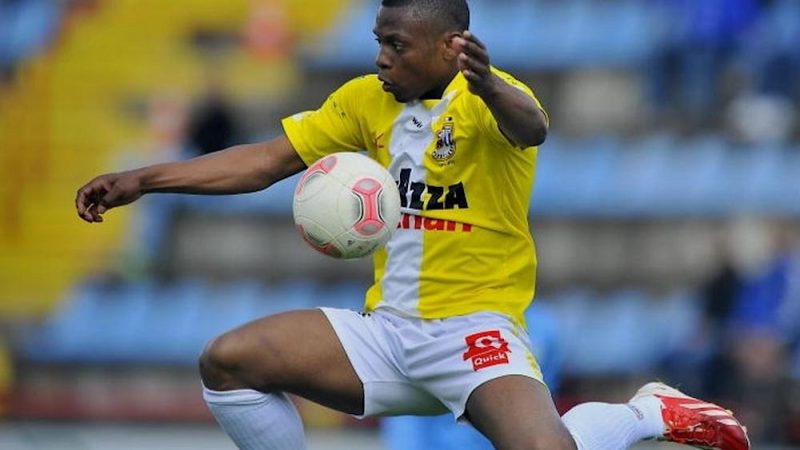
Photo – Joel Ngoy Kitenge – ex Luxembourgish international footballer. Photographer, Ben Majerus