






Luxembourg Boosts Defense R&D with Third Call for Projects
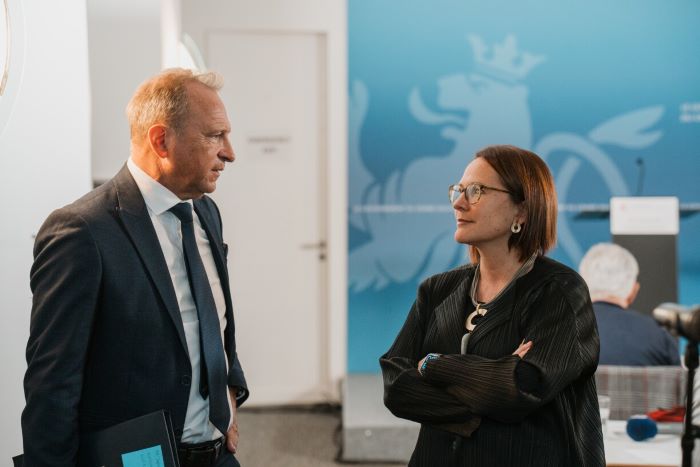
Luxembourg has launched its third annual call for defense-related research and development projects, a move that highlights the country’s evolving strategy to merge economic opportunity with national and European security goals. On 10 July, Minister of Defense Yuriko Backes, Minister of the Economy, SMEs, Energy and Tourism Lex Delles, and Minister of Research and Higher Education Stéphanie Obertin announced the initiative, opening the door for proposals from companies and research institutions.
Running from 15 September to 12 December 2025, this call is supported by a budget of €11.25 million. It specifically targets projects focused on purely defense applications rather than dual-use technologies. The priority fields include advanced materials, cybersecurity, space technologies, the circular economy, autonomous systems and artificial intelligence. Yet there is no strict thematic framework, which means innovation across a broad range of ideas is welcome.
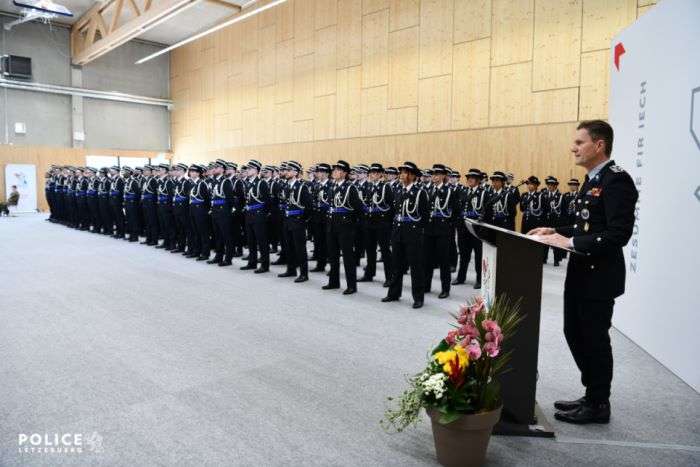
This initiative sits at the intersection of two strategic ambitions. On one side, Luxembourg is taking concrete steps to strengthen its defense posture as a NATO member. On the other, the country sees defense R&D as a sector with strong potential to drive investment, create high-value jobs and integrate local companies into international supply chains.
Luxembourg’s Directorate of Defense, the Ministry of the Economy, the Ministry of Research and Higher Education, along with the Luxembourg National Research Fund (FNR) and Luxinnovation, all collaborate to steer this program. Their efforts are designed not only to encourage local firms to pivot toward defense-related innovation, but also to position Luxembourg as a credible partner in the European defense industry.
Rebecca Damotte, Defense Innovation & Technology Advisor at Luxinnovation, described the advantages clearly. “Through this joint call, interested companies and research centers have the opportunity to validate the defense relevance of their technologies by securing national support for an initial project backed by the Directorate of Defense. It also opens the door to participation in the EU’s defense value chain, contributing to strengthening the European Union’s defense capabilities.”
For many firms and research institutes, participation is about more than national pride. Being selected for funding can offer a host of tangible benefits. It means new streams of revenue, possible collaborations with European partners and increased visibility with government buyers and major defense contractors. There is also the chance to later access EU-level defense programs under initiatives such as the European Defense Fund, which further multiplies financial and market prospects.
However, this approach inevitably raises questions. Is Luxembourg’s emphasis on defense R&D primarily about supporting NATO objectives or about diversifying and growing its economy? In reality it appears to be both. As global security risks intensify, NATO states are under pressure to boost capabilities. Luxembourg, with a modest national military budget and small army, has opted to play its part by investing heavily in innovation, space systems and secure communications.
At the same time, there is a clear economic rationale. Defense and security industries often deliver robust economic multipliers. They can create skilled employment, support local manufacturing and help small states attract foreign expertise and capital. For Luxembourg, which has already leveraged its reputation in financial services and space mining, defense is a logical extension into another high-technology sector.
Yet whether this is sustainable as a major pillar of economic growth is open to debate. Defense R&D often requires long lead times and carries the risk that prototypes never reach production. Even if Luxembourg-based factories scale up to produce advanced materials or systems, their local armed forces are too small to absorb large quantities. Luxembourg’s defense budget, while growing, remains limited by European standards. This means any significant output from these projects would have to find buyers abroad, placing Luxembourg’s firms into the competitive and politically sensitive global arms market.
Nonetheless, officials argue that the primary benefit is precisely this integration into broader European programs. By demonstrating expertise and hosting cutting-edge projects, Luxembourg’s companies can secure roles as suppliers to large EU or NATO-led procurement initiatives. This not only brings economic rewards but also ties Luxembourg more closely into continental security structures.
Luxinnovation will play a crucial part in making this call accessible. It will soon launch an online platform for submissions and host two webinars on 22 September and 12 November to explain details to interested businesses and research teams.
Luxembourg’s pursuit of defense R&D is therefore not about immediate military needs. It is a calculated effort to build industrial capacity, support highly skilled jobs and carve out a secure niche in Europe’s evolving security architecture. Whether this approach delivers sustained economic benefits or becomes overly reliant on external demand remains to be seen.
David Danisa CityNews