








Germany’s Offshore Hydrogen Project Could Revolutionize Clean Energy Production
Germany has launched a pioneering research initiative to produce hydrogen directly
from seawater at offshore wind farms, a breakthrough that could transform global clean
energy production. The project, called SalYsAse, is being led by the GEOMAR
Helmholtz Centre for Ocean Research in Kiel, in partnership with Kiel University of
Applied Sciences and technology company Element22. Funded by the German Ministry
of Research, the three-year project has secured €733,000 (approximately $860,000) in
backing.
The innovation at the heart of SalYsAse lies in its use of marine bacteria as biocatalysts
to prevent corrosion during the electrolysis process, a major challenge when working
with untreated seawater. Traditionally, electrolysis requires purified or desalinated water,
a process that is both energy-intensive and expensive. By using these naturally
occurring microorganisms, the researchers can bypass desalination altogether,
significantly cutting costs and boosting energy efficiency.
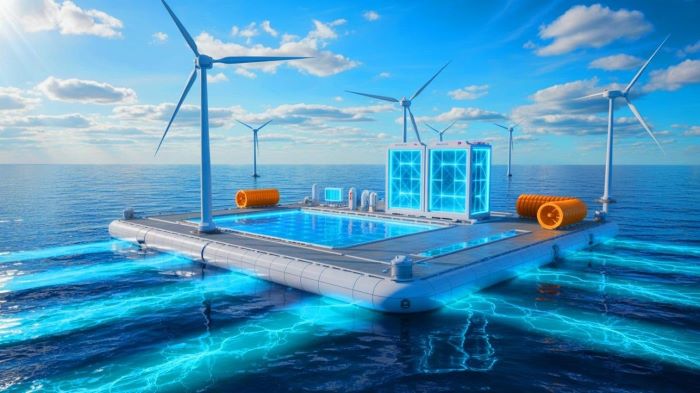
The hydrogen will be produced directly at offshore wind farms using surplus electricity
that would otherwise go unused due to grid limitations. This strategy addresses two
major bottlenecks in the renewable energy sector – the curtailment of excess wind
power and the high cost of hydrogen production. It also eliminates the need for
transporting electricity to shore before conversion, offering a more localized and circular
production model.
The advantages of this research are substantial. If scalable, the system could enable
continuous, low-cost hydrogen generation in coastal regions around the world.
Countries with abundant offshore wind resources, such as the UK, Denmark, the
Netherlands, Japan, and even parts of Africa, could replicate the model to support their
green hydrogen strategies. This has the potential to accelerate the global transition
away from fossil fuels, particularly in hard-to-decarbonize sectors like shipping, aviation,
and heavy industry.
Moreover, the German project could spur international collaboration in marine
biotechnology and sustainable energy, opening the door to further innovations that
blend ocean science with climate solutions. With hydrogen increasingly seen as a
cornerstone of future energy systems, SalYsAse represents a bold step toward cleaner,
more adaptable production methods.
As nations race to meet climate targets, Germany’s offshore hydrogen initiative could
serve as a blueprint for the rest of the world, demonstrating that with the right mix of
science, technology, and policy, green energy innovation is not only possible, but
already underway.
Image – Illustration of a floating platform harnessing wind power to produce clean hydrogen fuel, generated by artificial intelligence.