







Ethiopia’s Living Landscape Celebrated in Luxembourg
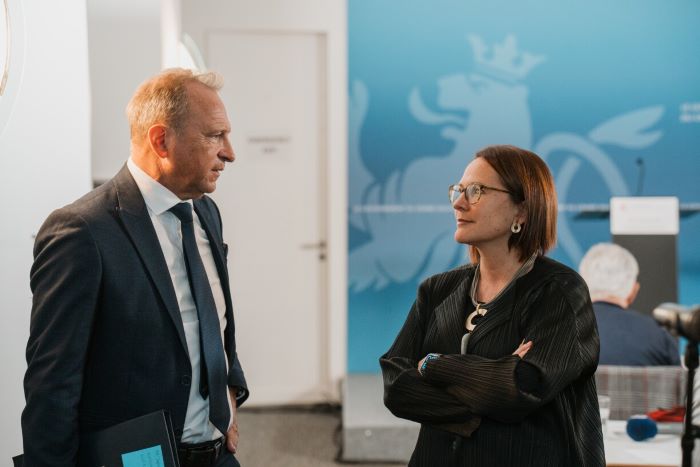
On the evening of 22 July, 2025, the National Museum of Natural History in Luxembourg became a window into Ethiopia’s lush ecological heritage, as botanists, diplomats, and cultural advocates gathered to mark a centenary of both scientific richness and historical diplomacy. The conference was organized by the Consulate of Ethiopia and the NGO Regards d’Enfants d’Éthiopie, in collaboration with the museum itself. Serving as consultant and project solicitor was Mme. Henoke Courte, the Honorary Consul of Ethiopia to Luxembourg. The event formed part of broader celebrations commemorating 100 years since the birth of Crown Prince Le Ras Teferi Mekonen, later Emperor Haile Selassie, who famously made a financial donation to the city of Luxembourg following his 1924 diplomatic visit.
Opening the evening, museum botanist Thierry Helminger introduced Odile Weber, herbarium specialist and longtime researcher of Ethiopian biodiversity. Ethiopia, she explained, harbors over 6,500 plant species, with more than 12 percent found nowhere else. This astonishing variety has been shaped not just by geography and climate, but by centuries of traditional agricultural wisdom — like the intercropping of maslins, a resilient blend of barley, wheat, and rye.
Weber’s presentation traced the roots of Ethiopia’s ecological resilience, with the Gullele Botanical Garden in Addis Ababa serving as a symbol of conservation and community-driven research. She highlighted the food-security promise of Enset — the “false banana” sustaining over 20 million Ethiopians — and the untapped scientific potential it holds. Field anecdotes revealed how children, farmers, and researchers are all stewards of this living legacy.
His Excellency Eshete Tilahun, Ethiopia’s Ambassador to Belgium, Luxembourg, and the EU, praised Ethiopia’s ongoing leadership in reforestation and biodiversity protection, from the cloud forests of Yayu to the alpine heights of Bale. As new species are still being discovered — including rodents in remote forest zones like Chingawa — Ethiopia’s environmental story continues to evolve.
Weber is now preparing for a new chapter in her engagement with Ethiopia through TheMuseumsLab, an ambitious knowledge-exchange initiative linking African and European museum professionals. As a 2025 participant, she will travel to Addis Ababa to join peers from both continents in rethinking the role of museums beyond traditional collections. Her focus will go beyond plants and ecosystems to engage with questions of restitution, community memory, and how cultural and scientific institutions can serve as bridges — not just repositories.
Guided by the principle that objects and ideas gain power through dialogue and shared stewardship, Weber’s upcoming sojourn will involve collaborative work with institutions like the Yimtubezina Museum and Cultural Center and the Gullele Botanical Garden. Inspired by philosopher Souleymane Bachir Diagne’s vision of museums as living, ethical networks, she hopes to help build a future in which biodiversity, heritage, and education are all part of a shared, evolving ecosystem.
The Luxembourg event underscored this very spirit — one where botany meets diplomacy, science meets tradition, and one country’s green legacy becomes a global conversation. As Weber noted, the lines between wild and cultivated, historical and contemporary, are not boundaries but meeting points. For Ethiopia, and for those who study and celebrate its landscapes, the story continues — in every forest path, every herbarium drawer, and every partnership yet to grow.
By David Danisa
For additional insights or to explore Ethiopia’s botanical research and conservation projects, visit;
Musée National d’Histoire Naturelle, Luxembourg https://www.mnhn.lu/
Gullele Botanical Garden, Addis Ababa http://gullelebotanicalgarden.org