






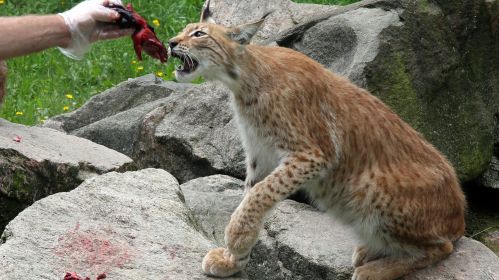
Danish Zoo Asking People to Donate Small Animals to Feed Predators, Spark Outrage
Aalborg Zoo in Denmark sparked outrage this week after confirming it was appealing for
donations of small animals and horses to feed its predators – a practice it described as
“nothing new.” But the revelation has reignited a deeper, more uncomfortable debate –
should wild animals be kept in captivity at all, especially when their most basic needs,
such as food, cannot be met without public intervention?
The zoo’s request, made openly and unapologetically, triggered a wave of criticism
across Europe. Animal rights activists called it “barbaric” and “immoral,” while others
questioned the sustainability and ethics of keeping wild animals confined behind
barriers for entertainment, education, or conservation.
At the heart of the controversy is a question that zoos globally must now confront – if
you cannot feed your animals, do you have any business keeping them?
The modern zoo has long defended its existence with three pillars: education,
conservation, and research. Zoos, they argue, allow children and adults to connect with
wildlife, inspire environmental stewardship, and help preserve endangered species
through breeding programs. Many species, such as the Arabian oryx and the
California condor owe their survival to zoo-led conservation efforts.
But critics argue that even the best intentions cannot justify confinement. No artificial
habitat, however elaborate, can replicate the complexity and freedom of the wild and
when institutions start appealing for “donated” animals to be used as feed, that moral
line becomes increasingly blurred.
“It’s one thing to feed predators in line with their natural diet,” says Dr. Elise Marlow, an
animal welfare expert. “It’s another to rely on public appeals to source prey. It raises
serious questions about capacity, planning, and responsibility.”
For some, the solution seems simple – release the animals. Let lions roam the
savannah and wolves return to the forests. Yet, re-wilding captive-born animals is a
complex, often impossible process. Many have lost the instinct to hunt, lack immunity to
wild diseases, and cannot adapt to a competitive natural ecosystem. Releasing them
could result in slow starvation or conflict with established wild populations.
What this controversy underscores is not simply a logistical failing but a philosophical
one. Keeping wild animals for human enjoyment or prestige, while appealing for
donations to sustain them, seems increasingly untenable in a world more attuned to
ethical responsibility.
Perhaps it’s time we asked not how to better feed predators in cages but whether they
should be in cages at all.
- By Moji Danisa