







Gold Still Matters to Nations, But Luxembourg Not Hoarding It
In an age when central banks are racing to bolster their gold reserves, Luxembourg
stands apart, or perhaps aside. The Grand Duchy, a financial powerhouse in its own
right, has confirmed that it maintains virtually no gold holdings beyond a modest cache
of historic coins.
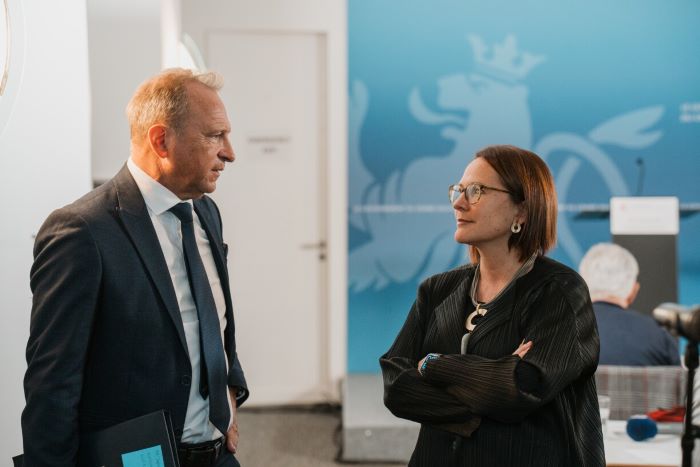
The revelation came this week from Minister of Finance Gilles Roth, who disclosed that
the state’s gold inventory consists solely of 1,800 Louis d’Or coins, stored at the
Luxembourg Central Bank (BCL) since 1998. These coins, once in the possession of
the State Intelligence Service, are collectively valued at around €990,000 – a figure that
barely registers in the context of modern reserve strategies.
The question, posed by Democratic Party MP André Bauler, points to a broader
discussion about the enduring significance of gold in national reserves and why some
countries, like Luxembourg, have stepped away from the bullion race.
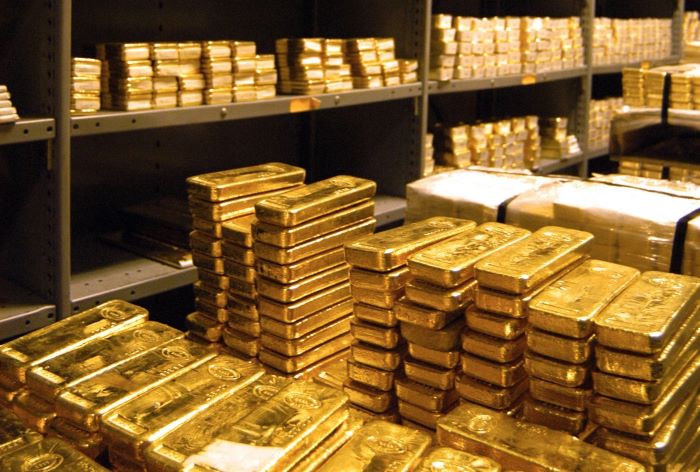
Gold has served as a symbol and store of wealth for millennia. In the era of the classical
gold standard, which spanned much of the 19th and early 20th centuries, nations
backed their currencies directly with gold, giving paper money the promise of
convertibility. This link between precious metal and monetary value was considered a
guarantee of stability, shielding economies from inflationary politics.
The end of the Bretton Woods system in 1971, when the US abandoned the dollar’s
convertibility to gold, marked the end of gold as the formal backbone of the global
monetary system. Yet the metal retained its allure – as a hedge against inflation, a safe-
haven asset during geopolitical turmoil, and a bulwark against currency crises.
Even today, countries such as the United States (8,133 tonnes), Germany (3,352
tonnes) and Italy (2,452 tonnes) hold massive gold reserves, regarding them as the
ultimate form of monetary insurance. Emerging economies including China and Russia
have aggressively increased their holdings in the past decade, in part as a buffer
against reliance on the US dollar.
Luxembourg, however, has charted a different course. Its absence from the bullion
game is not a product of neglect, but of a deliberate strategy rooted in its economic
profile.
Unlike commodity-rich nations or those with volatile currencies, Luxembourg’s stability is
anchored in its role as an international financial centre. Its reserves are dominated by
foreign currency assets, sovereign bonds, and other highly liquid instruments. Gold,
which yields no interest and must be securely stored, is considered less essential in this
mix.
“Luxembourg’s wealth is not in gold bars locked in a vault, but in its financial services
sector, its diversified investment portfolios, and its reputation as a safe and
sophisticated financial hub,” said one European economist familiar with the country’s
reserve policy.
Indeed, the country’s size and integration into the eurozone make the case for bullion
less compelling. As a member of the European Central Bank system, Luxembourg
shares in the eurozone’s collective reserves, which do include substantial gold holdings.
This means that in times of crisis, the country could theoretically draw on that shared
security.
The world’s renewed interest in gold, with central banks buying at the fastest pace in
decades, is driven by shifting geopolitics, concerns about dollar dominance, and volatile
global markets. The war in Ukraine, trade tensions between the US and China, and
inflation spikes have all pushed the metal’s price to historic highs.
Supporters of large gold reserves argue that, unlike currencies or bonds, gold carries no
counterparty risk. It cannot be devalued by a foreign government’s policies, nor can it
default. Critics counter that gold is a “sleeping” asset – expensive to store, slow to
deploy, and subject to market swings.
Luxembourg’s position reflects the latter view. Its minimal holdings show a prioritisation
of liquidity and yield over symbolism and hedging. For a nation that thrives on speed
and agility in global finance, bullion is simply not the most efficient tool.
For now, Luxembourg’s 1,800 Louis d’Or coins – relics of a bygone era – sit quietly in the
BCL’s vaults, their value more historical than strategic. Struck in gold and once a
medium of real purchasing power, they are a reminder of the days when nations
measured their wealth in weight.
That Luxembourg has chosen to let them remain as curiosities rather than the
foundation of a reserve policy says much about the shifting nature of economic security.
In a world where digital transactions, diversified portfolios and collective monetary
systems dominate, gold’s role is evolving, even if its mystique remains untarnished.
By Moji Danisa