







IKEA Takes Solar to the Balcony in Bid to Democratize Clean Energy
IKEA has begun selling plug-in solar panel kits designed for apartment balconies, a
move that could widen access to renewable power for urban households.
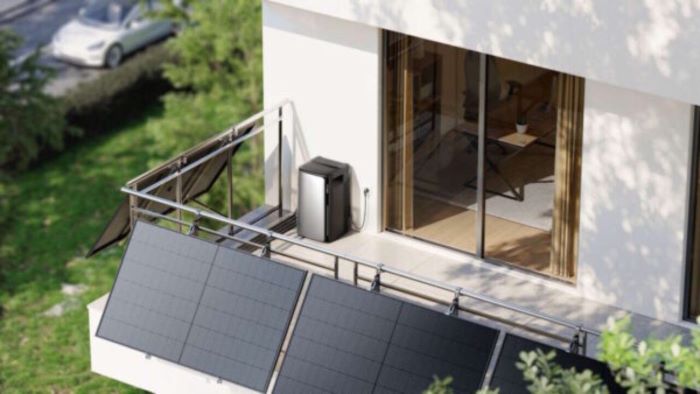
The kits, launched in Germany in June, are being marketed as “balcony power plants” –
small-scale systems that let tenants generate their own electricity without the need for
rooftop installation. The initiative comes as Germany relaxes regulations to encourage
solar adoption, scrapping grid operator registration requirements for households and
explicitly allowing plug-in panels.
“Small system, big impact,” IKEA declares on its German website, promising customers
more independence from volatile energy prices. The kits are produced by Swedish
energy company Svea Solar and offered in three options. The most basic, at €449
(£380), comes with two panels, an inverter and a digital app. A mid-range package
includes four panels and a storage device for €1,280 (£1,080), while larger households
can customise orders to suit their needs. IKEA estimates users could save between
€200 and €600 a year, generating 860 – 2,000 kWh annually.
The launch reflects broader momentum behind solar. The International Energy Agency
forecasts solar will be the world’s largest source of renewable energy by 2030,
accounting for 80% of renewable growth. By the end of the decade, almost half of all
global electricity generation is expected to come from renewable sources, with about
100m households relying on rooftop solar – up from 25m in 2022.
“For full decarbonisation of the electricity sector, solar PV must be installed everywhere
possible, starting with buildings,” the IEA said in a recent report.
Europe has pushed to accelerate solar adoption as part of its effort to wean itself off
Russian fossil fuels. Meanwhile, countries such as Nigeria and Pakistan are already
turning to low-cost Chinese-made panels, with China itself expected to drive 60% of
global renewable expansion.
Industry figures hailed IKEA’s move as potentially transformative. “When generating
clean electricity becomes as simple as assembling furniture, we’re looking at a
fundamental shift in how people think about power generation,” said Javier Gascón
Araujo, founder of a Madrid-based climate tech firm. Maria Mendiluce, head of the ‘We
Mean Business Coalition’, called for regulators to expand plug-in permits “to make this
accessible everywhere”.
IKEA, ranked 17th this year in Corporate Knights’ global list of most sustainable private
firms, has pledged to halve emissions by 2030 and reach net zero by 2050. The retailer
has faced criticism from Greenpeace over links to suppliers sourcing from old-growth
forests, but says it has cut its climate footprint by 22% since 2016 and is shifting
towards recycled and renewable materials.