








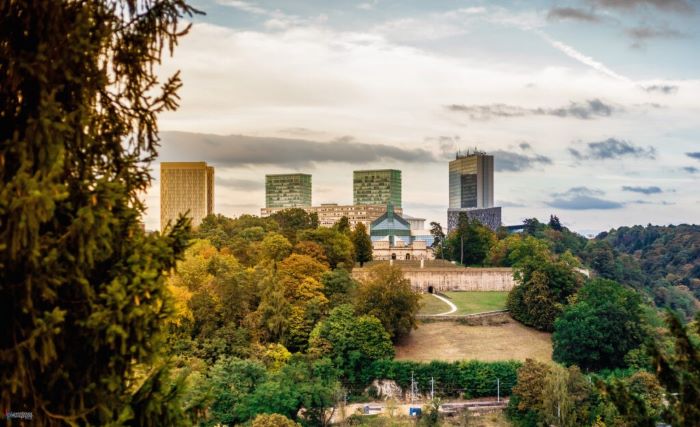
Luxembourg Eyes Tech and Green Growth Beyond Finance
Luxembourg’s prosperity has long rested on two pillars: finance and the state. Together they shape a labor market where opportunities are plentiful but concentrated, leaving the country unusually reliant on just a few engines of employment. Now, policymakers are looking to future-proof the economy by diversifying into technology, green finance and even space.
The financial sector is the undisputed giant. Successive governments deliberately built Luxembourg into a global hub for cross-border banking and fund management, using flexible regulation, political stability and tax incentives to attract international capital. The result is an economy where trillions of euros are managed by a small workforce, highly skilled but overwhelmingly concentrated in asset management, corporate law, compliance and IT. This dominance draws tens of thousands of daily commuters from neighboring France, Germany and Belgium, making Luxembourg’s financial services one of the most cross-border-dependent sectors in Europe.
Public administration, too, wields outsize influence. Luxembourg’s role as an EU capital ensures a steady supply of prestigious jobs at institutions such as the European Court of Justice and the European Investment Bank. At home, the state remains one of the largest employers per capita in the EU, reflecting the country’s deep tradition of state involvement in welfare and governance. For many residents, public sector jobs offer security, high salaries and social prestige. But this also cements a dual economy where the best jobs often lie either in Brussels-facing institutions or in finance, leaving smaller domestic industries overshadowed.
Beyond these pillars, other sectors struggle for prominence. Retail, logistics and construction provide thousands of jobs, and ICT is growing fast thanks to government backing for digitalisation and data services. The government has also launched initiatives in fintech, green finance and satellite technology, hoping to nurture new industries that can reduce dependence on traditional powerhouses.
The concentration brings risks. Heavy reliance on global finance leaves Luxembourg exposed to market volatility and international regulatory shifts, while an outsized public sector raises questions about sustainability in the long run. For all its wealth, the Grand Duchy’s workforce remains vulnerable to the fortunes of the industries it has chosen to rely on most. The challenge ahead will be whether the new push into innovation and high-tech fields can truly rebalance the nation’s economic model.
Photo – Luxembourg for finance