






New Technology that May Hold Answer to Luxembourg’s Spiraling Housing Crisis
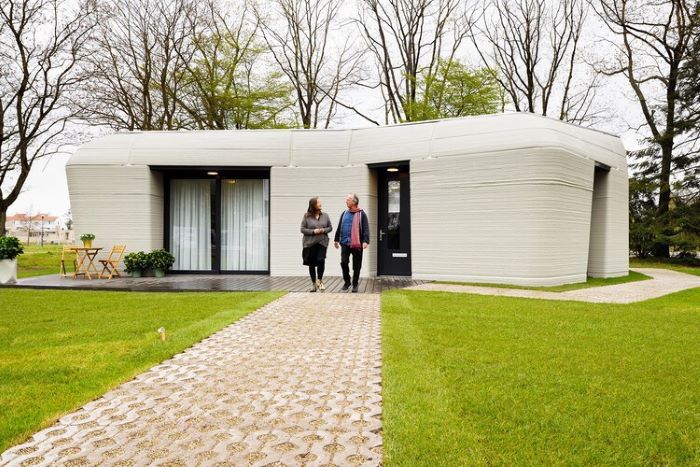
Luxembourg, one of Europe’s wealthiest nations, is facing a housing crisis so acute that even middle-income families are being priced out of the market. Against this backdrop, the unveiling of the country’s first 3D-printed house in the village of Niederanven has been hailed as a potential breakthrough in tackling both affordability and supply shortages.
The compact concrete home, built by Czech firm ICE Industrial Services, took less than 28 hours to print, though the overall project spanned about ten weeks once official inspections and finishing touches were factored in. At 50 square metres, the house is modest – comprising a kitchen, living area, bathroom and a flexible room – but officials hope it signals the beginning of a shift towards faster and cheaper housing solutions.
The urgency could not be clearer. Luxembourg has one of the fastest-growing populations in the EU, driven largely by inward migration, while its housing supply has consistently failed to keep pace. Property prices have doubled over the past decade, with the average cost of a home now among the highest in Europe. Even rentals have surged to levels that leave many young professionals, not to mention low-income families, struggling to find adequate accommodation.
Local authorities have acknowledged the crisis, but progress has been slow. Traditional construction methods are hampered by labor shortages and high land costs, creating bottlenecks that worsen the shortage each year. Advocates say 3D-printing technology could help by slashing building times, reducing material waste and making small, affordable homes viable.
Officials at the inauguration described the Niederanven project as more than a novelty. “This is not just about innovation,” one said. “It’s about creating a model that could help us meet the urgent need for affordable housing.”
Sceptics, however, warn that the project’s scale remains symbolic for now. One house alone will not dent Luxembourg’s deepening crisis, and questions linger over whether 3D printing can be scaled up quickly enough to address the demand.
Yet for many, the modest grey structure in Niederanven is a hopeful marker – a reminder that, as Luxembourg grapples with its housing emergency, new technologies may hold part of the answer to a problem that has become one of the nation’s greatest social pressures.