


Soldiers on Brussels’ Streets? Belgium’s Drug Violence Crisis Raises Deeper Questions
Belgium’s mounting drug crisis has forced the government into drastic territory, with
Security and Home Affairs Minister Bernard Quintin pushing for the deployment of
soldiers on the streets of Brussels. The proposal follows a surge in shootings linked to
the cocaine trade, raising fears that the capital could spiral into the kind of cartel-style
violence more often associated with Latin America than the heart of Europe.
The figures are grim. Prosecutors have recorded 57 shootings in Brussels so far this
year, 20 of them over the summer months alone. Innocent residents, prosecutors warn,
risk being caught in the crossfire. Julien Moinil, Brussels’ chief prosecutor, who now
lives under police protection after receiving threats from traffickers, has described the
situation as “spiralling” and pleaded for more resources to stop it.
Behind the violence lies a more entrenched problem – Belgium has become a key entry
point for South American cocaine into Europe. Antwerp, Europe’s second-busiest port,
has overtaken Rotterdam as the continent’s cocaine gateway. Customs officials seized
almost 120 tonnes of the drug in 2023, but experts say far more slips through. The
lucrative trade has attracted increasingly organised criminal networks, armed and
emboldened, fighting for control of neighborhoods and supply chains.
Quintin, a Brussels native, has branded the situation “catastrophic”, comparing the
brazenness of traffickers to street vendors casually setting up shop in broad daylight.
His call to send in the army reflects a sense of frustration that traditional policing, even
with additional funding, has not stemmed the tide. Justice Minister Annelies Verlinden is
asking for another €1bn for her department, but prosecutors say years of
underinvestment have already left law enforcement overstretched.
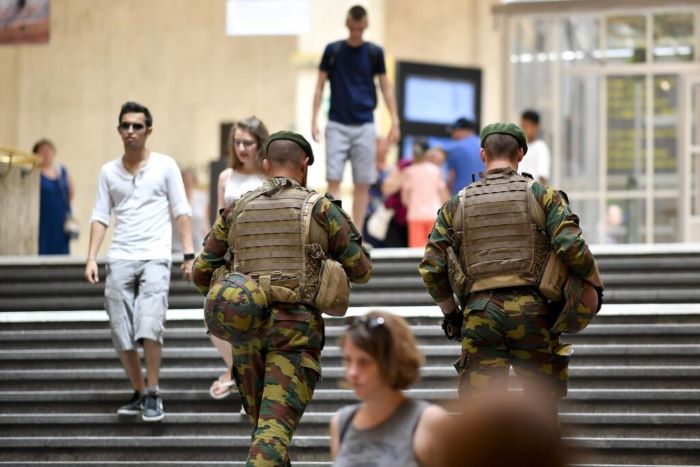
The idea of soldiers patrolling metro stations and neighborhoods such as Peterbos in
Anderlecht has drawn both support and concern. Advocates argue that military
presence could deter violence and reassure the public. Critics counter that it risks
militarising the capital and straining relations between residents and authorities in
already marginalised districts. For some, it raises echoes of France’s failed experiment
with Operation Sentinelle, where troops deployed after terror attacks were accused of
creating tension without addressing root causes.
What is clear is that Belgium’s drug crisis is not just a policing issue but a structural one
porous borders, the sheer volume of container traffic through Antwerp, underfunded
justice institutions and a growing consumer market across Europe.
Without tackling demand, corruption, and money laundering, experts warn that soldiers on the streets
may do little more than provide a temporary show of force.
For Brussels residents, the question is stark, can a military deployment bring back a
sense of safety, or will it mark a new stage in a crisis that shows no sign of abating?