



Frieden’s UN Speech and Israel’s Growing Diplomatic Isolation
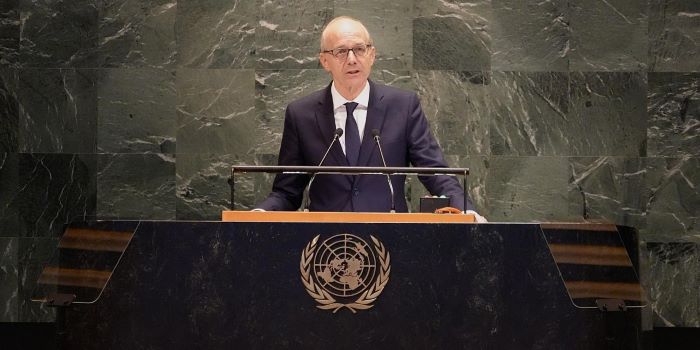
Luxembourg has formally recognised Palestine, with prime minister Luc Frieden using his address to the United Nations to argue that compromise, not confrontation, remains the only path to global peace.
Speaking at the General Assembly in New York, Frieden linked Luxembourg’s recognition to the urgent need for a ceasefire in Gaza and the revival of negotiations based on a two-state solution. “War is nothing but the final expression of that radical unwillingness to compromise,” he said. “The United Nations stands for the formidable power of reconciliation.”
The move puts Luxembourg in step with an emerging bloc of European states, including Ireland, Spain and Slovenia, that have broken ranks with larger powers by endorsing Palestinian statehood. While Luxembourg is a small country, its reputation as a consistent supporter of multilateralism and international law gives the decision symbolic weight. It adds to the pressure on bigger EU players such as France and Germany, which have so far stopped short of full recognition, to reassess their positions.
Whether this marks a turning point depends on how far the momentum spreads. In Brussels, the cumulative effect of smaller states’ recognitions could reshape the EU’s common foreign policy, long paralysed by division on the Israeli-Palestinian conflict. Recognition by a cluster of members makes it harder for the EU to maintain a strictly neutral stance, potentially forcing it into a more active diplomatic role.
Beyond Europe, Luxembourg’s step is another sign of Israel’s growing diplomatic isolation over its conduct in Gaza. Tel Aviv has condemned unilateral recognitions, arguing they reward Palestinian divisions and weaken negotiations. Relations between Luxembourg and Israel are likely to cool, even if the fallout is more symbolic than practical. The United States, which has traditionally resisted such moves, may also bristle, though the cumulative pressure from Europe could eventually contribute to a shift in Washington’s approach, particularly if more EU states follow suit.
Frieden tied the recognition to a wider warning about the fragility of the international order. The principles forged after the second world war, he said, were “at breaking point”. He called not only for a just settlement in the Middle East and Ukraine, but also for urgent progress on human rights, education and UN reform.
Luxembourg’s role, he added, would remain consistent, a small state with outsized influence through aid and diplomacy. “The United Nations can continue to count on Luxembourg,” Frieden told delegates. “In word and in deed.”
For now, Luxembourg’s recognition may not by itself transform the diplomatic landscape. But in the shifting politics of Europe, it adds to a growing chorus. If more states follow, the tide may yet turn.