








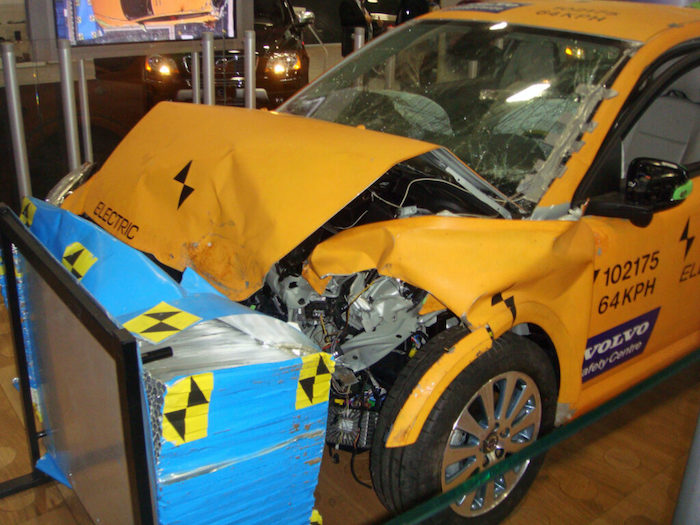
EV Accidents – Are Europe’s Electric Cars Safe or Potential Death Traps?
The fiery death of three passengers trapped in a Tesla after it crashed in Germany has reignited an uncomfortable question across Europe – how safe are electric vehicles when their power systems fail?
Luxembourg’s Mobility Minister, Yuriko Backes, has confirmed that European Union rules do not require electric cars to have mechanical door releases. That admission, coming days after firefighters in Germany were unable to free the victims from a burning Tesla, has sent shock waves through regulators, motorists and the car industry.
Electric vehicles were introduced to Europe with the promise of a cleaner, safer, and smarter transport future. Yet, the reality has grown more complex. In recent years, a string of fatal incidents involving electric cars, from Norway to France, and now Germany, has exposed potential flaws in their design and safety systems. The common thread in several of these tragedies has not been the crash itself, but what happens afterward – locked doors, disabled power systems and batteries that ignite with terrifying intensity.
Safety agencies insist that, statistically, electric cars catch fire less often than petrol or diesel vehicles. But when they do, the fires are harder to control, burn hotter and can reignite hours later. The batteries, made up of volatile lithium-ion cells, can go into what experts call “thermal runaway”, an unstoppable chain reaction that makes firefighting a nightmare.
The mechanical door issue adds another deadly twist. In the pursuit of sleek design and digital innovation, many electric car manufacturers have done away with traditional manual handles, replacing them with electronically controlled systems. These doors glide open with a touch when all is well but can become death traps when power is lost or wiring damaged in a crash.
Consumer advocates and road safety experts have begun asking pointed questions – how could regulators approve vehicles without ensuring there’s always a manual way out? In countries like Germany and Luxembourg, where electric cars have become symbols of modern mobility, officials now face a moral and political test, how to reconcile the race toward carbon neutrality with the need for human safety.
Under new EU product liability laws, carmakers could face lawsuits if it can be proven that a lack of mechanical escape options constitutes a design defect. But proving liability in complex, high-tech systems remains a challenge. So far, most manufacturers have defended their designs, arguing that safety protocols and driver manuals explain how to unlock vehicles manually in emergencies. Critics counter that in a fire or collision, few drivers, or rescuers, have time to consult an instruction booklet.
Still, Europe’s love affair with electric cars is unlikely to end overnight. Sales continue to rise, particularly among younger, environmentally conscious drivers who see EVs as the future. But these latest tragedies may cool enthusiasm, especially among families and older buyers wary of the risks.
For now, regulators have promised to review standards, and firefighters are undergoing fresh training to handle electric vehicle fires. Yet, until rules change, every driver must ask the uncomfortable question before buying their next car – “will I be able to open the door if the lights go out?”
Electric mobility may be the future, but without the humble mechanical handle, that future could turn fatal in the dark.