


Border Checks: Choking Trade, Undermining Schengen Agreement
Businesses in the German city of Trier are calling for an end to renewed cross-border checks, warning that stricter border controls between Germany, Luxembourg and France are damaging local economies, disrupting trade, and eroding one of the EU’s most tangible symbols of unity, the free movement of people and goods.
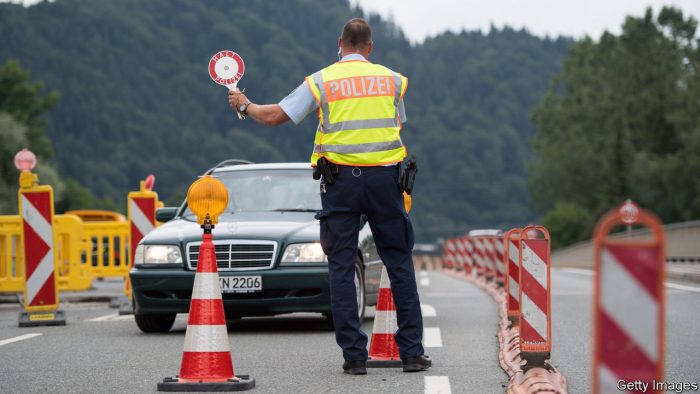
For decades, Trier’s economy has thrived on its proximity to Luxembourg and France. Thousands of workers cross the Moselle River daily, and countless small and medium-sized enterprises depend on the seamless flow of customers, suppliers and commuters. But with Germany and several of its neighbors tightening controls to curb illegal migration and organised crime, the once fluid borders of the Schengen Zone have become choke points.
Local businesses say the impact is immediate and severe. Delivery delays, longer commuting times and logistical bottlenecks have become routine. Retailers report fewer customers from Luxembourg and France, while transport and construction firms complain of increased costs and wasted hours stuck at checkpoints. “The checks are strangling what used to be a thriving cross-border market,” said one Trier-based logistics operator. “We’re losing both time and trust.”
Germany reinstated temporary border controls earlier this year, citing growing concerns about irregular migration and human trafficking networks. Similar measures have been introduced in Austria, Denmark and Poland. While governments insist the controls are necessary for security and public order, critics say they are politically driven and risk undermining the Schengen Agreement, a cornerstone of European integration.
For border communities like Trier, the effects extend beyond economics. Families and workers who move freely between countries now face delays that disrupt daily life. Regional cooperation projects, from education to infrastructure, are also suffering. “This region was built on cross-border solidarity,” said a local chamber of commerce spokesperson. “We fear the new restrictions will unravel that progress.”
European business groups warn that if checks persist, they could inflict long-term damage on the EU’s internal market, already strained by inflation, supply-chain issues and geopolitical instability. Economists note that reimposing borders, even temporarily, can cost billions in lost productivity across the bloc.
While Berlin and Brussels insist the controls are short-term, many in Trier are skeptical. As one hotel owner put it, “If we start normalising borders again, we lose what makes Europe work.”
For now, the city’s business leaders are urging governments to return to dialogue and to restore the freedom of movement that once defined Europe’s open frontier.
The Economist