








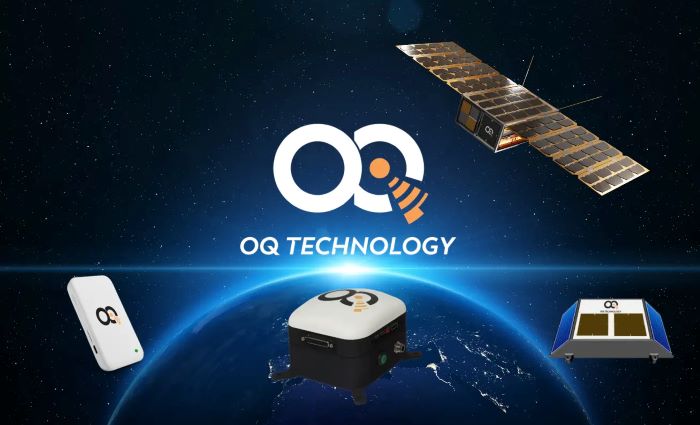
OQ Technology’s 5G Satellites – Internet as Boundless as the Sky
Luxembourg is stepping into a new era of connectivity. The government has granted local space-tech firm OQ Technology a major concession to operate global satellite-based 5G services, a decision that could reshape how people and businesses access the internet within the country and beyond.
Announced on Tuesday, the concession allows OQ Technology to deploy a constellation of low-Earth-orbit (LEO) satellites that will deliver 5G signals directly from space. Unlike traditional networks that rely on terrestrial cell towers, OQ’s system will beam coverage across the globe, targeting “narrowband” Internet of Things (IoT) devices and even offering direct-to-smartphone connectivity.
The innovation promises to bring seamless internet access to areas where traditional mobile coverage is limited or non-existent including rural communities, construction zones, agricultural sites, and cross-border logistics corridors. For Luxembourg, one of Europe’s smallest but most digitally ambitious nations, the project could redefine national infrastructure by making satellite-backed internet a practical reality for everyday users.
According to OQ Technology, the service is built on the 3GPP 5G Non-Terrestrial Network (NTN) standard, the same international protocol used by mobile operators worldwide. This ensures that ordinary smartphones, industrial sensors, and smart devices can connect to the satellite network without the need for specialized hardware.
The Luxembourg-based company has already tested 5G signal transmissions via its own satellites and ground stations, achieving successful IoT and messaging connections across continents. Its goal, executives say, is to make space-based 5G as accessible as roaming onto another local network.
Government officials describe the concession as a “strategic step” toward consolidating Luxembourg’s reputation as a European hub for space innovation. Over the past decade, the country has invested heavily in satellite and data infrastructure, nurturing companies like SES, GovSat, and now OQ Technology, to anchor its leadership in next-generation communications.
Analysts say the move could also influence how telecom operators expand their reach. By partnering with OQ’s satellite network, carriers could offer continuous coverage for subscribers moving between terrestrial and orbital networks – an approach that could transform how Luxembourg’s population of commuters, cross-border workers, and digital industries experience mobile connectivity.
Still, experts caution that issues such as spectrum management, cost-sharing, and international regulation will determine how quickly the system scales. But for now, the small Grand Duchy has positioned itself at the center of a major technological leap, one that could soon make the internet as boundless as the sky above it.
