




Europe’s Dirty Money Crackdown – Inside Luxembourg, Germany €12 Million Sting that Shook a Crime Empire
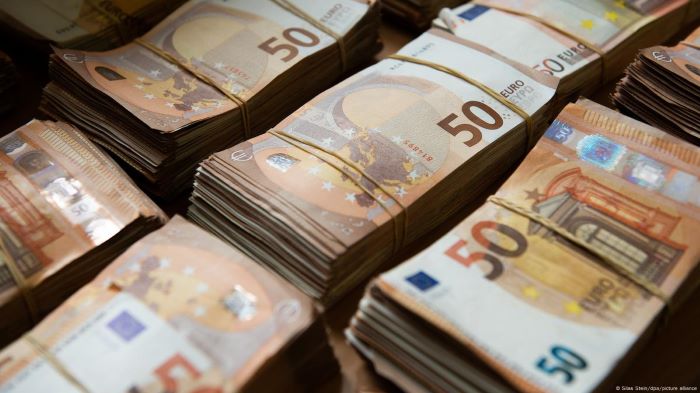
A major international money-laundering network spanning multiple countries has been dismantled in a coordinated operation between Luxembourg and German authorities, resulting in the seizure of more than €12 million and the arrest of a central suspect. The joint sting, announced this week, marks one of the most significant blows against cross-border financial crime in Europe this year.
According to investigators, the operation, months in the making, exposed a labyrinth of shell companies, falsified invoices and encrypted communications designed to mask the origin of illicit funds. Raids were carried out across both countries, with law-enforcement officers seizing cash, property deeds, luxury vehicles and digital records believed to contain details of an extensive laundering network.
The investigation began in Luxembourg, where financial-intelligence analysts first detected unusual transfers coursing through a cluster of corporate accounts. These entities – on paper, legitimate consulting and import firms – were allegedly being used as fronts to funnel illicit funds into the German banking system. Once inside, the money was broken into smaller transactions, routed through payment service providers and eventually withdrawn, invested or wired abroad.
Officials in Frankfurt said the network appeared to be linked to organised-crime groups operating across several EU member states. The suspect arrested in Germany, described only as a “key facilitator”, is believed to have coordinated the laundering structure and maintained connections to financial intermediaries in Eastern Europe and the Middle East.
Luxembourg’s financial regulator and police confirmed that cooperation between the two nations was “intensive and decisive”. Investigators worked with Eurojust and Europol, sharing data and tracing digital footprints through encrypted financial platforms. “This success demonstrates the strength of European cooperation against organised financial crime,” Luxembourg’s justice ministry said.
For years, European watchdogs have warned that the continent’s financial system remains vulnerable to abuse. Luxembourg, home to thousands of investment funds and holding companies, has faced scrutiny for its opaque ownership structures and limited transparency, despite recent reforms. Germany, meanwhile, has struggled to contain money-laundering through its vast real-estate market and payment-service sector.
The €12 million seizure, though modest compared to global laundering estimates, some €2 trillion a year, according to the United Nations, represents a crucial symbolic victory. It also offers a warning to financial institutions that the tolerance for negligence is narrowing.
The operation follows a string of high-profile European crackdowns. Earlier this year, German police raided several fintech firms suspected of processing fraudulent payments linked to online investment scams. In Belgium and the Netherlands, investigators have targeted networks using cryptocurrencies to move illicit funds.
The European Commission has announced that by 2026, a new EU Anti-Money-Laundering Authority (AMLA) will coordinate national regulators and close oversight gaps that allow such schemes to thrive.
Authorities have not yet revealed the origin of the laundered money, though early indications suggest links to large-scale fraud and tax-evasion schemes. Further arrests are expected in the coming weeks as investigators sift through seized documents and digital data.
For both countries, the case carries a deeper lesson. Luxembourg’s reputation as a discreet financial hub and Germany’s complex web of banks and payment processors make them frequent targets for illicit flows. Their joint success may signal a new era of more assertive European enforcement but it also exposes just how entrenched such networks have become.
In a continent still grappling with the aftershocks of financial opacity and digital fraud, this operation stands as both a victory and a warning – Europe’s battle against dirty money is far from over and the launderers are not done fighting back.
