


Can Pope Leo’s Two-State Vision Move the Middle East?
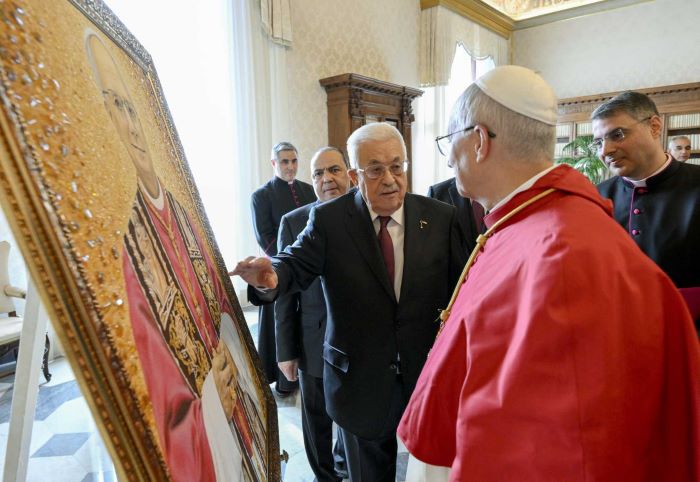
Pope Leo’s latest appeal for peace between Israel and Palestine came with a familiar but urgent refrain – the world must finally embrace a two-state solution to “end the conflict” that has haunted the Middle East for generations. The Pontiff made the statement during a meeting with Palestinian President Mahmoud Abbas at the Vatican, where he reiterated the Holy See’s long-standing support for peaceful coexistence between the two nations.
But while the Pope’s moral authority remains unmatched in many parts of the world, the question looms large – how much sway does he really hold in one of the world’s most intractable conflicts?
For decades, successive Popes have spoken passionately about peace in the Holy Land, yet the situation has only grown more complex. Wars, settlements, and shifting regional alliances have hardened positions on both sides. In the current global landscape, where religion, politics, and power collide – the Vatican’s influence appears more symbolic than strategic.
Still, Pope Leo’s message resonates deeply among millions of Catholics and people of conscience who see moral clarity as the first step toward justice. His emphasis on compassion, human dignity, and mutual recognition appeals to the moral fabric of humanity, even if it cannot bend the will of political leaders entrenched in geopolitical calculations.
In Palestine, the Pontiff’s words are seen as an affirmation of the people’s struggle for recognition and independence. Among Israelis, reactions are mixed, many view Vatican statements as idealistic and detached from the security realities their nation faces. Yet, even critics acknowledge that a voice like the Pope’s can soften rhetoric and renew calls for diplomacy, especially in an age when dialogue has largely been replaced by drone strikes and sanctions.
The Vatican, with no military might or economic leverage, relies solely on moral persuasion. History shows that such persuasion, while slow, can sometimes outlast the loudest cannons. But in the immediate term, Pope Leo’s call is more likely to stir global conscience than political change.
As the dust of conflict continues to settle over Gaza and Jerusalem, the Pontiff’s words may not redraw borders but they remind the world that peace, however distant, still has a voice.
– By Moji Danisa
Photo – Palestinian President Mahmoud Abbas presents to Pope Leo XIV a portrait of the pope during a meeting in the library of the Apostolic Palace at the Vatican Nov. 6, 2025. (CNS photo/Vatican Media)
