







AI Joins the Fight Against Breast Cancer but Can It Replace the Mammogram?
Luxembourg’s hospitals have begun adopting artificial intelligence tools in breast cancer screening, marking a new chapter in how medical technology is being used to detect one of the world’s most common cancers earlier and more accurately.
The new AI-assisted systems are being introduced across several radiology units in the country, allowing computers to help radiologists read mammograms, identify early signs of cancer, and reduce the number of missed diagnoses. The technology is part of Luxembourg’s broader plan to modernize its national cancer screening program and manage increasing workloads in medical imaging.
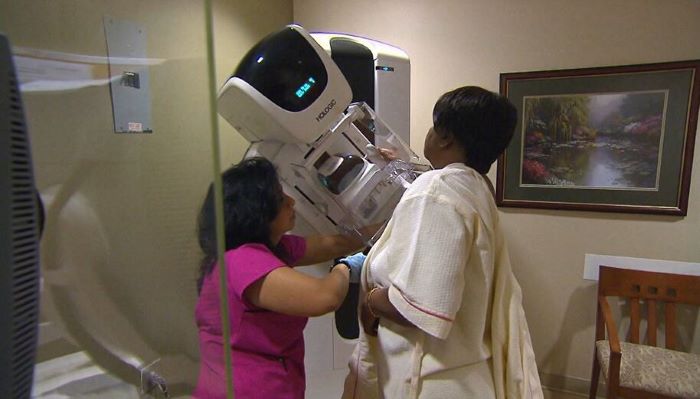
Artificial intelligence in breast cancer screening does not perform the test itself, it does not replace the mammogram. Instead, it acts as a second set of eyes that analyses the digital images produced by the X-ray. The AI software scans thousands of data points within each mammogram, searching for subtle patterns, densities, or irregularities in breast tissue that could indicate a developing tumour. It then highlights areas of concern for the radiologist to review, helping to minimize human error and ensure that no potential signs are overlooked.
In some hospitals, AI also helps sort large volumes of mammograms by urgency – flagging images that appear suspicious while filtering out those that seem normal. This triage system saves time, allowing radiologists to focus more closely on higher-risk cases.
Medical studies across Europe and the United States have shown promising results. Some AI systems detect up to 20-30 percent more cancers than traditional reading alone, often identifying tumours at earlier stages, when treatment is more successful and survival rates higher. Researchers have also found that AI can reduce the rate of false negatives, cases where a cancer is missed, without increasing unnecessary recalls for patients.
Luxembourg’s adoption of the technology reflects both innovation and necessity. As more women become eligible for routine screening under national health plans, hospitals have faced growing demand on radiologists. By using AI, health officials hope to maintain high standards of accuracy while improving efficiency and reducing diagnostic delays.
Still, experts caution that AI is a support tool, not a replacement for human expertise. Radiologists remain responsible for the final interpretation and for discussing results with patients. The algorithms, trained on millions of images, can detect patterns invisible to the human eye, but they can also make mistakes if data quality or population differences are not accounted for.
Health authorities in Luxembourg have emphasized that every AI system must undergo rigorous local testing before full deployment. This ensures that the technology performs reliably across diverse patients and imaging equipment.
For now, AI’s greatest value lies in its partnership with human doctors – not in replacing them. By enhancing accuracy and consistency, the technology is helping to ensure that more cancers are caught when they can still be cured.
As one radiologist at Luxembourg’s National Health Laboratory put it, “AI doesn’t replace our judgment – it sharpens it. It gives us more time to focus on our patients, and more confidence that nothing has been missed.”
For patients, that extra layer of confidence could mean everything. In the delicate balance between technology and humanity, AI is emerging as a quiet but powerful ally in the race to save lives.