


A Visit Heavy With Symbolism: The Pope’s Istanbul Trip and His Push for Christian Unity
Pope Leo XIV visit to Istanbul’s Blue Mosque – a landmark he toured in reflective silence rather than prayer, comes at a moment when global Christianity faces deepening fractures, geopolitical pressures, and a shifting religious landscape. His presence in the city historically known as Constantinople, once the nerve centre of Eastern Christianity, is neither accidental nor merely ceremonial. It is a calculated step toward rebuilding bonds between the Catholic Church and the ancient Eastern Orthodox tradition – a relationship long marked by division, rivalry, and only fragile reconciliation.
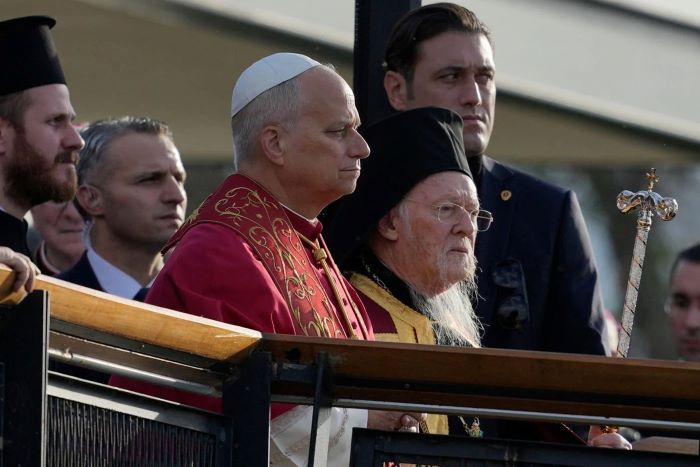
The Pope arrived in Istanbul primarily to strengthen ties with the Ecumenical Patriarch, the spiritual leader of Eastern Orthodoxy. Their meetings are designed to push forward attempts at healing the millennium-old schism that split Christianity into Eastern and Western branches. While relations have thawed in recent decades, momentum has slowed amid theological disputes, power dynamics, and global political realignments. The Pope’s visit signals an intention to inject fresh energy into this dialogue, underscoring unity not as a doctrinal merger but as a shared witness at a time when Christians face persecution, displacement, and declining influence in regions where they once thrived.
The timing is crucial. Conflicts across the Middle East have hollowed out Christian communities, while political tensions between Russia and the West have strained relations within the Orthodox world itself. Istanbul’s symbolic role — as the seat of a patriarchate that has survived empire, collapse, and marginalization, offers neutral ground for a message of solidarity. By refraining from prayer in the Blue Mosque, the Pope aimed to avoid igniting interfaith sensitivities and instead centre the visit on Christian reconciliation, a priority he sees as essential for navigating an era of rising nationalism, religious polarisation, and global instability.
The unity he seeks is not institutional absorption but moral and pastoral cooperation: common positions on humanitarian crises, coordinated defence of persecuted minorities, and renewed collaboration in protecting sacred heritage across conflict zones. It is also a theological commitment to presenting a less divided Christian voice on issues ranging from migration to climate action – concerns the Pope frames as transcending denominational boundaries.
Expectations of concrete outcomes remain modest. No doctrinal breakthroughs are anticipated, and centuries-old disagreements on authority and ecclesial structure will not vanish overnight. Instead, the likely result of his visit is a strengthened interpersonal bond between the Pope and the Patriarch, a joint declaration reinforcing dialogue, and renewed working groups aimed at deepening cooperation. Symbolic though these moves may seem, they help create the climate necessary for future progress.
In a world in flux, the Pope’s Istanbul journey is a reminder that the path to healing Christian division is long, slow, and often more about gestures than grand announcements. But in choosing to walk that path now, in a city layered with the scars and splendour of Christian history, he signals that unity, however fragile, remains an indispensable goal for the global church.