



Examining Claims of an Imminent Global Pandemic Deadline
Claims that the world has “until the end of today” to prevent another pandemic have spread rapidly online, tapping into lingering fears from the COVID-19 crisis. The assertion suggests an urgent, near-apocalyptic deadline for global action. However, a closer examination of statements from scientists and international health authorities shows that no such ultimatum has been issued.
No recognised global health body, including the World Health Organization (WHO), has declared a 24-hour deadline to avert another pandemic. There is no countdown clock, no final warning tied to a specific day. What experts have consistently warned is both less dramatic and more concerning: another pandemic is inevitable, its timing uncertain, and global preparedness remains inadequate.
The phrase “until the end of today” appears to stem from a misinterpretation of repeated scientific warnings that the world must act urgently to strengthen pandemic preparedness. In public health terms, urgency refers to immediate and sustained investment in systems, not a literal deadline. On social media, however, nuance often gives way to alarmist framing, transforming calls for long-term action into claims of impending catastrophe.
Public health researchers have long highlighted that the underlying drivers of pandemics are intensifying. Global populations are larger, more urbanised and more mobile than ever before, allowing infectious diseases to spread internationally within hours. Climate change and environmental degradation are increasing contact between humans and wildlife, raising the risk of zoonotic spillovers – diseases that jump from animals to humans. Deforestation, intensive agriculture and wildlife trade continue to weaken natural barriers that once limited such transmission.
COVID-19, scientists argue, was not an isolated event but a warning. Zoonotic spillovers are occurring more frequently, most ending without widespread impact. When a pathogen combines high transmissibility with delayed detection and global travel, however, the consequences can be severe. That risk has not diminished since the last pandemic.
This is the context in which global health leaders continue to speak with urgency. The WHO’s director-general has repeatedly stated that the next pandemic could occur “tomorrow, or in 20 years,” stressing that the key uncertainty is not if it will happen, but whether the world will be prepared when it does. The message is preventative, not apocalyptic.
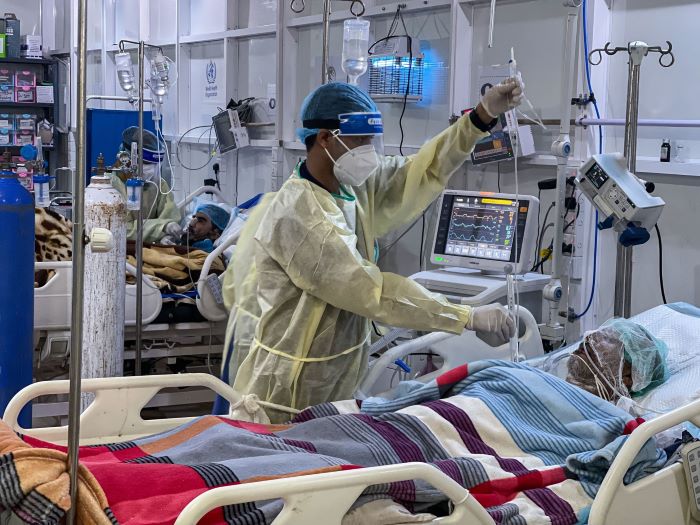
Experts emphasise the need for stronger early-warning systems, including global disease surveillance and rapid data sharing. They point to the importance of laboratories capable of quickly identifying and sequencing new pathogens, health systems resilient enough to withstand sudden surges, and vaccine platforms that can be adapted and deployed at speed. Central to these efforts is international cooperation, particularly ensuring that low-income countries are not left without the tools needed to detect and contain outbreaks early.
Many scientists warn that the greatest risk now is complacency. As the immediate threat of COVID-19 faded, emergency measures were rolled back in many countries, funding for preparedness declined, and political attention shifted elsewhere. Pandemic fatigue set in, even as the biological and environmental conditions that enable outbreaks remained unchanged.
Accusations that scientists are exaggerating risks to provoke fear overlook recent history. Before COVID-19, warnings about pandemic preparedness were frequently confined to academic circles and policy reports. When the virus spread globally, the consequences of underinvestment were stark, measured in millions of deaths and profound economic disruption. In hindsight, many early warnings appeared prescient rather than alarmist.
At the same time, health experts acknowledge that fear-driven messaging can be counterproductive. Overstated claims of imminent disaster can fuel panic, misinformation and public distrust. Effective public health communication, they argue, must balance urgency with accuracy, encouraging preparedness without inciting fear.
For the public, experts say there is no reason to believe that a decisive moment arrives at midnight today. The concern lies instead in whether governments will continue to delay difficult and costly decisions needed to strengthen global health security.
Pandemics are not prevented in a single day. They are mitigated through years of sustained investment in science, public health infrastructure, workforce training and international cooperation. The true test of preparedness will come not at the end of today, but at the emergence of the next outbreak – whenever that may be.