




Rwanda; An Outpost of Collective Western Interest in Africa – David Wagner
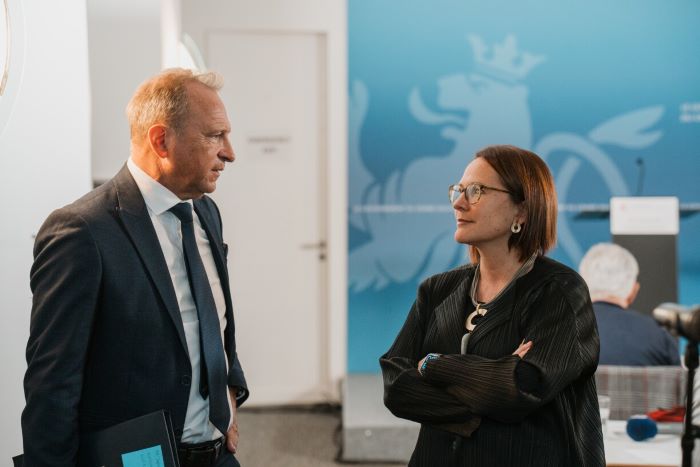
Luxembourg’s engagement with Rwanda is wrapped in layers of contradiction and opportunism. While publicly championing human rights and democracy, Luxembourg is quietly deepening its economic and political ties with a regime that is complicit in destabilizing the region. This was disclosed in a recent interview by David Wagner Member of the Luxembourg Chamber of Deputies. According to him, Luxembourg’s foreign policy in Rwanda has little to do with altruism or humanitarianism and everything to do with strategic alliances that serve its financial and political interests.
The Left (déi Lénk) MP qualified Rwanda as a stepping stone to Luxembourg’s power and influence in Africa. In his words, the growing presence of Luxembourg’s financial sector in Kigali makes this clear. “Luxembourg sees Rwanda not as a partner in development, but as a key outpost in Africa’s Great Lakes region, helping to secure European control over the region’s vast mineral wealth”. Rwanda has played a significant role in the plundering of Congo’s natural resources, and Luxembourg-based companies like Traxis have been part of the complex network of companies that profit from this illicit trade. Despite the clear evidence of exploitation, Luxembourg continues to turn a blind eye, unwilling to take meaningful action against Rwanda’s involvement in these operations.
Observers have noted the contradiction between Luxembourg’s often advertised core foreign policy principle of unconditional support for human rights and democracy, and the Grand Duchy’s support for the President Paul Kagame led regime in Kigali, which operates with little regard for either. While Luxembourg’s foreign policy administration appears vocal in its criticism of some of Israel’s most atrocious policies in Palestine, when it comes to Rwanda, its rhetoric is hollow. The foreign ministry has condemned violence against Palestinians, yet it has repeatedly blocked any EU sanctions against Rwanda for its actions in the Congo.
A widely circulated report by Diego Velazquez of Luxembourg Times revealed that Luxembourg’s foreign Minister Xavier Bettel had earlier in the year surprised EU diplomats by blocking a sanctions package against Rwandan military officials involved in the M23 rebel activities in Congo. This move cast shadows on the authenticity of Luxembourg’s posture on issues relating to the search for peace and security in the Great Lakes region of Africa – while suggesting the true intent of its growing economic ties with Rwanda as having more to do with facilitating Rwanda’s role as a financial hub in Africa?
For many in Congo and surrounding countries and many Congolese in Diaspora in Europe, actual motives behind Luxembourg’s policy are buried under the guise of “cooperation.” The country frames its partnership with Rwanda as an act of support for Africa’s development, yet Rwanda’s model of “development” is one of exploitation, not empowerment. Luxembourg’s role is less about lifting Africa out of poverty and more about securing a foothold in a region rich with resources, resources that the EU and other Western powers have long been determined to control. For David Wagner, “Rwanda’s transformation into a financial hub, aided by Luxembourg, is part of a broader European strategy that seeks to maintain Africa’s dependency while extracting its wealth”.
Speaking further, he described Luxembourg’s claims of promoting human rights and economic development, Luxembourg’s policies often reflect a neo-colonial mindset. “The country’s cozy relationship with Rwanda’s ruling elite is rooted in the shared interests of maintaining control over Africa’s wealth”. While Luxembourg provides technical assistance and investments in Rwanda’s financial sector, it overlooks the darker side of the regime. “Rwanda’s involvement in smuggling resources from the Congo, where thousands of lives have been lost in conflict over mineral-rich territories, is ignored in favor of economic profit”, Wagner disclosed. This is the uncomfortable reality of Luxembourg’s policy: it is not in Rwanda’s best interest, but in the interest of Western business elites who benefit from Africa’s instability.
This is not an isolated case. Luxembourg’s approach to Rwanda mirrors the broader EU and Western strategy in Africa: a mixture of economic exploitation and political manipulation. “The European Union has long supported policies that have kept African nations in a state of dependency, never allowing them to control their own development”, tLeft (déi Lénk) MP emphasised . Trade agreements between the EU and African countries often favor European corporations at the expense of local economies. African countries are turned into suppliers of raw materials, but their ability to develop their own industries is stifled. Rwanda, despite its growth in certain sectors, remains a nation that is tied to the whims of foreign powers, and Luxembourg’s involvement in this process only reinforces that dependency.
Wagner makes a damning point when he states that Luxembourg’s foreign policy is rooted in “colonial nostalgia.” The country was never a direct colonial power, but its historical ties to Belgium and the legacy of Belgian colonialism in Africa cannot be ignored. Luxembourg is not just a bystander in the West’s exploitation of Africa; it plays an active role in reinforcing the systems of control that have plagued the continent for centuries. Rwanda, for all its economic development, remains a tool in this larger geopolitical game.
What is most troubling is the extent to which Luxembourg is willing to bend its foreign policy to serve its economic interests. The EU’s refusal to take stronger action against Rwanda’s role in Congo’s mineral exploitation is a glaring example of how economic interests consistently trump human rights. The situation in Congo, where entire communities have been displaced and massacred over control of valuable resources, is a direct consequence of Rwanda’s policies. Yet Luxembourg continues to block sanctions against Rwanda, siding with a government that has done little to address its involvement in the conflict. The fact that Luxembourg, a self-proclaimed advocate for human rights, stands by this regime highlights the deep contradictions at play.
At the heart of this issue is the relationship between Luxembourg’s financial sector and Rwanda’s government. Luxembourg has invested heavily in Rwanda’s economic infrastructure, helping the country position itself as a financial hub in Africa. This is not about charity or development; it is about making money. Luxembourg’s financial interests in Rwanda are inextricably linked to the exploitation of Africa’s resources, and the country’s refusal to take meaningful action against Rwanda’s actions in Congo is a clear indication that profit is prioritized over principles.
Luxembourg’s role in Rwanda is a microcosm of the broader European approach to Africa. The West has long viewed Africa as a source of wealth to be extracted rather than a partner in development. Painting a pathetic picture of EU’s policies, “whether they involve trade agreements”, Wagner stated that western “economic aid, or diplomatic support, often reinforce Africa’s position as a raw material supplier. The result is a continent stuck in a cycle of poverty, exploitation, and conflict, while European nations continue to reap the benefits. Luxembourg’s relationship with Rwanda, though framed as a cooperative effort, is just another example of this larger trend”.
Luxembourg’s foreign policy in Rwanda reveals a disturbing truth: the EU and the West are more invested in maintaining control over Africa’s resources than in truly supporting the continent’s development. Rwanda, despite its economic growth, remains tethered to the interests of Western powers. Luxembourg, with its deep financial ties to Rwanda, is complicit in perpetuating this system. In David Wagner’s view, “what the world sees as a progressive relationship between Luxembourg and Rwanda is, in reality, another chapter in the long history of European exploitation of Africa”.
By David Danisa