



Small States and High-Tech Shields: The end of Luxembourg’s Quiet Era
For decades, the military presence in the Grand Duchy of Luxembourg was so minimal it was often joked that the country’s primary defense was its neighbors’ good intentions but this month, the signing of a major procurement deal for 54 French-built armored vehicles has confirmed that one of the world’s wealthiest and smallest nations has definitively “woken up” to a more volatile geopolitical era.
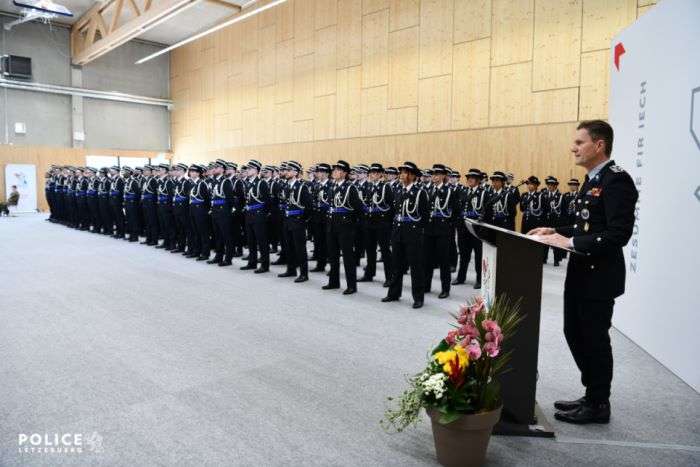
The agreement, finalized on December 17, 2025, sees Luxembourg partnering with Belgium to acquire 38 Jaguar reconnaissance vehicles and 16 Griffon multi-role carriers. These platforms are not merely new hardware; they are the backbone of the “Guides-Chasseurs Luxembourgeois,” a binational battalion of 700 soldiers – half of them Luxembourgish – set to be fully operational by 2030.
This shift marks the end of the post-Cold War “peace dividend” for the Grand Duchy. In the wake of Russia’s invasion of Ukraine and heightened tensions across Eastern Europe, the government in Luxembourg City has faced intense pressure to meet NATO’s increasingly stringent spending targets. Having long struggled to hit the 2% mark, Luxembourg is now navigating a path toward a new 5% GDP defense target agreed upon by the alliance, a figure that would require the tiny state to invest roughly €3 billion annually.
Rather than attempting to build a conventional mass army, Luxembourg is reinventing itself as a “digital scout” for Europe. The strategy leans heavily on the country’s existing dominance in the space and satellite sectors. In August 2025, the successful launch of LUXEOSyS, the nation’s first sovereign Earth-observation satellite, signaled this intent. Orbiting the globe 15 times a day, the satellite provides high-resolution imagery for monitoring troop movements and conflict zones – data that Luxembourg now provides to NATO, the UN, and the EU.
The rationale is clear – Luxembourg is trading its traditional neutrality for a role as a high-tech intelligence hub. By integrating its ground forces with Belgium under the “Ermesinde” agreement and its data capabilities with NATO’s broader infrastructure, the Grand Duchy is ensuring that its small size does not equate to irrelevance.
Critics of the build-up have questioned the rapid militarization of a country that previously lacked even a basic arms industry. However, the government has framed the spending as an economic opportunity. By investing in local drone companies, cybersecurity, and space research, the Duchy aims to turn its defense obligations into a driver for technological innovation.
As the new armored battalion prepares to take its place in the Ardennes, the message from Luxembourg is one of pragmatic survival. In a world where the prospect of high-intensity conflict has returned to the European continent, even the smallest of states has decided it can no longer afford to be a spectator.
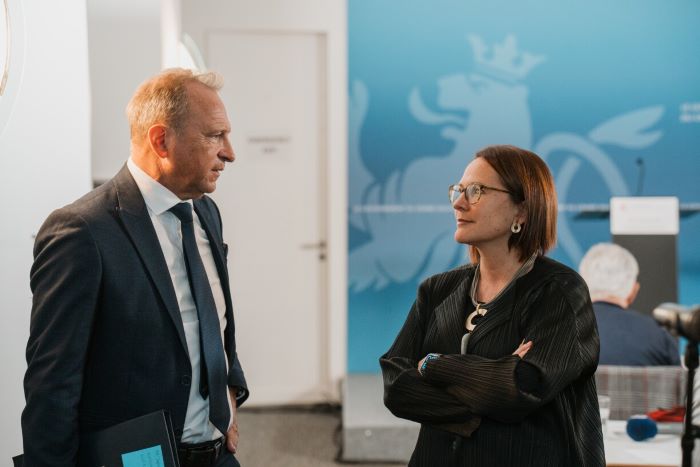
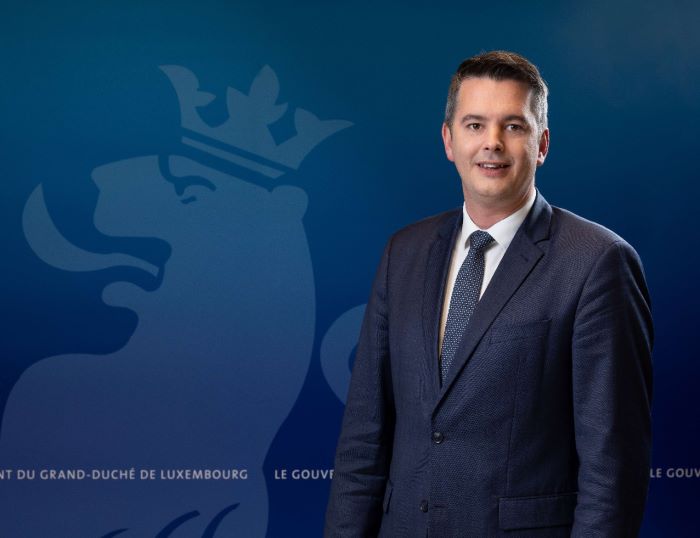
Photo – Claude Piscitelli, Minister of the Economy, SME, Energy and Tourism (©SIP/)