






Silent Intruders – Unidentified Drones, Shadow Warfare and the New Battle for Europe’s Skies
Across parts of Europe, the sky has become a place of quiet unease. Belgium, Germany and several other countries have in recent months reported repeated sightings of unidentified drones in sensitive airspace, hovering near military installations, energy infrastructure and border regions. Governments have been quick to point fingers, with Russia and unnamed “hostile actors” frequently cited. Yet proof remains elusive, leaving Europe facing a troubling question – who is really watching from above, and what does this new form of aerial intrusion mean for sovereignty in the 21st century?
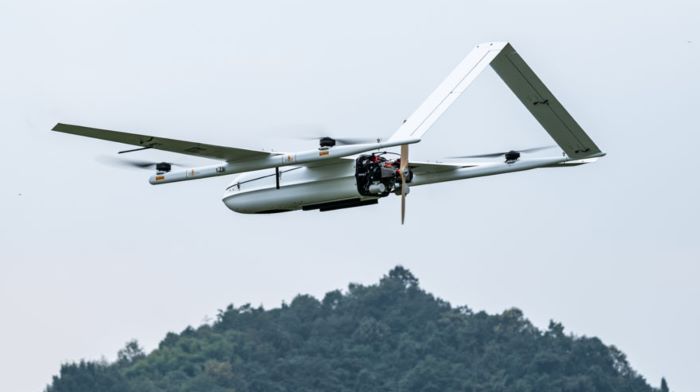
Drones have long escaped the confines of hobbyist culture and battlefield use. Cheap to build, difficult to trace and increasingly sophisticated, they have become the perfect tools of deniability. Unlike manned aircraft, drones can cross borders silently, loiter for hours and disappear without consequence, often leaving states unable to say with certainty who launched them or for what purpose. That ambiguity is precisely what makes them so attractive in an era of hybrid warfare.
European security officials increasingly believe that many of the incursions are not random. In Germany, drones have been reported near military training grounds and industrial facilities tied to defence production. Belgium has raised concerns about sightings near ports and critical infrastructure. Similar reports have emerged from Poland, Norway and the Baltic states. While Russia is often mentioned, especially given its tense relationship with NATO and the war in Ukraine, officials are careful to acknowledge that attribution is difficult. State actors, proxy groups, private intelligence contractors and even criminal networks now all possess drone capabilities once reserved for militaries.
Espionage is the most obvious explanation. Modern drones can carry high-resolution cameras, thermal sensors and signal interception equipment, allowing operators to map installations, monitor troop movements or probe electronic defences. But spying is only part of the story. Drones may also be used to test air defence systems, assess response times, or deliberately sow anxiety by exposing gaps in surveillance. In some cases, they may be linked to industrial espionage, monitoring energy facilities, ports or data centres vital to national economies.
There is also the possibility of preparation rather than observation. Security analysts warn that persistent drone activity could be a rehearsal for sabotage, cyber-physical attacks or coordinated disruptions of infrastructure during times of crisis. In that sense, the drones are not just eyes in the sky, but quiet markers of future vulnerability.
The implications for territorial safety are profound. Traditional airspace control was designed to detect planes and missiles, not small, slow-moving objects flying low and blending into civilian environments. Many of the drones reported fall below the thresholds of conventional radar systems, leaving authorities reliant on patchwork responses involving police, military units and air traffic agencies. This blurring of civilian and military responsibility has exposed legal and operational grey zones across Europe.
International law has not kept pace with the technology. While airspace sovereignty is well established under conventions such as the Chicago Convention on International Civil Aviation, enforcement mechanisms for unmanned aerial vehicles are weak. Domestic drone regulations largely focus on safety, privacy and commercial use, not hostile state activity. When an unidentified drone violates airspace, states face a dilemma – shoot it down and risk escalation, or tolerate the intrusion and appear exposed.
European governments are now scrambling to adapt. Some countries are investing in counter-drone systems, including electronic jamming, signal takeover technology and specialised detection networks. Others are pushing for closer intelligence-sharing within the EU and NATO, arguing that drone incursions are rarely isolated incidents but part of wider patterns. There is also growing pressure to update international norms, clarifying when drone activity constitutes an act of aggression and how states can lawfully respond.
What is clear is that drones have changed the nature of spying and surveillance. They have lowered the cost of intrusion while raising the difficulty of accountability. The sky, once a clear marker of national borders, is becoming porous, contested and crowded with unseen actors.
For Europe, the challenge is not only technical but political. Defending territorial boundaries now requires redefining sovereignty itself, not just on the ground or at sea, but in the quiet spaces between satellites and streetlights. The unidentified drones hovering over Europe are more than machines; they are signals of a new, unsettled era where power is exercised silently, and borders are tested not with troops, but with shadows in the air.
– By Moji Danisa