




Royalty in the Dock – Norway Reckons with the Trial of Marius Borg Høiby
Norway, a country that prides itself on equality before the law and a monarchy stripped of excess, is confronting a deeply unsettling moment as the eldest son of its crown princess stands trial on charges of rape and sexual abuse. The case against Marius Borg Høiby has shattered the careful distance long maintained between the Norwegian royal family and scandal, dragging private conduct into unforgiving public view.
Høiby, in his late twenties, is accused of committing multiple acts of sexual violence against women over several years. Prosecutors allege that some of the incidents involved victims who were unconscious or otherwise unable to give consent, with digital material said to have been recovered from phones and encrypted applications forming a central plank of the evidence. He has denied the most serious charges, insisting that sexual encounters were consensual, while acknowledging a history of substance abuse and chaotic behaviour.
Unlike his half-siblings, Høiby holds no royal title and has never been expected to perform official duties. Yet his proximity to power has always been undeniable. He is the son of Mette-Marit, who married Crown Prince Haakon in 2001, bringing her young child into the royal household at Skaugum. From that moment, Høiby grew up suspended between worlds – not a prince, but never entirely private; not bound by constitutional duty, yet shaped by the privileges and pressures of royal life.
Friends and critics alike have long described him as restless and impulsive, a figure more at ease in nightlife circles than palace corridors. In court, he has spoken openly of heavy drinking, drug use and a craving for attention that he says developed under constant public scrutiny. That lifestyle, prosecutors argue, created an environment in which boundaries dissolved and vulnerable women were exploited. His defence counters that excess and immaturity do not amount to rape, warning against turning personal failure into criminal guilt.
The question of upbringing hovers uneasily over the proceedings. There is no suggestion that royal life produces criminality, yet the case exposes how privilege can distort accountability. Access to exclusive spaces, deference from others and a belief – conscious or otherwise – that consequences can be managed quietly may all have played a role in allowing troubling behaviour to continue unchecked. For critics of monarchy, the trial has become an uncomfortable illustration of how proximity to power can shield misconduct until victims force it into the open.
The reputational implications for the Norwegian royal family are profound. For decades, the institution has cultivated an image of modesty, moral seriousness and closeness to ordinary citizens. That image now feels fragile. Even though Høiby is not a working royal, the charges have inevitably reflected back onto the household itself, raising questions about oversight, responsibility and the limits of the palace’s famed transparency. A conviction would mark the most serious criminal scandal to touch the modern Norwegian monarchy and could accelerate a slow erosion of public trust.
Yet even an acquittal would not restore the status quo. The trial has already punctured the idea that royal families can neatly separate public duty from private conduct. It has also ignited a broader national conversation about consent, digital evidence and how societies respond when allegations implicate the well-connected. Norway’s legal culture insists that status confers no immunity, and the courts have taken pains to underline that the defendant is being treated as any other citizen.
At its core, the case is not only about one man and his alleged crimes, but about power and accountability in a society that claims to have little patience for either privilege or secrecy. As the proceedings continue, Norway watches not just for a verdict, but for reassurance that its values – equality before the law, respect for victims and a clear moral line – are more than ceremonial ideals.
Whatever the outcome, the trial of Marius Borg Høiby has already altered the relationship between the Norwegian public and its monarchy. A crown may not be on trial in name, but its moral authority is, and the judgement will linger long after the courtroom doors close.
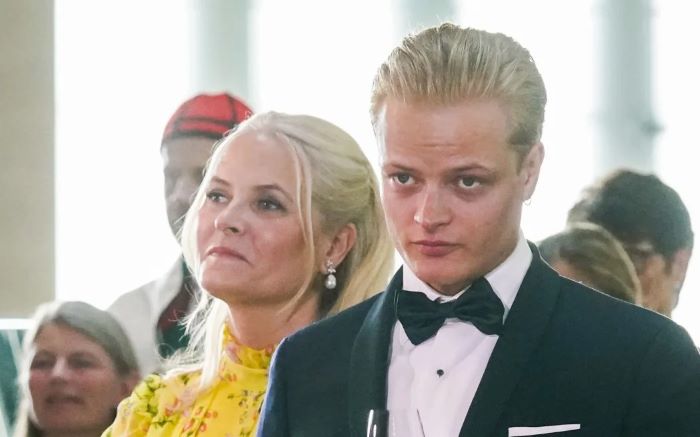
Photo – Marius Borg Høiby and his mother Crown Princess Mette-Marit. Høiby, the stepson Crown Prince Haakon – the heir to the throne in Norway – has been charged with multiple counts of rape, sexual assault and bodily harm. Photo: Lise Aaserud / NTB via AFP