


Luxembourg’s Frieden Advocates a Stronger United European Bloc as Tensions Increase
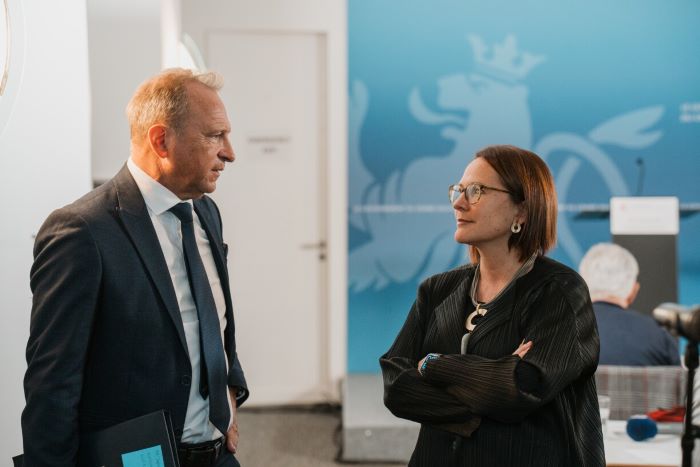
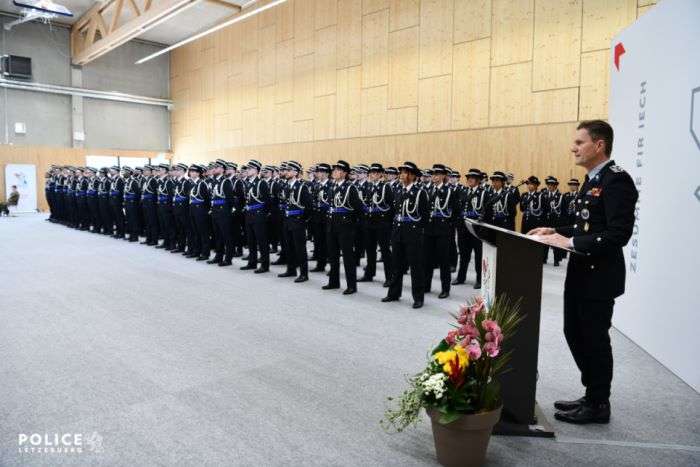
Europe must take greater responsibility for its own economic power, energy security and defence, Luxembourg’s prime minister, Luc Frieden, said on Friday, warning that the continent can no longer assume that the United States will always act as its reliable partner.
Speaking at an Institute of Politics forum moderated by Harvard professor Daniel Ziblatt, Frieden described the present moment as a turning point, shaped by war on Europe’s borders, economic rivalry between major powers and a shifting American political landscape that has become less predictable and more transactional.
For decades, Europe’s prosperity and security were anchored in a transatlantic bargain – American military protection under NATO and open trade across the Atlantic, in exchange for political alignment and economic partnership. That arrangement, Frieden suggested, is now under strain.
Across successive administrations, Washington has grown more willing to use tariffs, sanctions and industrial subsidies to defend its own interests, even when they clash with those of European allies. Trade disputes over steel, electric vehicles and digital taxation have exposed tensions once considered unthinkable between partners who saw themselves as part of the same strategic bloc.
At the same time, calls in the United States for Europe to shoulder more of the burden for its own defence have become louder, particularly as American attention shifts toward the Indo-Pacific and competition with China. For many European leaders, the lesson is clear – dependence carries risks.
Frieden’s message reflects a growing consensus in European capitals that the continent must act more like a unified economic and strategic power rather than a collection of loosely coordinated states. In practice, that means deeper integration in energy markets, stronger joint defence capabilities, and a more assertive industrial policy to compete with American and Asian giants.
For smaller states such as Luxembourg, the stakes are especially high. The Grand Duchy’s prosperity is built on open markets, stable alliances and the rule-based international order. Any erosion of those pillars – whether through protectionism, geopolitical conflict or fractured alliances, threatens the foundations of its economy.
The argument for a more unified Europe rests on three pillars.
First is economic strength. While the European Union collectively rivals the United States and China in market size, its fragmented capital markets, regulatory differences and uneven industrial policies limit its global leverage. A truly integrated financial system, deeper capital markets and coordinated investment in technology could give Europe the scale it needs to compete in sectors from artificial intelligence to green energy.
Second is energy independence. Russia’s invasion of Ukraine exposed the risks of reliance on external suppliers. Although Europe has made rapid progress in diversifying gas imports and expanding renewables, energy security remains uneven across the continent. A unified energy grid, shared strategic reserves and joint investment in hydrogen and nuclear technologies could form the backbone of a more resilient system.
Third is defence and security. NATO remains the cornerstone of European defence, but many leaders now speak of building a stronger “European pillar” within the alliance. That would involve joint procurement, shared command structures and a more integrated defence industry capable of producing equipment at scale. The goal is not to replace the United States, but to ensure that Europe can act independently when necessary.
The assumption that America could be perceived as a threat may seem dramatic, but it reflects a shift in strategic thinking rather than hostility. The concern in European capitals is less about military confrontation and more about economic coercion, unpredictable foreign policy swings and the possibility of a United States that retreats from its global commitments.
In such a world, Europe’s greatest vulnerability is disunity. National interests often pull in different directions – energy-rich states versus import-dependent ones, fiscally conservative economies versus more indebted neighbours, eastern security concerns versus southern migration pressures. These divisions weaken Europe’s ability to respond collectively to external shocks.
Frieden’s warning, therefore, is less about America itself and more about Europe’s own responsibilities. A continent that depends too heavily on any external power, however friendly, risks being caught off balance when political winds shift.
For Luxembourg and its neighbours, the choice is stark. Either Europe deepens its integration and speaks with one voice on trade, defence and energy – or it risks being squeezed between larger powers whose priorities may not always align with its own.
In Frieden’s view, the era of comfortable assumptions is over. Europe’s future security and prosperity, he suggested, will depend not on the strength of distant allies, but on the unity and resolve of the continent itself.
Copyright AP Photo/Omar Havana