





France and Luxembourg’s Enduring Police Pursuit of Financial Crime
Franco-Luxembourgish cooperation in the policing of credit institutions has never been a product of mere convenience; it is rooted in decades of necessity, shared financial entanglement, and institutional oversight structures that were formed out of overlapping economic interests. Both countries are home to powerful banking sectors with deep integration across borders. Their collaborative law enforcement tradition reflects a mutual recognition that white-collar crime, particularly in the domain of money laundering and financial fraud, is not bound by geography.
Tracing back to the 1980s and 1990s, France and Luxembourg began formalizing channels of legal assistance and information sharing under the umbrella of broader European Union directives. Notably, bilateral agreements under the Schengen framework and mechanisms established through Europol and Eurojust have enabled real-time cooperation between prosecutors and financial crimes units. Despite Luxembourg’s reputation as a discreet banking hub, it has historically signaled a willingness to cooperate with French authorities—particularly under international pressure following financial scandals in the early 2000s.
The persistent cooperation between the two countries in financial investigations is propelled not just by geography but by the reality of shared clients and cross-border financial flows. Numerous French companies maintain subsidiaries or accounts in Luxembourg, often for tax optimization. The architecture of financial crime in this region typically relies on layering—moving illicit funds through a network of institutions to obscure their origin. Luxembourg’s tax regime, banking secrecy (despite significant reforms), and wealth management services make it an attractive jurisdiction for such schemes. French corporations and wealthy individuals have historically exploited this setup, creating a natural arena for Franco-Luxembourgish scrutiny.
Cases of money laundering involving businesses from both countries continue to surface, not due to lack of effort from law enforcement, but rather because the mechanisms of white-collar crime constantly evolve. Perpetrators rely on sophisticated legal instruments, shell corporations, and consulting firms to obfuscate illicit activity. Moreover, internal compliance in major banks often lags behind the creativity of financial engineers. Political hesitation, regulatory loopholes, and the enormous challenge of gathering admissible cross-border digital evidence make a “final end” to such activity nearly impossible. The scale of global capital flows far outpaces the capacity of traditional enforcement models.
Over the past decade, multiple cases have rocked the Franco-Luxembourgish financial scene. In 2016, French prosecutors investigated the use of Luxembourg-based investment vehicles to mask profits and reduce tax liabilities. The Panama Papers and LuxLeaks revelations provided new evidence trails implicating financial institutions and high-net-worth individuals operating across both territories. BNP Paribas and Crédit Agricole have both faced scrutiny in this context, with reports alleging their involvement in aiding clients to shift funds offshore.
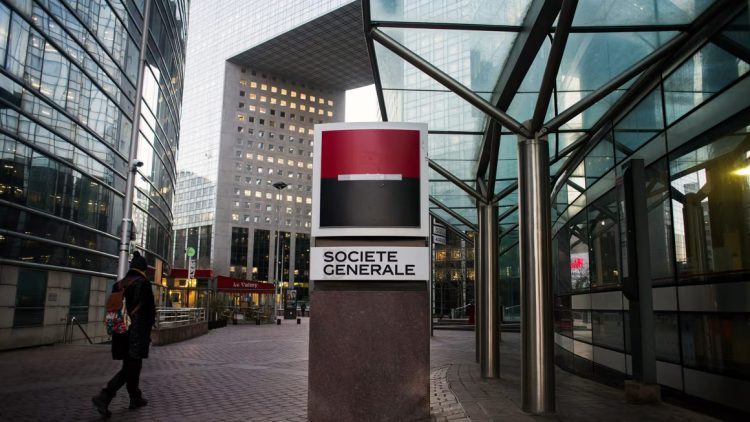
The Société Générale case stands out due to its magnitude and timing. On Tuesday this week, raids on the bank’s offices in both France and Luxembourg were conducted under the authority of the Parquet National Financier (PNF). These raids form part of a sweeping investigation into alleged money laundering tied to tax fraud, specifically targeting schemes that might have been structured as early as 2009. At the core of the inquiry are accusations that Société Générale constructed opaque financial instruments to enable large French corporations to avoid taxes. Four individuals, including high-ranking executives, have been taken into custody, and searches were conducted at their private residences.
This is not Société Générale’s first brush with controversy. The bank has previously faced allegations of misleading investors and manipulating financial data. The current case, however, appears more serious due to its systemic implications and the fact that criminal conspiracy charges are being pursued. While the identities of the arrested executives have not yet been made public, speculation in financial circles points toward individuals in the bank’s tax advisory and structured finance departments—teams known for designing bespoke financial instruments for corporate clients.
Luxembourg’s involvement in the raids is not accidental. Given that the suspected laundering structures likely involved Luxembourg-based shell entities or holding companies, the country’s judiciary had to be brought in for effective jurisdictional coordination. With 80 investigators and 11 judges participating across both countries, the scale of the operation underscores the gravity of the case. Legal experts suggest that this could become one of the most consequential financial crime probes in the region in recent years.
If found guilty, the penalties facing the individuals and Société Générale are substantial. Executives convicted of aggravated money laundering and conspiracy could face up to 10 years in prison under French law. The bank itself could face enormous fines, suspension of certain licenses, or even forced restructuring of its operations. Civil liability claims could follow, further exposing the bank to reputational and financial damage. For Luxembourg, this case also risks re-igniting criticism of its financial regulation and transparency, just as the country has tried to shed its image as a tax haven.
Looking ahead, police investigations in both countries are likely to intensify in scope and coordination. Forensics teams will comb through digital correspondence, transaction logs, and internal audit reports. Prosecutors will try to reconstruct the chain of command and decision-making processes behind the structures in question. The judicial strategy is expected to rely on whistleblower testimony, international bank transfer records, and potentially cooperation agreements with implicated executives in exchange for leniency.
While this investigation might not eradicate financial crime between France and Luxembourg, it represents a strong signal of a coordinated, no-tolerance approach to institutional complicity in financial wrongdoing. The enduring police partnership between these nations—grounded in pragmatism and reinforced by repeated necessity—will only grow more sophisticated. The Société Générale case is not an aberration, but a testament to how systemic financial crime operates—and how persistent, transnational oversight remains the only meaningful antidote.