




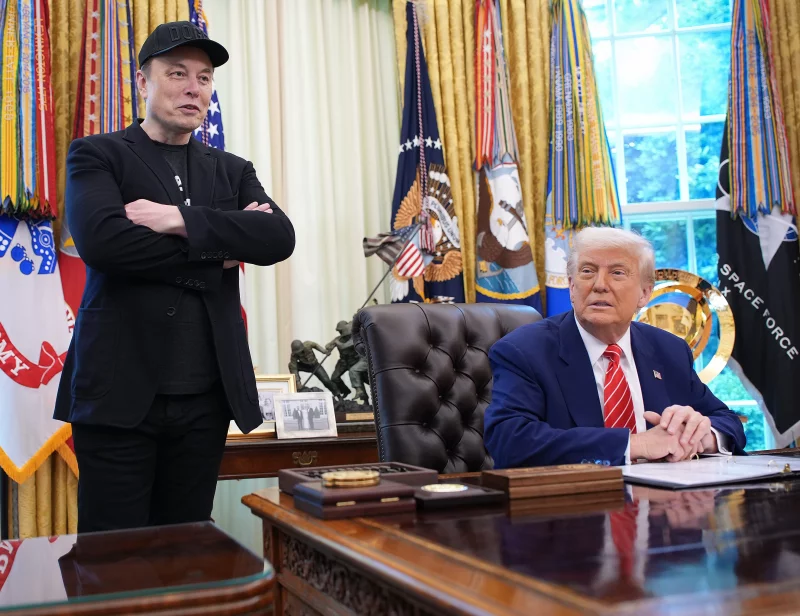
Can Donald Trump Really Deport Elon Musk?
Inside the High-Stakes Feud Between a Former President and a Tech Titan
The simmering feud between Donald Trump and Elon Musk, two of America’s most
flamboyant and influential figures, has burst into the public square with fresh threats,
cutting remarks, and escalating tension. Once cordial allies, they are now locked in a
bitter clash that pits political muscle against tech ambition.
At the center of the dispute are Trump’s public threats to revoke Musk’s federal
subsidies, sever his ties to government agencies and, in a startling twist, deport him.
The feud, at once personal and political, reflects a deeper struggle over power, loyalty,
and the future of American capitalism.
For a time, Musk and Trump shared a mutual admiration. Trump praised Musk as a
“genius” and job creator; Musk offered measured support for some of Trump’s
deregulation efforts. But the alliance cracked after Musk publicly condemned Trump’s
signature spending package, dubbed the “Big Beautiful Bill”, calling it “a disgusting
abomination.”
Behind Musk’s ire, sources say, was frustration over failed lobbying efforts. Tesla had
spent heavily to preserve the electric vehicle tax credit, while Musk also pushed to have
the Federal Aviation Administration adopt his Starlink satellite network for national air
traffic control, a proposal ultimately rejected. Adding to the fallout was Trump’s sudden
withdrawal of Jared Isaacman, a Musk ally, from consideration as NASA administrator.
Privately, the two remained in contact. But tensions simmered. “Elon was very hurt,”
said one source close to the situation. Then came the public break.
The rhetoric soon escalated after Elon again, lashed out at the president on his X app
and Trump’s response was brutal: “We might have to put DOGE on Elon,” referring to
the Department of Government Efficiency, a defunct agency revived in Trump’s platform
to eliminate wasteful spending. Ironically, Musk had been floated to lead that agency.
Then came the most eyebrow-raising line. Posting on Truth Social, Trump wrote:
“Elon may get more subsidy than any human being in history. Without them, he might
have to pack up and head back to South Africa.”
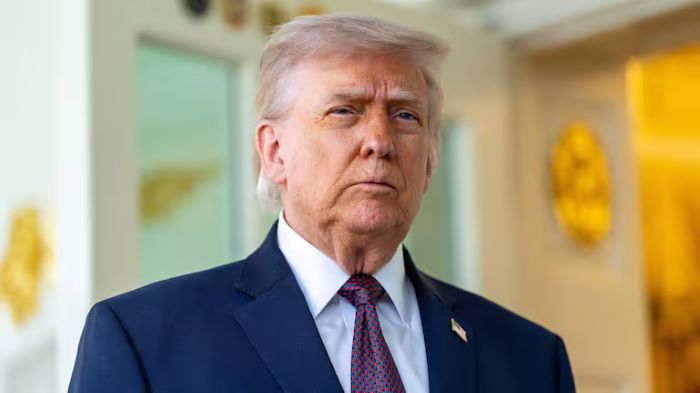
Trump followed his statement up with a threat on Tuesday when he told reporters that
his administration will “have to take a look” at deporting Elon Musk”.
Musk, a South African national and a naturalized U.S. citizen, has made several X posts
slamming Republicans over the “Big Beautiful Bill,” arguing that it was adding more
debt.
He said: “It is obvious with the insane spending of this bill … that we live in a one-party
country – the PORKY PIG PARTY!!,” Musk posted Monday afternoon.
Elon Musk had also suggested that if the GOP bill passed, he would swiftly form a new
“America Party” and wrote on X that nearly the entire House and Senate GOP “will lose
their primary next year if it is the last thing I do on this Earth.”
Legally, no. Musk became a naturalized U.S. citizen in 2002, after acquiring Canadian
citizenship and legally migrating to the U.S. Deportation of a naturalized citizen is nearly
impossible unless there is evidence of fraud in the naturalization process or links to
terrorism, neither of which apply to Musk.
Even as president Trump lacks the legal authority to strip Musk of his citizenship or
forcibly expel him from the country. Any such move would be unconstitutional and
immediately blocked in the courts. In other words: The threat is political theater, not legal reality.
While deportation is off the table, Trump’s economic threats may carry real weight for
various reasons: EV Subsidies at Risk. Tesla has long benefited from federal and state incentives to boost electric vehicle adoption. These subsidies helped keep the company afloat in its early years and remain a competitive advantage. Trump’s “Big Beautiful Bill” aims to eliminate such green
incentives, potentially costing Tesla billions.
SpaceX in the Crosshairs. Musk’s aerospace firm, SpaceX, is deeply embedded in federal operations, from NASA missions to national security launches. Trump could attempt to freeze or redirect these
contracts under the guise of “efficiency reforms.” The result? Major disruption and new
opportunities for rivals like Blue Origin. Political and Reputational Fallout. A war with Trump could also ripple through Republican-controlled states, where Musk’s companies rely on local subsidies, tax breaks, and regulatory support. A coordinated campaign against him, formal or informal, could create bureaucratic bottlenecks and stall expansion plans.
Musk, never one to back down, responded on X (formerly Twitter) with a defiant
message: “I am literally saying CUT IT ALL. Now.”
The statement aligns with Musk’s libertarian ethos and disdain for what he calls “crony
capitalism.” Yet critics note that his empire was built, in part, on the very government
assistance he now disavows.
The Trump-Musk standoff is more than a personal spat. It’s a flashpoint in a broader
ideological battle over how American power, political, technological, and economic, is
wielded.
Trump, who blends populism with retaliation, is reminding America that he is willing to
use government levers against perceived enemies. Musk, cast as a techno-libertarian
hero, is daring to bite the hand that once fed him.
Deportation won’t happen but Musk could find himself in a tightening vise of economic
and regulatory pressure.
One thing is certain: This is not just a feud between two billionaires with big egos. It’s a
struggle that could ripple through industries, shake investor confidence, and alter the
trajectory of America’s innovation landscape.
Moji Danisa
Award-winning Journalist & Media Consultant