




“The Epstein Enigma: Banks, Blackmail, and the Billion-Dollar Silence”
The sordid saga of Jeffrey Epstein remains perhaps the greatest modern scandal — a grotesque nexus of sex trafficking, elite complicity, global espionage, and mind-boggling financial malpractice. Even more disturbing is how swiftly President Trump’s administration abandoned its early vows to shine a relentless spotlight on Epstein’s labyrinthine network. What explains this sudden U-turn, especially when the magnitude of the scandal dwarfs other supposed priorities?
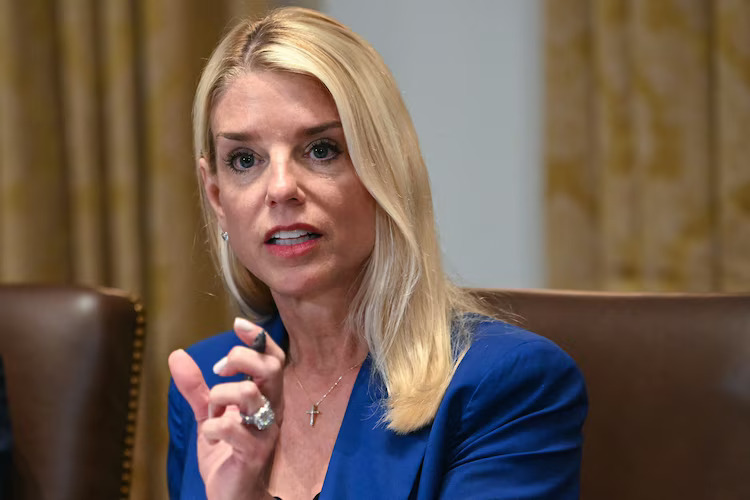
Trump initially thundered about “draining the swamp,” vowing to expose the depravity festering in the corridors of power. Epstein’s spectacular fall — a man whose wealth, friends, and unexplained influence seemed lifted from the pages of a spy novel — should have been the signature case. Instead, the administration clammed up. Attorney General Pam Bondi, once a vocal champion of “justice for the victims,” performed a brazen volte-face, pivoting from calls for accountability to silence, apparently under immense political pressure. The reasons may be found in the deep, oily footprints left by money and power.
Consider first the grotesque manner of Epstein’s death. Officially ruled a suicide in a Manhattan jail cell, it occurred under circumstances that strain credulity: malfunctioning cameras, inattentive guards who literally fell asleep, and a cellmate abruptly removed. It was almost cartoonish in its convenience — a scenario that would be laughed out of a movie script. The cover-up smell was immediate and pungent. Who benefits when the central figure of one of the largest blackmail operations of the century suddenly dies? The list is long and runs through the world’s most powerful boardrooms and cabinet offices.
At the top of that sordid financial heap are J.P. Morgan and Deutsche Bank. Together, they have paid out nearly $800 million for their role in enabling Epstein’s crimes — hush money settlements by another name. JPMorgan shelled out around $290 million to Epstein’s victims and millions more to the U.S. Virgin Islands. Deutsche Bank coughed up another $75 million. Why? Because these supposed pillars of modern finance willfully ignored mountains of red flags. Standard KYC (Know Your Customer), AML (Anti-Money Laundering), and due diligence protocols evaporated when it came to Epstein. As victims came forward, financial records revealed Epstein was withdrawing cash just under mandatory reporting thresholds repeatedly, structuring transactions in textbook criminal fashion. Yet the banks facilitated these flows, even as his declared income could never have justified his lavish global empire.
It begs a savage irony: banks today will lock down accounts of ordinary citizens for minor clerical discrepancies, but for Epstein — whose finances were a nightmarish swirl of shadowy shell companies and bribery schemes — they rolled out the red carpet. Not a single top director at these banks has faced meaningful consequences. Instead, taxpayers and shareholders shoulder the burden, and executives retreat to their yachts.
The rot is not just financial. The Epstein file intersects with intelligence agencies in chilling ways. Epstein’s close ties to former Israeli prime ministers like Ehud Barak and the shady financial streams from Les Wexner’s Zionist “Mega Group” point to Mossad’s fingerprints. Epstein’s partner Ghislaine Maxwell was the daughter of Robert Maxwell, himself an alleged Mossad asset and towering figure of international intrigue who mysteriously “fell” off his yacht after looting pension funds. The shadows around him are dense with half-truths — a man simultaneously lauded by world leaders and investigated as a spy.
Epstein’s blackmail operation served more than personal perversions. It was an intelligence gold mine. Video evidence, testimonies from pilots and house staff, and even flight logs confirm that global elites — from U.S. presidents to British royalty to tech moguls — found themselves tangled in Epstein’s velvet snares. Such compromising material would be irresistible for agencies like Mossad, MI6, or the CIA. It’s espionage 101: lure, film, control.
No wonder the Trump administration, so brash on the campaign trail, suddenly developed collective amnesia. With hundreds of powerful men potentially implicated — some who shape entire economies or control national security portfolios — the pressure to look away was overwhelming. Bondi’s abrupt retreat underscores that even top law enforcers bend under this weight.
And while these grotesqueries unfolded, the broader financial system revealed its moral bankruptcy. As billions shuffled through Epstein’s accounts to fund exploitation, hundreds of millions worldwide still starve, lack basic health care, or die for want of inexpensive treatments. The global economy — rigged to siphon wealth upward — makes a mockery of laborers who toil to prop up this farce, while billion-dollar hush deals for sexual slavery pass with barely a shrug.
So is this the greatest cover-up since JFK? Circumstantially, the scale and international stakes argue yes. Epstein’s dark empire, straddling the worlds of high finance, espionage, and global politics, has been systematically buried under payouts, sudden deaths, sealed court files, and the eerie silence of former crusaders.
Until the full truth emerges — if it ever does — one grim certainty remains: this story exposes not just individual depravity, but the systemic corruption of institutions we once believed were the bulwark against precisely such evil. In a world teetering under grotesque inequality, the Epstein scandal is more than a crime story; it is a testament to how easily justice can be bought, secrets buried, and humanity betrayed by its own elites.
David Danisa CityNews
Pamela Jo Bondi, United States Attorney General (Andrew Caballero-Reynolds/AFP via Getty Images)