







Beyond the Stun Guns – Luxembourg’s Changing Streets
The placid image of Luxembourg, often lauded for its low crime rates and high quality of
life, is facing a subtle but significant shift. The Grand Ducal Police’s recent
announcement to equip units with tasers marks a pivotal moment, signaling a more
assertive posture in response to what authorities describe as an “intensifying” crime
landscape. This decision, while framed as a modernization effort, hints at underlying
anxieties about public safety and the evolving nature of criminal activity in the
prosperous European duchy.
For years, Luxembourg has enjoyed a reputation as one of the safest countries globally,
a distinction it proudly upholds (ranked 15th safest in the world in 2024 by the Global
Residence Index Safety Index). However, the Grand Ducal Police’s 2024 activity report,
the detailed contents of which are now being scrutinized, paints a picture of growing
challenges. While overall crime figures, just under 40,000 reported offenses, might
seem modest compared to larger nations, the composition of these crimes is what
appears to be driving the policy shift.
The most striking figures from the report point to a substantial surge in specific, high-
impact offenses. Private vehicle thefts, often linked to organized criminal networks
operating across borders, have skyrocketed by over 37%. Similarly, drug-related arrests
have seen a parallel increase of approximately 37%, with 207 suspects apprehended in
flagrante delicto. This suggests a growing problem with drug trafficking and
consumption, particularly concerning for a nation that serves as a significant financial
hub.
Furthermore, incidents of assault and battery have climbed by nearly 5.5%, a rise that,
while seemingly small, indicates a concerning trend in direct interpersonal violence.
These figures, underscore a qualitative change in the crime environment, moving
beyond simple property offenses to more confrontational and potentially dangerous
situations. The perception that certain areas, such as the Gare and Bonnevoie
neighborhoods in Luxembourg City, are becoming “flashpoints” for these types of
incidents further fuels the demand for enhanced police capabilities.
Will equipping the police unit with Tasers make any difference, is the Duchy moving
towards de-escalation or escalation?
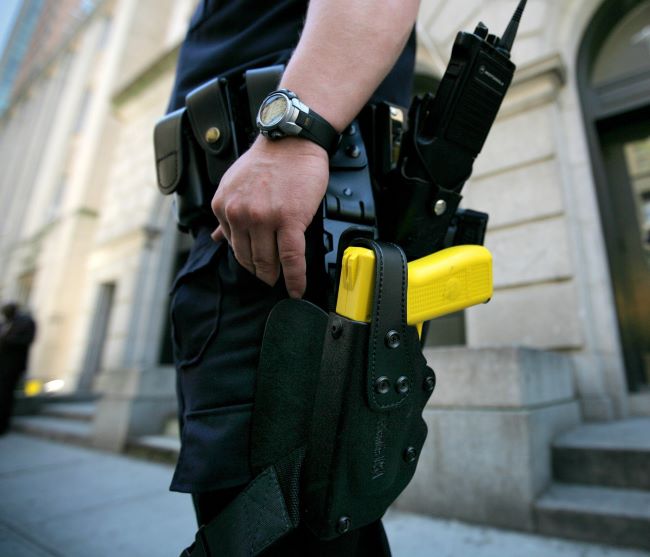
The introduction of tasers, or Conductive Energy Devices (CEDs), is presented by
authorities as a crucial “intermediary force option.” The argument is that these devices
provide a less-lethal alternative to firearms, allowing officers to de-escalate violent
encounters and reduce injuries to both suspects and police personnel. This aligns with
broader European trends where police forces are seeking tools that offer a step
between verbal commands and the use of firearms. Proponents argue that a visible
Taser can act as a deterrent, encouraging compliance and avoiding the need for
physical struggle but the debate surrounding taser deployment in Europe is far from
settled. While supporters emphasize their potential to reduce serious injury or death,
critics often raise concerns about their potential for misuse, particularly against
vulnerable individuals, or the possibility of “mission creep” where Tasers become a first
resort rather than a last.
Studies in other European countries have shown mixed results, with some suggesting that the presence of tasers can, in some contexts, lead to an
increase in the overall use of force by officers, or even an increase in assaults on
officers, rather than a decrease. The Grand Ducal Police will need to implement
rigorous training, clear policy guidelines, and robust oversight mechanisms to ensure
that the tasers are used proportionally and ethically, in line with international human
rights standards.
Crucially, the Taser rollout is not an isolated measure. It forms part of a more
comprehensive modernization and community engagement strategy by the Grand Ducal
Police. The active deployment of body-worn cameras from July 1, 2025, following
legislation passed in 2023, is a significant step towards increased transparency and
accountability. These cameras are intended to provide objective evidence, protect both
officers and the public, and contribute to de-escalation by documenting interactions.
Complementing these technological advancements is the expansion of the “Local Police
Unit” pilot program. Launched in July 2024 in Luxembourg City and Esch-sur-Alzette,
this community-focused initiative, built on the “4 P principle” (Personnel, Presence,
Proximity, Prevention), is now extending to Differdange and Grevenmacher by May, 2025.
The program aims to foster closer ties between the police and local
communities, with figures already indicating over 1,650 extra operations, 3,400
preventive checks, and 2,600 traffic controls. This emphasis on visible patrolling and
community interaction is vital in rebuilding public reassurance in areas where crime
concerns are heightened.
Luxembourg’s move to arm its police with Tasers is a clear indication that the idyllic
image of the Grand Duchy is confronting new realities. The rise in specific crime
categories, particularly violent and drug-related offenses, necessitates a re-evaluation of
law enforcement’s tools and tactics. By combining the introduction of less-lethal force
options with enhanced community policing and increased transparency through
bodycams, officials hope to strike a delicate balance – to diffuse volatile situations
effectively, increase deterrence in hotspot areas, and crucially, maintain and strengthen
community trust. The success of these interventions will be closely watched, both within
Luxembourg and across Europe, as other nations grapple with similar evolving crime
landscapes and the ongoing debate over police powers and public safety.