




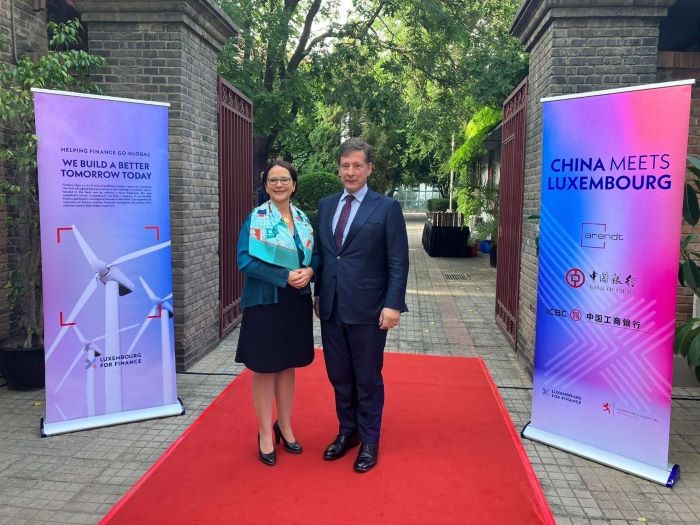
Luxembourg’s Growing Ties with China Amid Possible Circuit Foil Deal
Luxembourg’s relationship with China continues to deepen, evolving well beyond the
financial headlines that have long defined the two countries’ ties. At the heart of this
expanding engagement is the potential acquisition of Circuit Foil, a Luxembourg-based
manufacturer of high-precision copper foils used in electronics, by a Chinese firm.
Though reports suggest the €174 million figure may not be final or confirmed, the very
possibility of such a deal reflects a broader, well-established trend of Chinese
investment flowing into the Grand Duchy.
Circuit Foil, with its decades-long legacy in advanced material manufacturing,
represents a strategic asset, not only in terms of high-value industrial technology but
also in its role within Europe’s semiconductor and electronics supply chain. If the
acquisition goes through, it could serve as a symbol of China’s growing interest in
Europe’s industrial backbone, especially in sectors critical to digital infrastructure and
energy transition.
Luxembourg, for its part, offers a uniquely attractive proposition. Since the late 1970s, it
has served as the European gateway for Chinese banks and state-backed enterprises.
Today, the Grand Duchy continues to draw investors with its political stability, robust
legal system, multilingual workforce, and central geographic position within the EU.
The benefits of this relationship for Luxembourg are tangible – they include, foreign
direct investment (FDI) from China fuels job creation, infrastructure upgrades, and
technology transfer. It also helps diversify Luxembourg’s economy, moving it beyond its
traditional identity as a banking haven. In turn, Chinese investors gain access to the EU
single market, regulatory credibility, and proximity to major European clients and
partners.
Yet this partnership is not without complexities. The Luxembourg government is acutely
aware of the geopolitical sensitivities involved in Chinese acquisitions, particularly in
strategic sectors such as tech and manufacturing. Concerns include potential data
security vulnerabilities, dependence on non-EU supply chains, and the risk of
intellectual property loss.
To address these challenges, Luxembourg adheres strictly to EU investment screening
mechanisms and its own national regulations. Its strategy is one of cautious openness,
welcoming investment, but within a framework that safeguards national interests and
European values.
Beyond economics, the China-Luxembourg relationship includes growing cultural,
academic, and diplomatic exchanges. These people-to-people connections further
solidify a bond that is increasingly multifaceted, positioning Luxembourg as a small but
influential player in shaping the future of EU-Asia cooperation.